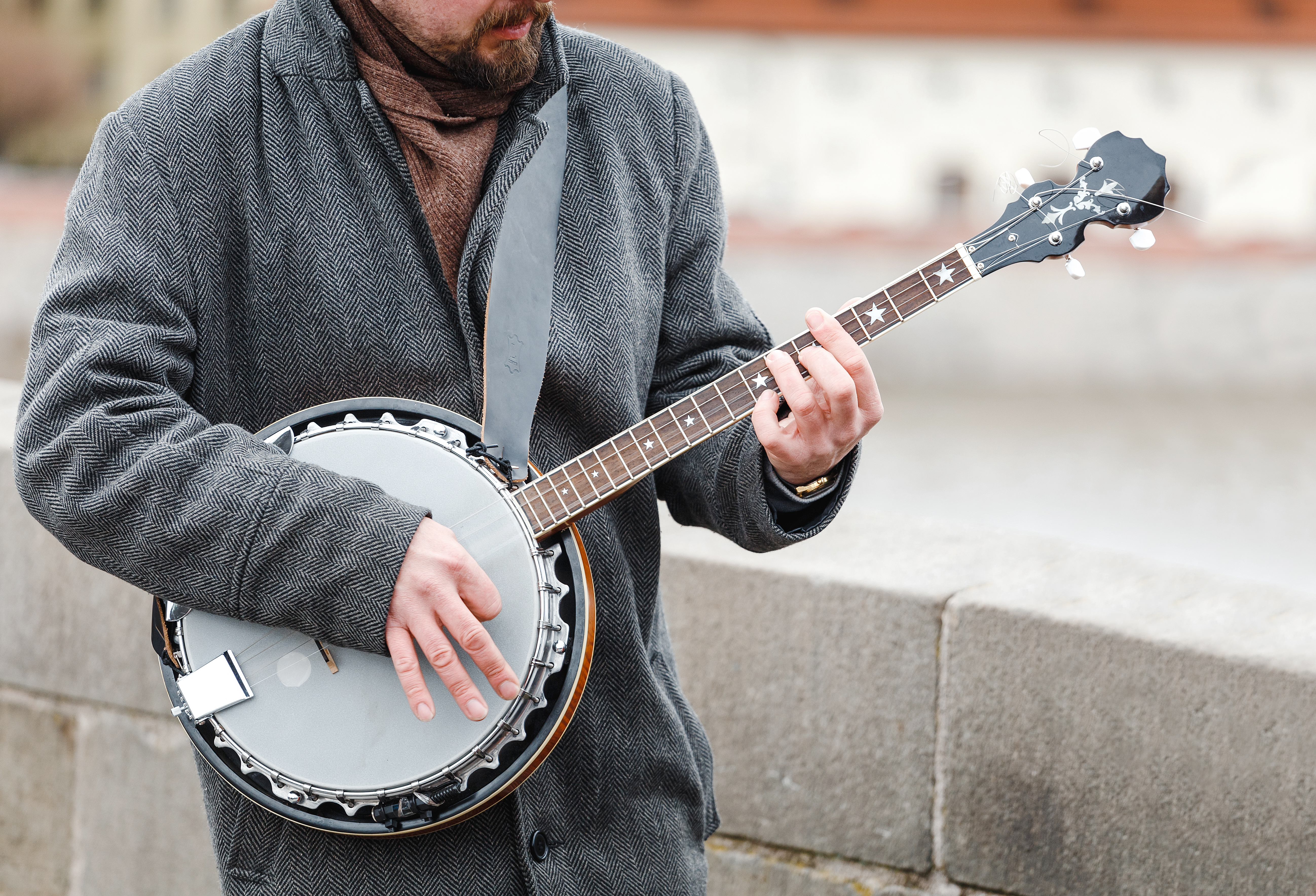
The Best Banjo Player: A Comprehensive Look into the World of Banjo Virtuosos
The banjo traces its roots to West African stringed instruments brought to America by enslaved Africans. Over the centuries it moved from minstrel stages to Appalachian porches to the Grand Ole Opry, picking up new techniques and entire genres along the way. If you want to understand the different types of banjos that exist today, the players below are the reason those variations exist. Each one changed what the instrument could do.
This list covers bluegrass, old-time, jazz-influenced, and crossover players. They are grouped roughly by era rather than ranked, because comparing Earl Scruggs to Bela Fleck is like comparing the Wright Brothers to a test pilot — both essential, neither replaceable.
Earl Scruggs (1924—2012)
Earl Scruggs is the single most important banjo player in American music. Born in Flint Hill, North Carolina, he joined Bill Monroe’s Blue Grass Boys in 1945 and debuted his three-finger picking style at the Grand Ole Opry. That night is widely considered the moment bluegrass music was born.
Before Scruggs, the banjo was fading. His technique — now called Scruggs style — replaced the older strumming and clawhammer approaches with rapid-fire rolls that let individual notes ring out in smooth, driving sequences. The forward roll, backward roll, and alternating roll patterns he codified remain the foundation every three-finger player learns first.
Key recordings to study:
- “Foggy Mountain Breakdown” (1949) — The blueprint for bluegrass banjo, later used in the 1967 film Bonnie and Clyde, which kicked off another wave of banjo popularity.
- “The Ballad of Jed Clampett” (1962) — The Beverly Hillbillies theme put banjo in front of millions of TV viewers every week.
- “Earl’s Breakdown” — A showcase of his speed and clean roll execution.
Scruggs won five Grammy Awards, was inducted into the Country Music Hall of Fame, and received the National Heritage Fellowship. His instruction book, Earl Scruggs and the 5-String Banjo, has been the standard learning text for decades. If you are learning the banjo, you will play Scruggs licks whether you know it or not.
Don Reno (1926—1984)
Don Reno developed independently alongside Scruggs. He was actually offered a spot in Monroe’s Blue Grass Boys in 1943, two years before Scruggs joined, but enlisted in the military instead. When he returned from World War II, Scruggs was already in the band playing the three-finger style Reno had also been working on.
Rather than duplicate Scruggs, Reno carved out his own approach. His single-string technique — “Reno style” — let him play melodic, guitar-like lines on the banjo. He also developed a chordal approach that worked well on slower tunes, giving him a wider palette than most players of his era.
Reno partnered with guitarist Red Smiley, and the duo Reno & Smiley recorded hits including “I’m Using My Bible for a Roadmap,” “Banjo Signal,” and “Charlotte Breakdown.” Reno also played on Arthur Smith’s original 1955 recording of “Feudin’ Banjos” (later reworked as “Dueling Banjos”). He was posthumously inducted into the International Bluegrass Music Hall of Honor in 1992.
Ralph Stanley (1927—2016)
Ralph Stanley and his brother Carter originally modeled their sound on Bill Monroe. Ralph’s banjo style drew from Scruggs but developed its own identity. Where Scruggs typically started rolls with his thumb, Stanley often led with his index finger, producing a smoother, more driving feel.
Stanley played a Gibson archtop banjo with an overtightened head, giving him a bright, cutting tone that became his signature. His clawhammer-influenced approach to three-finger picking blurred the line between old-time and bluegrass in a way few others managed.
His career spanned over 60 years. The 2000 film O Brother, Where Art Thou? introduced his voice and banjo to a massive new audience through his performance of “O Death,” which won the Grammy for Best Male Country Vocal Performance. Stanley was one of the first artists inducted into the International Bluegrass Music Hall of Honor and received the National Medal of Arts in 2006.
J.D. Crowe (1937—2021)
J.D. Crowe brought a polish and discipline to bluegrass banjo that raised the bar for every player who followed. His break on Jimmy Martin’s “You Don’t Know My Mind” is a must-study passage for any serious student.
Crowe’s band, the New South, released their debut album (Rounder 0044) in 1975, and it brought an entire new generation of listeners to bluegrass. The album combined tight arrangements with a cleaner, more modern production sound. His backup work on the Bluegrass Album Band recordings in the 1980s is still considered some of the finest rhythm banjo ever recorded.
Crowe proved that technical excellence and good taste are not opposites. He played exactly what the song needed, never more.
Sonny Osborne (1937—2021)
As half of the Osborne Brothers alongside his sibling Bobby, Sonny Osborne helped make “Rocky Top” one of the most recognized banjo songs in America. He joined Jimmy Martin’s band at just 14 years old.
Sonny’s technique included bends and slides that mimicked steel guitar sounds, giving his slow-song playing an expressive, vocal quality that stood apart from the pure-speed approach of many peers.
Bill Keith (1939—2015)
Bill Keith invented what is now called “melodic style” or “Keith style” banjo. Debuting with Bill Monroe’s Blue Grass Boys in 1963, Keith showed that three-finger players could play fiddle tunes note-for-note by using carefully planned fingering patterns that moved across the neck.
Before Keith, banjo players approximated fiddle melodies with rolls. After Keith, they could play them exactly. This opened up an enormous repertoire and gave the banjo a new role in bluegrass ensembles. Bobby Thompson developed a similar scale-oriented approach independently around the same time.
If you study banjo rolls long enough, you will eventually hit the wall that Keith’s melodic style was designed to solve.
Tony Trischka (b. 1949)
Tony Trischka is the bridge between traditional bluegrass banjo and the progressive experiments that followed. His 1977 instruction book Melodic Banjo became essential reading for players who wanted to move beyond Scruggs licks.
Trischka consistently pushed boundaries while staying grounded enough to win the International Bluegrass Music Association’s Banjo Player of the Year award. His 2007 album Double Banjo Bluegrass Spectacular brought together multiple generations of players. He was also a direct mentor to Bela Fleck, making his influence both direct and downstream.
Bela Fleck (b. 1958)
Bela Fleck took the banjo places it had never been and made it sound like it belonged there. Born in New York City, he first reached a wide audience with Sam Bush’s progressive group New Grass Revival in the early 1980s, then formed Bela Fleck and the Flecktones in 1989.
Fleck’s range is genuinely unprecedented. He has recorded bluegrass, jazz, classical concertos (including works he composed for banjo and orchestra), West African collaborations, and duo albums with his wife Abigail Washburn. His collaborative partners include Chick Corea, Zakir Hussain, Edgar Meyer, and Chris Thile.
The numbers back up the breadth: Fleck has won Grammy Awards in more categories than any other instrumentalist, including country, bluegrass, pop, jazz, classical, and world music. He has over 40 albums to his name.
For players looking to understand what the 5-string banjo is truly capable of, Fleck’s discography is the answer.
Alison Brown (b. 1962)
Alison Brown played banjo with Alison Krauss’s band from 1987 to 1990, during the period when Krauss began selling albums in numbers previously unheard of in bluegrass. Brown then founded Compass Records, one of the most important acoustic music labels, and continued performing with her own group.
A Harvard graduate with an MBA from UCLA, Brown brought a jazz-influenced sensibility to the banjo. Her tone is warm, her phrasing is deliberate, and her compositions draw from folk, jazz, and Celtic music. She won the IBMA’s Banjo Player of the Year and a Grammy Award.
Kristin Scott Benson (b. 1975)
Kristin Scott Benson has won the IBMA’s Banjo Player of the Year award six times, more than anyone else. As a member of the Grascals, she exemplifies what it means to be a great band player: supportive in backup, precise in solos, and always serving the song.
Her playing is rooted firmly in Scruggs style but with a level of rhythmic control and clean execution that sets her apart. For anyone who thinks banjo virtuosity is only about speed, Benson’s work is a corrective.
Noam Pikelny (b. 1981)
Noam Pikelny picked up his first banjo at eight years old in Chicago and has been redefining what the instrument can do ever since. He performed with Leftover Salmon at 19 and has been a core member of Punch Brothers — Chris Thile’s progressive acoustic ensemble — since its founding.
Pikelny’s style builds on Scruggs picking but incorporates fingerpicking techniques, jazz voicings, and melodic ideas that are uniquely his own. His solo albums — In the Maze (2004), Beat the Devil and Carry a Rail (2011), Universal Favorite (2017), and Opus Pocus (2024) — have all received strong critical praise.
In 2010 he became the first recipient of the Steve Martin Prize for Excellence in Banjo and Bluegrass, an award that recognized him as the leading banjo player of his generation. He has since won the IBMA’s Banjo Player of the Year multiple times.
Steve Martin (b. 1945)
Steve Martin is best known as a comedian and actor, but his banjo playing is serious. He is accomplished in both clawhammer and three-finger styles, and his 2009 album The Crow: New Songs for the 5-String Banjo won the Grammy for Best Bluegrass Album.
Martin used his celebrity platform to put banjo in front of audiences who would never have sought it out. Performances on late-night television alongside Earl Scruggs and Bela Fleck gave the instrument mainstream visibility. He also created the Steve Martin Prize for Excellence in Banjo and Bluegrass, providing direct financial support to working players.
For the cultural reach he has given the instrument, Martin belongs on any serious list.
Rhiannon Giddens (b. 1977)
Rhiannon Giddens reconnected the banjo to its African roots. As a founding member of the Carolina Chocolate Drops, she played old-time music while explicitly tracing the instrument’s origins back to the West African akonting and similar gourd-bodied lutes.
Giddens plays minstrel-era banjo styles, clawhammer, and fingerpicking. She won a MacArthur Fellowship in 2017 and the Pulitzer Prize for Music in 2023 for her opera Omar, which tells the story of an enslaved West African man. Her work has reshaped how people think about whose instrument the banjo is and always was.
For more on the instrument’s deep history, see our facts about the banjo.
Abigail Washburn (b. 1977)
Abigail Washburn plays clawhammer banjo and sings in Mandarin Chinese. That sentence alone tells you she occupies unusual territory. She has performed traditional Appalachian music, Chinese folk songs, and original compositions that blend both traditions.
Washburn won the IBMA’s Best Banjo — excuse the pun — by which we mean she was the first clawhammer player to win the Steve Martin Prize (along with her duo album with Bela Fleck, her husband, which won the Grammy for Best Folk Album in 2014). Her clawhammer technique is clean, rhythmic, and deeply musical.
How to Listen and Learn
If you want to study these players seriously, here is a practical approach:
- Start with Scruggs. Learn the basic banjo rolls and listen to Foggy Mountain Breakdown until you can hear each roll pattern.
- Add Stanley and Crowe. Notice how they differ from Scruggs in timing, tone, and note choice despite using the same basic technique.
- Study Keith and Reno for melodic ideas. Their single-string and melodic approaches will open up the fretboard.
- Listen to Fleck and Trischka for range. Hear what happens when bluegrass technique meets jazz harmony and world rhythms.
- Explore Pikelny and Benson for modern excellence. They represent the current peak of the instrument.
- Do not skip Giddens and Washburn. They will change how you think about the banjo’s identity and what it can express.
If you are just starting out, our guides on how to play banjo and easy banjo songs will get your hands moving while you develop your ear by listening to these players.
Further Resources
- International Bluegrass Music Hall of Fame — Full list of inducted artists with biographies.
- American Banjo Museum — Hall of Fame members and historical exhibits covering the instrument from minstrel era to present.
- Banjo Newsletter — Long-running publication with interviews, tablature, and player profiles.
- Deering Banjos Blog — Technique guides, player spotlights, and gear reviews from a major banjo manufacturer.