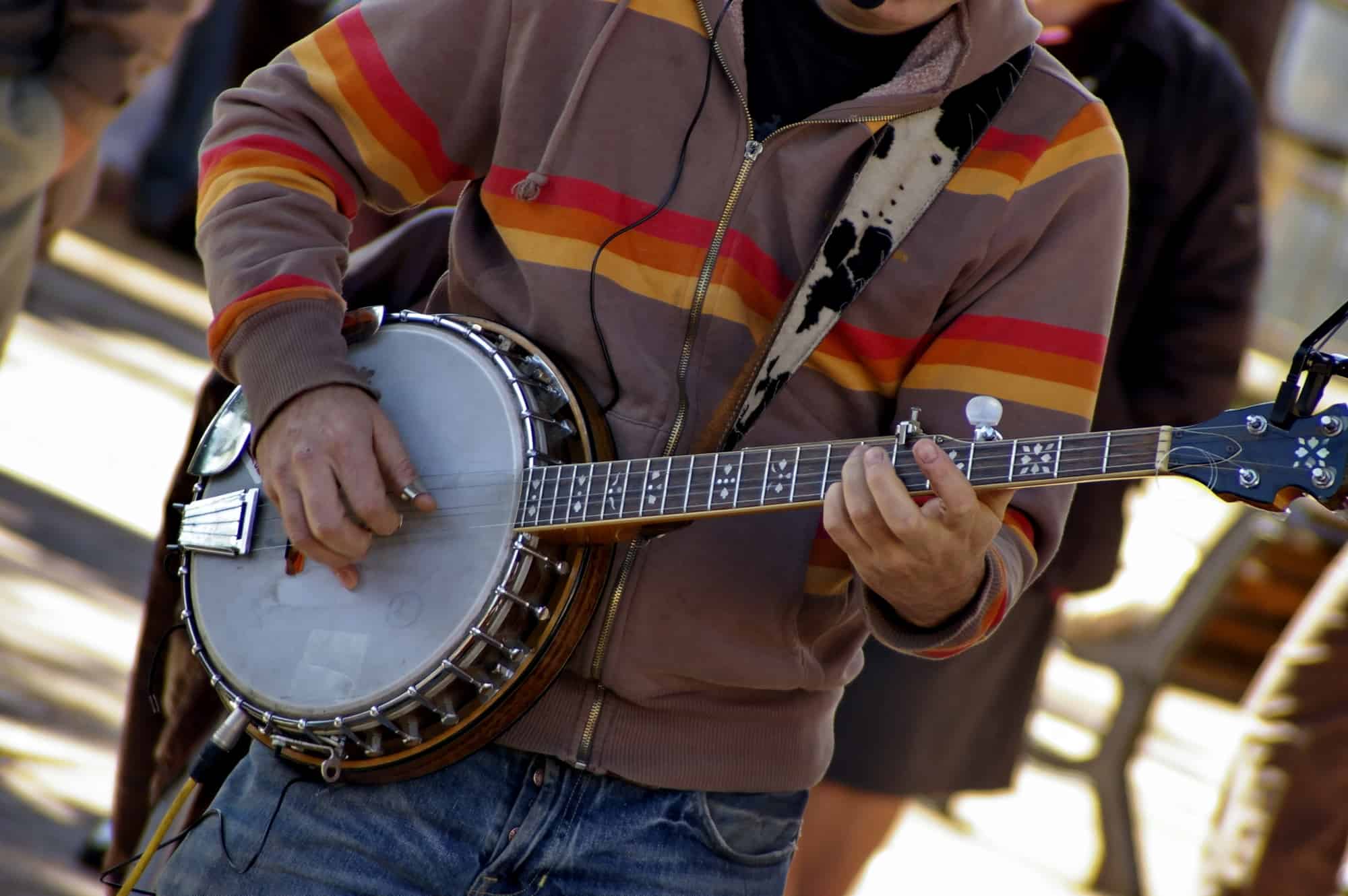
Best Banjo Strap: The Ultimate Guide
A banjo strap does more than hold your instrument. The right one distributes weight across your shoulder, keeps the neck at a consistent angle, and lets you play for hours without fatigue. The wrong one digs into your shoulder, slips during performances, or even dampens your tone.
The problem is that banjo straps are not like guitar straps. Banjos attach differently, weigh more, and come in configurations (resonator vs. open-back) that affect which straps work. This guide covers the two main strap types, what materials actually matter, and specific recommendations based on how you play.
Cradle Straps vs. Hook Straps: The Fundamental Choice
Before you look at brands or materials, you need to understand the two attachment systems. This is the single most important decision when choosing a banjo strap.
Cradle Straps
A cradle strap wraps around the bottom of the banjo pot (the round body), cradling the instrument from below. It typically attaches to the bracket hooks on the rim and passes underneath the resonator or pot.
Best for:
- Heavy banjos with tone rings (10+ lbs)
- Standing performance where you need the banjo to stay locked in position
- Players who want the most secure hold possible
Drawbacks:
- Bulkier and harder to store in a case with the strap attached
- Some players report that a tight cradle pressing against the head or resonator can dampen the banjo’s tone
- More expensive, typically $40-$80+
Popular cradle straps include the Lakota Leathers 3-inch cradle strap, which gets consistent praise on forums for heavy banjos like Gibson Mastertones, and the Deering leather cradle strap, which is one of the more affordable leather options.
Hook Straps
Hook straps attach to two bracket hooks on the banjo’s rim using metal hooks, ties, or leather loops. The strap goes over your shoulder and connects at two points on the rim rather than wrapping around the pot.
Best for:
- Lighter banjos and open-back banjos
- Players who want to quickly remove the strap for case storage
- Bluegrass players who prefer the traditional look (this is what most pros use on stage)
Drawbacks:
- All the weight hangs from two hooks, which puts more stress on those specific bracket points
- Less secure for very heavy instruments
- Can shift position more than a cradle strap
The Huber leather banjo strap is a well-regarded hook strap among serious players. Professional bluegrass musicians like Ben Clark and Russ Carson use hook-style straps even with heavy banjos, which shows that the “you must use a cradle for heavy banjos” rule is not absolute.
Best Banjo Straps by Category
Best for Comfort: Neotech Mega Banjo Strap
The Neotech Mega Banjo Strap uses memory foam padding and a wide neoprene design that distributes weight better than any leather strap can. It also wicks moisture, which matters during long sets under stage lights.
At 3 inches wide with thick padding, it takes the edge off heavy resonator banjos. The hook attachment system is straightforward, and the strap is light enough that it does not add noticeable weight. The main complaint is that it can be too short for larger players, so check the length range before ordering.
If you play for more than an hour at a time or have shoulder issues, this is the strap to get.
Best Value: Neotech Super Banjo Strap
The Neotech Super Banjo Strap uses similar neoprene technology to the Mega but in a slimmer, more affordable package. It has a wider adjustment range, which means it accommodates more body types.
It lacks the memory foam of the Mega, but the neoprene still provides more cushion than basic leather or nylon straps. For players who want Neotech’s comfort without spending $40+, this is the practical choice.
One thing to note: some players find this strap too long at its maximum extension. If you are on the shorter side, that is actually an advantage since you will have plenty of room to find the right position.
Best for Style: Levy’s Leathers M10HT Hootenanny
The Levy’s M10HT Hootenanny is a jacquard-woven strap that comes in multiple patterns, from vintage Americana designs to bold geometric prints. It looks great on stage and at jams.
The tri-glide adjustment buckle makes length changes easy mid-session. At 2 inches wide, it is narrower than the Neotech options, which means less padding but a cleaner visual profile. This strap works best for lighter banjos or shorter playing sessions where comfort is not the top priority.
Best Leather Option: Levy’s Leathers PM14
The Levy’s PM14 is a 2.5-inch wide leather strap available in five colors. It is adjustable and has the classic look that works with both vintage and modern instruments.
Leather straps break in over time and conform to your shoulder, which some players prefer to the instant comfort of neoprene. The PM14 is a mid-range option that works well for players who want leather without paying premium prices. The trade-off is that the leather quality is not as refined as high-end options from Lakota or Huber.
Best for Character: 1to1music Celtic Leather Banjo Strap
The 1to1music Celtic Leather Banjo Strap features embossed Celtic knotwork on padded leather. It handles weight well thanks to decent padding and the wider design.
The Celtic design is distinctive and pairs well with open-back banjos used in folk and Celtic music. The main concern with this strap is long-term durability. Some users report that the decorative layer can separate over time, so treat it with leather conditioner periodically.
What to Look for When Choosing a Banjo Strap
Width
Wider straps distribute weight over a larger area of your shoulder, which reduces pressure points. As a general rule:
- 2 inches is the minimum for comfortable playing
- 2.5 inches is a good all-around width
- 3 inches or wider is ideal for heavy banjos or long playing sessions
Narrow straps may look sleek, but they concentrate weight on a smaller area. If your banjo weighs more than 8 pounds, go with at least 2.5 inches.
Material
Each material has trade-offs:
- Leather: Durable, breaks in over time, looks classic. Heavier than synthetics. Ranges from stiff (new) to supple (broken in). Quality varies enormously by price point.
- Neoprene: Lightweight, cushioned, moisture-wicking. Best for pure comfort. Does not have the traditional look some players want.
- Nylon/polyester: Cheapest option, lightweight, durable. Minimal padding. Fine for light banjos or casual playing.
- Suede: Grips well against clothing (less sliding), soft. Can wear faster than smooth leather.
Padding
Padding matters more than most players realize until they have played a two-hour gig with an unpadded strap. Memory foam (like the Neotech Mega) provides the most cushion. Leather padding breaks in and molds to your shoulder. No padding works fine for lightweight open-back banjos under 6 pounds.
Length and Adjustability
Measure before you buy. Sit or stand in your playing position, have someone measure from the strap attachment point over your shoulder and back to the other attachment point. Add a few inches for adjustment room.
Most straps adjust between 38 and 56 inches. If you are particularly tall or large, check the maximum length. If you are shorter, check the minimum, as some straps cannot cinch down short enough.
Can You Use a Guitar Strap on a Banjo?
Not easily. Guitar straps have leather tabs or plastic ends designed to slip over strap buttons. Most banjos do not have strap buttons. Instead, they use bracket hooks on the rim as attachment points.
Banjo straps typically use metal hooks, leather ties, or cord loops to connect to these bracket hooks. If your guitar strap has hook-compatible ends, it could work, but this is uncommon. Rather than trying to adapt a guitar strap, get a proper banjo strap. They are purpose-built for the attachment system and weight distribution that banjos require.
If your banjo does have strap buttons installed (some modern models do), then a guitar strap will technically fit. But you will still miss out on the weight distribution designed specifically for the banjo’s heavier, rounder body.
How to Attach a Banjo Strap
Strap attachment varies by type. Cradle straps loop around the pot and connect to bracket hooks. Hook straps clip directly onto two bracket hooks, usually at the 2 o’clock and 10 o’clock positions on the rim.
We have a detailed walkthrough in our how to attach a banjo strap guide, including tips for both resonator and open-back banjos.
The key thing: make sure the hooks are secure before you stand up. A banjo dropping to the floor is an expensive lesson in strap attachment.
Tips for New Banjo Players
If you are just starting out on banjo, here are some practical strap tips:
- Start with a strap from day one. Even if you only play sitting down, a strap keeps the banjo stable and lets you focus on your fretting and picking hand rather than holding the instrument in place.
- Match the strap to your banjo’s weight. Lightweight starter banjos (under 6 lbs) work fine with basic nylon straps. Heavier instruments with tone rings need wider, padded straps.
- Check case compatibility. If you want to leave the strap attached when you put your banjo in the case, choose a thinner, more flexible strap. Thick padded straps often prevent the case from closing, which means you will either damage the strap or stop using it. The Neotech Super is flexible enough to stay on in most cases.
- Pair your strap with fresh strings and a reliable tuner. A new strap changes your playing angle slightly, which is a good time to re-evaluate your overall setup.
The Bottom Line
For most players, the Neotech Mega Banjo Strap is the best overall choice. Its memory foam padding and neoprene construction provide comfort that leather straps simply cannot match out of the box. It works well for both practice and performance.
If budget is a concern, the Neotech Super Banjo Strap delivers similar comfort for less money. For players who prefer the look and feel of leather, the Levy’s PM14 is a solid mid-range option, or step up to a Lakota Leathers cradle strap if you have a heavy resonator banjo and want the most secure hold possible.
Whatever you choose, prioritize width and padding over looks. Your shoulder will thank you after the first long jam session.