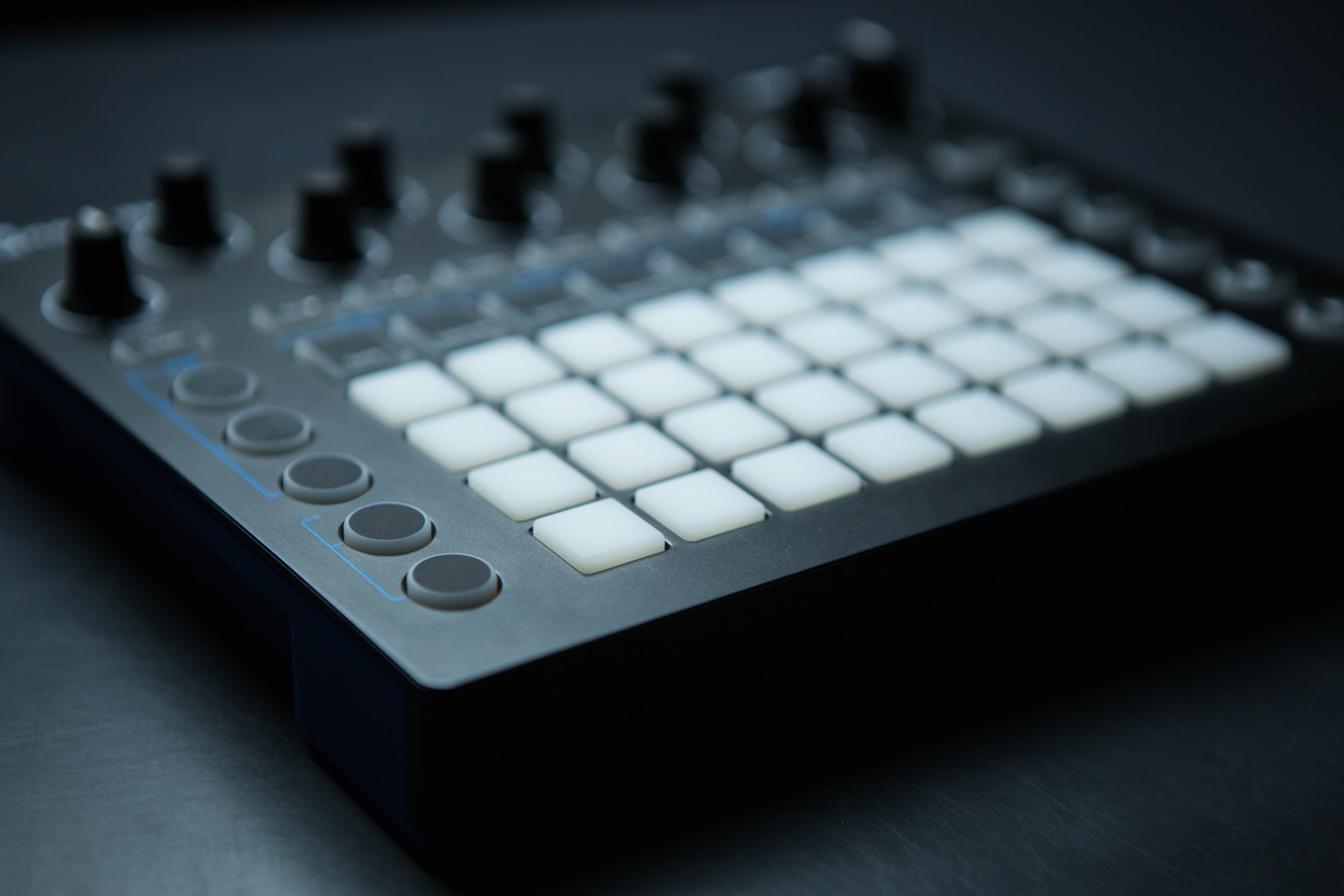
The Best Drum Machine To Drop The Beat in 2025
The drum machine market in 2025 is the strongest it has been in years. Roland released the TR-1000 (a hybrid monster combining circuits from every TR machine they have ever made), Elektron dropped the Tonverk multi-sampler, and Akai shipped the MPC Live III. Meanwhile, proven workhorses like the Roland TR-8S and Elektron Analog Rytm MKII continue to hold their ground.
This guide covers hardware drum machines across three price tiers. Every pick here works as a standalone instrument — no laptop required to start making beats.
Best Budget Drum Machines (Under $350)
Korg Volca Beats — Best Entry Point
Price: ~$150 | Buy on Amazon
The Volca Beats is the cheapest way to get real analog drum sounds in hardware form. It has a 16-step sequencer, six analog parts (kick, snare, two hats, two toms), a stutter effect for live fills, and sync I/O for chaining with other Volca units.
The kick and snare sound punchy for the price. The hi-hats are PCM samples rather than analog, which is a compromise at this price point, but they sit well enough in a mix. The built-in speaker is tinny (use headphones or connect to a mixer), and you cannot load external samples.
Best for: Beginners who want to learn step sequencing on real hardware without spending $500+. Pairs well with the Korg Volca Drum if you want a second unit for experimental percussion sounds.
Arturia DrumBrute Impact — Best Analog Under $300
Price: ~$300 | Buy on Amazon
The DrumBrute Impact gives you 10 pure analog voices, a 64-step sequencer with polyrhythm support, and a “Color” circuit that adds distortion and saturation per-voice. Individual audio outputs for the kick, snares, hats, and FM sound mean you can process each element separately in your DAW or on a mixer.
The sound set is focused: a fat kick, two snares with different characters, toms, hats, a cymbal, and an FM drum voice for metallic textures. The “Roller” touch strips let you create fills and build tension in real time, which makes this a strong choice for live performance.
The sequencer’s swing and randomness controls encourage experimentation. At this price, there is nothing else with this level of hands-on analog control.
Best for: Techno, industrial, and anyone who wants gritty analog drums with individual outputs. If you are also looking at drum pads for finger drumming, the DrumBrute Impact covers different ground — it is a sequencer-first instrument, not a pad controller.
Elektron Model:Samples — Best for Fun
Price: ~$350 | Buy on Amazon
The Model:Samples is a six-track sample-based groovebox with Elektron’s parameter-lock sequencer. It ships with a solid factory sound library, but you can load your own samples via USB. Each track gets its own filter, LFO, and delay/reverb send.
The real draw is Elektron’s sequencer workflow. Parameter locks let you change any knob setting on a per-step basis, so a single pattern can evolve dramatically across 64 steps. The learning curve is steeper than the Volca or DrumBrute, but once it clicks, you can build complex, shifting beats faster than on almost any other hardware.
Best for: Electronic producers who want the Elektron workflow without the Elektron price tag. It also works as a sample playback engine for chopped loops and one-shots.
Best Mid-Range Drum Machines ($500—$1,000)
Roland TR-8S — Best All-Rounder
Price: ~$900 | Buy on Amazon
The TR-8S is Roland’s flagship desktop drum machine and the one most working producers reach for. It combines ACB (Analog Circuit Behavior) models of the 808, 909, 707, 606, and other classic Roland machines with a sample import engine that lets you load your own sounds.
Each of the 11 tracks has a dedicated knob for tuning, decay, and one assignable parameter. There are separate audio outputs for every track, plus a master effects bus with delay, reverb, and a side-chain compressor. The MIDI implementation is thorough — it sends and receives on all channels, making it a solid hub for a hardware setup.
The TR-8S runs on Roland’s ZEN-Core platform, so you also get access to FM and virtual analog drum synthesis beyond the classic emulations. The sequencer supports probability, sub-steps, and per-step effects, which keeps patterns from sounding static.
Best for: Studio production and live performance across any genre. If you want one drum machine that does everything competently, this is it. It integrates well with Ableton controllers if you are running a hybrid hardware/software setup.
Akai MPC One+ — Best Standalone Production
Price: ~$700 | Buy on Amazon
The MPC One+ is not just a drum machine — it is a full production workstation with the same multi-core processor as Akai’s flagship MPC X. You get 16 velocity-sensitive pads, a 7-inch touchscreen, WiFi, Bluetooth, and 16 GB of onboard storage.
The pad workflow will be familiar if you have used any MPC before. Chop samples, assign them to pads, sequence patterns, arrange songs — all without touching a computer. The built-in plugins cover synths, effects, and drum kits. You can also load third-party samples and even run Akai’s desktop software in controller mode when you do want DAW integration.
The MPC One+ has fewer outputs than the full-size MPC X (stereo main out plus a stereo headphone out, with more available over USB audio), so if you need individual outs for every pad, look at the MPC Live III or the X. For most bedroom producers and beat-makers, the One+ is the sweet spot.
Best for: Beat-makers and hip-hop producers who want a self-contained production tool. The MPC workflow is built for sampling from turntables and chopping breaks, which is harder to replicate on sequencer-first machines like the TR-8S.
Best Premium Drum Machines ($1,000+)
Elektron Analog Rytm MKII — Best Sound Engine
Price: ~$2,300 | Buy on Amazon
The Analog Rytm MKII is an eight-voice analog drum machine with sample layering, a 13-track sequencer, and Elektron’s full parameter-lock workflow. Each voice has its own analog filter, overdrive, and dedicated compressor. The 12 velocity-and-pressure-sensitive pads are large enough for actual finger drumming, not just step input.
The sound is where this machine earns its price. The analog engines produce tight, punchy drums with serious low-end weight. Layer a sample on top of any analog voice and you can create sounds that sit somewhere between organic and synthetic — useful for everything from techno to film scoring. The built-in reverb and delay are high quality, and the analog distortion on the master bus can push everything from subtle warmth to full destruction.
The Elektron sequencer is deep. Conditional trigs, micro-timing, and per-step parameter locks mean a single 64-step pattern can generate rhythms that never quite repeat the same way. The MKII adds Overbridge support, which lets you stream individual tracks as separate audio channels into your DAW over USB.
Best for: Producers who want the best-sounding analog drum machine currently available and are willing to invest time learning Elektron’s workflow. The learning curve is real but rewards patience.
Roland TR-1000 — Best Hybrid Powerhouse
Price: ~$1,500 | Check availability at Sweetwater
Roland’s TR-1000 arrived in 2025 as the most comprehensive TR machine ever built. It packs ACB models from 16 different Roland drum machines, plus FM percussion, virtual analog synthesis, and a full sampling engine with stereo recording, time-stretching, and slice editing.
Each track has its own sound generator, compressor, and multi-mode filter/EQ. Four tracks can layer two sound generators simultaneously, which opens up layered kick and snare designs that were previously only possible in a DAW. The sequencer carries over from the TR-8S but adds deeper probability and fill controls.
This is a lot of machine. If you just want classic 808/909 sounds, the TR-8S does 80% of what the TR-1000 does for 60% of the price. The TR-1000 justifies its cost if you need the sampling engine, the expanded synthesis options, or you want a single unit that replaces multiple boxes.
Best for: Experienced producers and live performers who want one drum machine to cover every sonic territory. It is overkill for beginners.
How to Choose the Right Drum Machine
Decide on Your Sound Source
Drum machines generate sound in one of three ways, and each has real trade-offs:
Analog synthesis creates sounds through electrical circuits. Machines like the Arturia DrumBrute Impact and Elektron Analog Rytm MKII generate kicks, snares, and hats from oscillators and filters. The result is warm, punchy, and slightly different every time you trigger it. The downside is limited sound variety — you get drum sounds and that is about it.
Digital synthesis uses algorithms (FM, virtual analog, physical modeling) to generate sounds. The Korg Volca Drum and the synthesis side of the Roland TR-8S fall here. Digital synthesis can produce a wider range of sounds than analog, including textures that do not exist in the physical world.
Sample playback triggers pre-recorded audio files. The Akai MPC One+, Elektron Model:Samples, and the sampling engine in the Roland TR-1000 all work this way. You can load any sound — acoustic drums, field recordings, vocal chops — which gives you unlimited sonic range, but the sounds are static unless you layer processing on top.
Most modern drum machines combine two or more of these approaches. The Analog Rytm MKII layers analog synthesis with sample playback. The TR-8S combines digital modeling with sample import. Hybrid machines cost more but save you from buying multiple units.
Match Features to Your Workflow
If you play live: Prioritize hands-on controls, large pads, and the ability to save and recall kits quickly. The TR-8S and Analog Rytm MKII both excel here. Avoid machines that require menu diving to switch sounds mid-performance.
If you produce in a studio: Look for individual audio outputs (so you can mix each drum sound on its own channel), USB audio streaming, and a deep sequencer. The Analog Rytm MKII’s Overbridge and the TR-8S’s USB audio both let you record multi-track directly into your DAW.
If you are a beginner: Start with something affordable that works standalone. The Korg Volca Beats or Arturia DrumBrute Impact will teach you step sequencing and sound shaping without overwhelming you. You can always sell them later and move up — both hold their resale value reasonably well.
If you make hip-hop or sample-based music: The MPC One+ is the natural choice. Its pad workflow and sample-chopping tools are purpose-built for this style. Combine it with a turntable for sampling vinyl and you have a complete beat-making station.
Connectivity Checklist
Before you buy, verify that your chosen machine has the connections you need:
- MIDI (5-pin DIN or TRS): Essential if you want to sync with other hardware synths or a DAW. Almost all current drum machines include this, but check.
- USB: For audio streaming, sample transfer, and DAW control. USB-C is increasingly standard; older models may use USB-B.
- Individual audio outputs: Critical for multi-track recording and live sound. Budget machines (Volca, Model:Samples) typically have a single stereo output. Premium machines (TR-8S, Analog Rytm MKII) offer per-track outputs.
- Sync (clock in/out): Useful for chaining machines together. The Volca series uses 3.5mm sync, which works with other Korg gear but needs an adapter for everything else.
What About Software Drum Machines?
Plugin drum machines like XLN Audio XO, Native Instruments Battery, and Ableton’s built-in Drum Rack offer more sounds and deeper editing for less money than most hardware. If you are on a tight budget and already own a laptop, software is the practical choice.
Hardware drum machines exist for a different reason: immediacy. Turning a physical knob, tapping a pad, and hearing the result with zero latency creates a feedback loop that makes you play differently than clicking a mouse does. That tactile connection is why hardware drum machines continue to sell well even as software gets better every year.
If you are unsure which direction to go, start with software to learn the fundamentals, then add hardware once you know what workflow you prefer.
The Bottom Line
For most people, the Roland TR-8S is the best drum machine to buy right now. It covers the widest range of sounds and use cases at a reasonable price, works equally well in the studio and on stage, and has enough depth to grow with you for years.
If your budget is under $300, the Arturia DrumBrute Impact gives you the most hands-on analog experience at that price. If money is no object and you want the best-sounding analog drum machine made today, the Elektron Analog Rytm MKII is the one to beat.