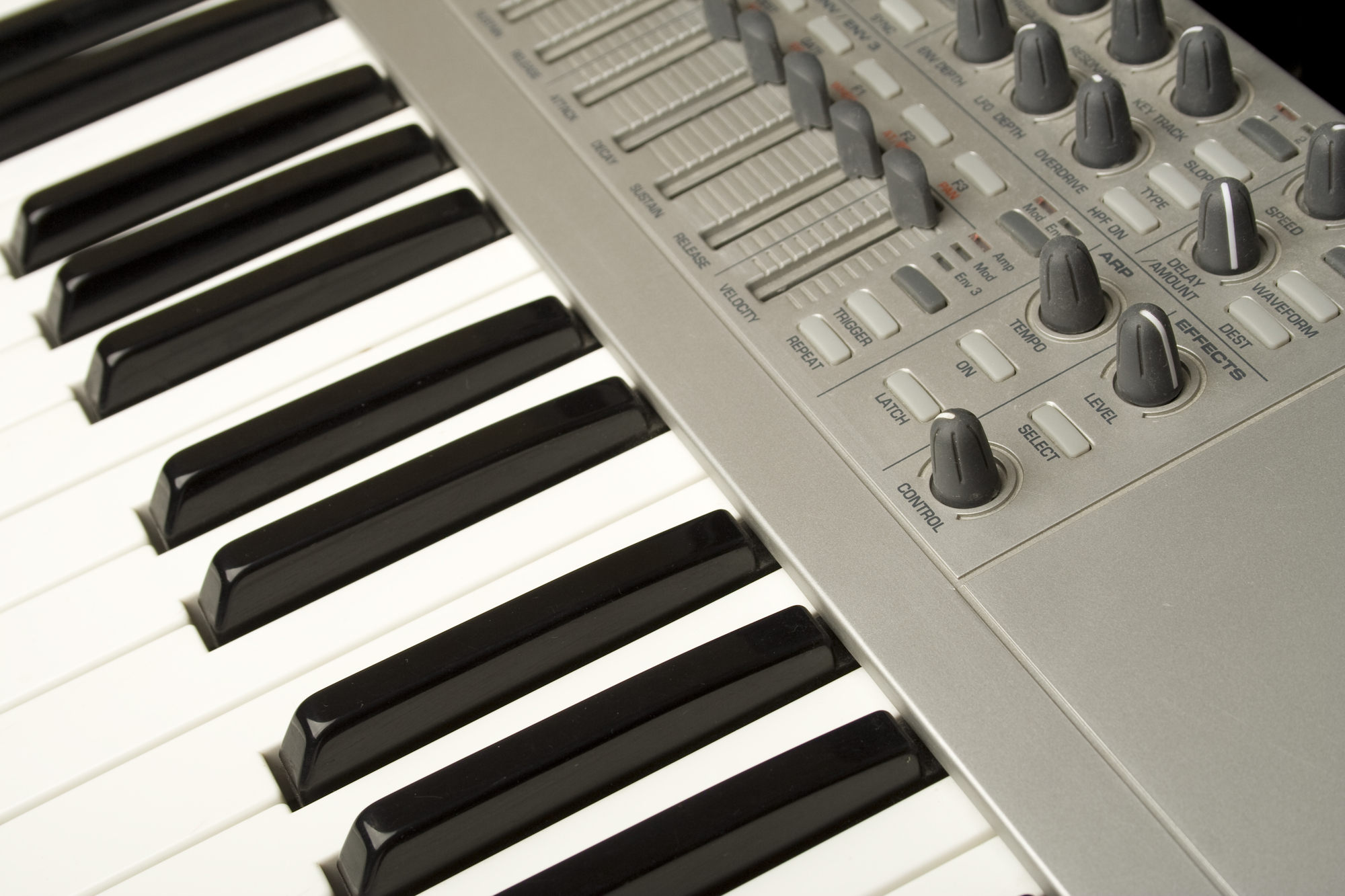
The Best Keyboard Workstation in 2025
A keyboard workstation puts a full production studio under your fingers: multiple sound engines, a built-in sequencer, effects processing, and (on modern models) a USB audio interface that can replace your external one. If you write, produce, or perform music and want to do it without a laptop open, a workstation is the fastest way to capture ideas and turn them into finished tracks.
Below are the best keyboard workstations currently available, followed by a buying guide that covers what actually matters when choosing one.
Best Keyboard Workstations at a Glance
| Model | Best For | Keys | Polyphony | Street Price |
|---|---|---|---|---|
| Kurzweil K2700 | Best overall sound quality | 88, fully weighted | 256 voices | ~$2,800 |
| Roland FANTOM-8 EX | Best workflow and interface | 88, graded hammer | 256 (ZEN-Core) | ~$4,000 |
| Yamaha Montage M8x | Best for layered sound design | 88, polyphonic aftertouch | 400 combined | ~$4,500 |
| Korg Nautilus 88 | Best value for the money | 88, RH3 weighted | Varies by engine | ~$2,000 |
| Akai MPC Key 61 | Best for beat-making producers | 61, semi-weighted | N/A (sample-based) | ~$1,500 |
| Roland JUNO-DS88 | Best lightweight option | 88, weighted | 128 voices | ~$1,100 |
Kurzweil K2700 — Best Overall
The K2700 earns the top spot for one reason: its stock sounds are exceptional out of the box. The acoustic pianos are bright and expressive, the electric pianos are lush, and the bass and guitar patches are the most convincing you will find in any workstation today.
Under the hood, the K2700 runs four sound engines — Dynamic VAST, 6-operator FM synthesis, KB3 ToneReal organ, and VA1 virtual analog. That breadth means you can cover everything from realistic orchestral patches to aggressive synth leads without loading external samples.
Key specs:
- 88 fully weighted keys with aftertouch
- 256-voice polyphony
- 4.5 GB factory sounds plus 3.5 GB user sample memory
- Built-in USB audio interface (no external interface needed for recording)
- 16-track sequencer with 16 trigger pads
- 6-operator FM synthesis engine
Who it is for: Producers and composers who want the best internal sounds without endless tweaking. If you plug in and want to immediately start writing with realistic, studio-ready tones, the K2700 delivers.
Trade-off: The interface is functional but not as visually slick as the Roland FANTOM’s touchscreen. Sound design is deep but less intuitive for synth-heavy producers.
Roland FANTOM-8 EX — Best Workflow
The FANTOM-8 EX is Roland’s flagship, and its biggest advantage is workflow. The large color touchscreen makes patch browsing, sound editing, and sequencing feel more like working in a DAW than navigating nested menus. If you want to capture ideas fast, this is the most frictionless workstation you can buy.
Roland packed four distinct sound engines into the FANTOM: ZEN-Core (their latest sample + virtual analog hybrid), SuperNATURAL acoustic modeling, V-Piano physical modeling, and a VTW organ engine. The pads and the ZEN-Core drum kits are particularly strong — producers who split time between keys and beats will feel at home here.
Key specs:
- 88 graded hammer keys with aftertouch
- 256-voice polyphony (ZEN-Core), plus modeled V-Piano voices
- Large color touchscreen with clip-based and TR-REC sequencing
- 16x3 USB audio interface
- 16 RGB velocity-sensitive pads
- Expandable sound content via Roland Cloud
Who it is for: Performers and producers who want a modern, visual workflow. The FANTOM is ideal for live sets where you need to switch between scenes quickly, and for studio sessions where you want to sketch out arrangements without reaching for a mouse.
Trade-off: Expensive. The stock piano sounds are good but not quite at the Kurzweil or Yamaha level. You will likely spend time downloading additional content from Roland Cloud.
Yamaha Montage M8x — Best for Sound Design
The Montage M8x is Yamaha’s answer to everything. It runs three sound engines simultaneously — AWM2 (sample playback), FM-X (8-operator FM synthesis), and the new AN-X (virtual analog) — giving it the broadest sonic palette of any workstation on this list.
The standout feature is polyphonic aftertouch. Press harder on individual notes within a chord and you can control vibrato, filter cutoff, or effect depth per-note. Combined with the Super Knob (a macro controller that can morph multiple parameters at once), the Montage M8x is built for expressive, evolving sound design.
Key specs:
- 88 GEX keys with polyphonic aftertouch
- Combined 400-note polyphony (256 AWM2 + 128 FM-X + 16 AN-X)
- 9.97 GB wave ROM plus 3.8 GB user memory
- Super Knob for real-time macro control
- 6-in/32-out USB audio interface
- Pattern sequencer with scene memory
Who it is for: Sound designers, film/TV composers, and keyboardists who want maximum expression. The polyphonic aftertouch alone sets the Montage apart for anyone who values nuance in their playing.
Trade-off: The most expensive option here. The sequencer is capable but not as intuitive as the FANTOM’s clip-based approach. Some users find that stock presets lean heavily on reverb.
Korg Nautilus 88 — Best Value
The Nautilus is a streamlined version of Korg’s legendary Kronos, and it is the best workstation you can get under $2,500. It runs nine different sound engines — including the SGX-2 premium piano, CX-3 tonewheel organ, and the MS-20EX and PolysixEX virtual analog engines pulled from classic Korg synths.
That engine count gives the Nautilus a wider range of synthesis methods than any competitor at this price. The open sampling system lets you record audio directly into the workstation and play it back chromatically across the keyboard, which is useful for building custom patches from real-world sounds.
Key specs:
- Available in 61, 73 (light-touch), or 88 (RH3 weighted) key configurations
- 9 sound engines (SGX-2, EP-1, CX-3, HD-1, AL-1, MOD-7, MS-20EX, PolysixEX, STR-1)
- 3 GB RAM plus 60 GB SSD for sample storage
- 16-track MIDI sequencer plus 16-track audio recorder
- Open sampling with real-time resampling
- Set List mode for live performance
Who it is for: Working musicians and gigging keyboardists who want a do-everything workstation without spending FANTOM or Montage money. The Set List mode makes it a strong live performance choice. If you are coming from a keyboard arranger background and want to step up, the Nautilus is a natural upgrade.
Trade-off: The touchscreen is smaller and less responsive than the FANTOM’s. The aftertouch model (AT) costs more; the standard version lacks aftertouch entirely.
Akai MPC Key 61 — Best for Beat Producers
The MPC Key 61 is not a traditional workstation — it is a standalone MPC production center with a proper keyboard attached. If your workflow revolves around beat-making, sampling, and hip-hop/electronic production, this is the most capable option on the market.
It runs the full MPC software standalone, with over 10 GB of sound content, drum programs, and plugins built in. The 16 pads are Akai’s best, and the sequencer is clip-based and loop-oriented rather than linear, which suits modern production styles.
Key specs:
- 61 semi-weighted keys
- Full standalone MPC software (no computer required)
- 10+ GB of factory sound content
- 16 velocity-sensitive pads with aftertouch
- 7-inch multi-touch display
- Direct DAW integration via USB (works as a controller too)
- Built-in WiFi and Bluetooth for wireless file transfer
Who it is for: Producers who think in loops and beats rather than linear arrangements. If you already use MPC software or Ableton-style workflows, the Key 61 will feel natural. It is also an excellent Ableton controller when connected to a computer.
Trade-off: The 61 semi-weighted keys are fine for production but will not satisfy serious pianists. No 88-key option. The learning curve is steeper if you are coming from traditional workstation brands.
Roland JUNO-DS88 — Best Lightweight Workstation
At roughly 16 kg (35 lbs), the JUNO-DS88 is the lightest 88-key workstation you can buy. It runs on AC power or eight AA batteries, making it the only workstation on this list that works completely off-grid.
The sound library includes over 1,200 patches with Roland’s SuperNATURAL piano engine. It is not as deep as the FANTOM, but for gigging musicians who need a reliable, portable 88-key workstation with decent sounds, the JUNO-DS88 hits a sweet spot between capability and convenience.
Key specs:
- 88 weighted keys (ivory feel)
- 128-voice polyphony
- 1,200+ onboard patches
- Battery operation (8x AA)
- Lightweight at 16 kg / 35 lbs
- Mic input with vocal effects
- Expandable via free Roland Axial sound packs
Who it is for: Gigging musicians, worship keyboardists, and anyone who needs a full-size weighted keyboard they can carry without a roadie. If portability matters more than deep production features, the JUNO-DS88 is the clear choice. Pair it with a good keyboard amp and you have a complete live rig.
Trade-off: The sequencer and sound design tools are basic compared to the FANTOM or Nautilus. No touchscreen. The built-in speakers are not included — you will need an external amp or headphones.
How to Choose a Keyboard Workstation
Sound Engines Matter More Than Preset Count
Manufacturers love advertising 3,000+ presets, but the number is meaningless if the underlying sound engine is weak. What matters is the type and quality of synthesis.
- Sample playback (AWM2, SuperNATURAL, HD-1): Realistic acoustic instruments — pianos, strings, brass. Yamaha and Kurzweil lead here.
- Virtual analog (AN-X, ZEN-Core, AL-1): Classic synth sounds — leads, basses, pads. Roland and Korg are strong.
- FM synthesis (FM-X, MOD-7): Metallic textures, electric pianos, experimental sounds. The Montage M8x has the most powerful FM engine.
- Physical modeling (V-Piano, SGX-2, STR-1): Instruments modeled from the physics of how they produce sound. Niche but useful for realistic pianos and plucked instruments.
A workstation with multiple engines gives you more range. The Korg Nautilus (9 engines) and Yamaha Montage M8x (3 engines running simultaneously) offer the broadest palettes.
Key Action and Key Count
This is non-negotiable for pianists: if you play classical or jazz, you need 88 fully weighted keys with aftertouch. For production-focused work where you are programming more than performing, 61 semi-weighted keys save space and money.
Key action types ranked by piano realism:
- Graded hammer action (heaviest, most piano-like) — FANTOM-8, Montage M8x
- Fully weighted — Kurzweil K2700, Nautilus 88
- Semi-weighted — Akai MPC Key 61, many 61-key options
- Synth action / unweighted — lightest, fastest for synth playing
If you are coming from an acoustic piano, read our guide to weighted keyboards and pianos before buying a workstation with lighter action. The difference is significant.
Sequencer and Recording
Every workstation has a built-in sequencer, but they work differently:
- Linear sequencers (Kurzweil K2700, Nautilus): Traditional track-by-track recording, similar to a DAW timeline. Best for arranging full songs.
- Clip/pattern-based (FANTOM, Akai MPC): Loop-oriented, great for building ideas quickly and performing live. Closer to Ableton’s workflow.
- Scene-based (Montage M8x): Designed around morphing between sound configurations, ideal for evolving textures and live performance.
If you plan to record vocals or external instruments, check whether the workstation has audio inputs and a built-in audio interface. The K2700, FANTOM, and Montage M8x all function as USB audio interfaces, which means you can record directly into your DAW without extra hardware.
Connectivity
Modern workstations should have:
- USB audio/MIDI for direct DAW connection
- Standard MIDI DIN (5-pin) if you connect to older gear
- Audio outputs (balanced TRS or XLR) for live sound
- Headphone jack for silent practice
- Sustain pedal input (all workstations have this)
- Expression pedal input for real-time control
Some models add mic/line inputs for recording audio internally. The FANTOM and Montage M8x go furthest here, functioning as multi-channel audio interfaces.
Portability and Weight
Workstations are heavy. An 88-key model typically weighs 18-30 kg (40-66 lbs), and that is before the case. If you gig regularly, weight is a real factor:
| Model | Weight |
|---|---|
| Roland JUNO-DS88 | 16 kg / 35 lbs |
| Korg Nautilus 88 | 24 kg / 53 lbs |
| Kurzweil K2700 | 24 kg / 53 lbs |
| Roland FANTOM-8 EX | 24 kg / 53 lbs |
| Yamaha Montage M8x | 29 kg / 64 lbs |
If portability is critical and you do not need 88 keys, consider a 61-key version. Most models (FANTOM-6, Nautilus 61) are available in smaller formats at lower prices and weight. For amplification on the go, check our best keyboard amp guide.
Workstation vs. Arranger vs. Stage Piano: What is the Difference?
These three categories overlap, and manufacturers blur the lines, but the core distinctions matter:
- Workstation: Full sound design tools, deep sequencing, multiple sound engines. Built for creating and producing music. Examples: FANTOM, Montage, K2700.
- Arranger: Auto-accompaniment styles, one-touch backing bands, built-in speakers on some models. Built for solo performers and entertainers. Example: Yamaha Genos. Read more in our arranger keyboard guide.
- Stage piano: Focused on realistic piano and electric piano sounds with minimal production features. Built for live performance pianists. See our guide to digital pianos for advanced players.
If you want to write and produce complete songs on the hardware itself, you want a workstation. If you mainly need backing tracks for live gigs, an arranger may be more practical.
Frequently Asked Questions
Can a keyboard workstation replace a DAW?
For writing, arranging, and demoing — yes. Modern workstations like the FANTOM and Montage have sequencers, effects, and mixing tools that handle complete productions. For final mixing, mastering, and heavy editing, most producers still move to a DAW. The built-in USB audio interfaces on current workstations make that transfer seamless.
Do I need 88 keys?
If you play piano repertoire or need the full range for orchestral writing, yes. For synth playing, production work, and most pop/rock/electronic music, 61 or 73 keys are enough. The money you save on a 61-key model can go toward better monitors or headphones.
Are older workstations still worth buying used?
The Korg Kronos, Yamaha Montage (original), and Roland FA-08 are all solid used buys. The Kronos in particular still has one of the deepest sound engines ever put in a workstation. Just confirm the firmware is updated and all keys/faders work before purchasing.
What about the Yamaha Genos?
The Genos is technically an arranger, not a workstation, even though it has powerful sound engines and deep editing. If your primary use is solo live performance with auto-accompaniment, the Genos is excellent. For songwriting and production, a true workstation gives you more flexibility. We cover the Genos in our arranger keyboard guide.
Bottom Line
The Kurzweil K2700 is the best keyboard workstation for most musicians — it has the strongest stock sounds, a built-in audio interface, and deep synthesis at a price below the FANTOM and Montage. If workflow and visual feedback matter most, the Roland FANTOM-8 EX is the pick. For the best value, the Korg Nautilus packs nine sound engines into a sub-$2,500 package that is hard to beat.
Whatever you choose, a workstation is worth the investment if you want to create complete music without being tethered to a computer screen. The instruments on this list will serve you for years.