The Best Mandolin Under 1000 Dollars To Start Your Journey in 2025
The sub-thousand-dollar mandolin market has gotten remarkably good. Brands like Eastman, Kentucky, and The Loar are building instruments with solid tonewoods, hand-carved tops, and real playability that would have cost twice as much a decade ago.
Whether you are picking up mandolin for the first time, stepping up from a starter instrument, or adding a second mandolin to your collection, this price range hits a sweet spot. You get instruments built with genuine craftsmanship without entering the world of custom luthier builds.
Here is what actually matters when choosing a mandolin in this range, followed by specific models worth your attention.
What to Look For in a Mandolin Under 1000
Before diving into specific models, understanding a few key construction details will save you from overpaying for features that do not matter and underpaying for ones that do.
A-Style vs. F-Style Body
This is the most visible choice you will make, and it is mostly cosmetic.
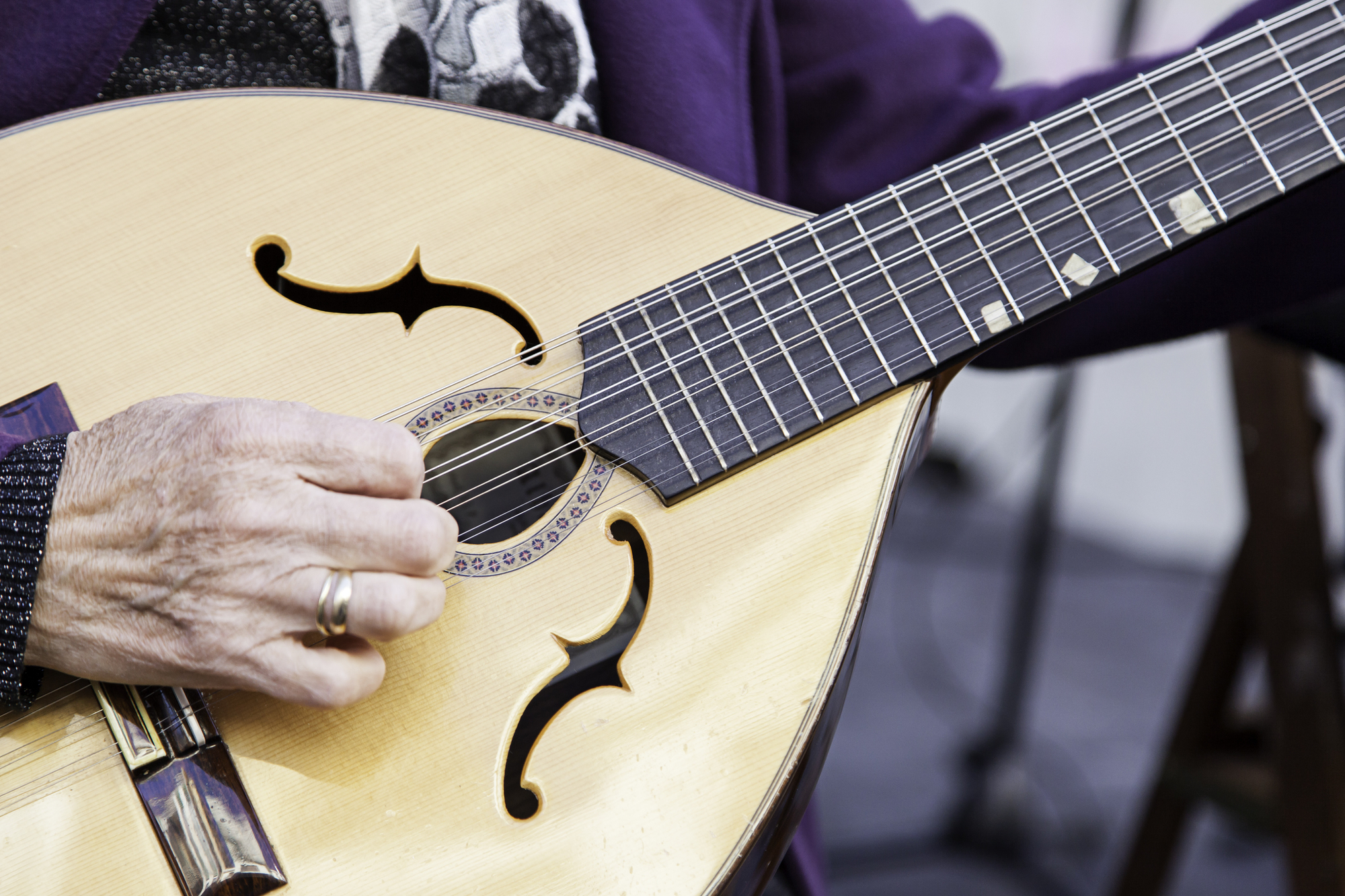
A-style mandolins have a teardrop or pear-shaped body. They are simpler to build, which means more of your money goes into wood quality and construction rather than ornamental features. For bluegrass, folk, Celtic, or any genre really, an A-style instrument delivers the same core sound.
F-style mandolins have the iconic scroll and points that most people associate with bluegrass. The scroll and decorative curl require additional handwork, which drives the price up. At this budget level, that extra cost means you may be getting slightly lower-grade wood or construction to keep the overall price down.
The practical takeaway: if you want the best-sounding instrument for your money, A-style gives you more bang for your buck. If the F-style look matters to you (and it matters to a lot of players), just know what the tradeoff is. There is a strong consensus among experienced mandolin players on forums like Mandolin Cafe that A-style delivers better value in this price bracket.
Solid Wood vs. Laminate Construction
This is where the real tonal differences live.
Solid wood tops (especially spruce) vibrate more freely and produce a richer, more complex tone that improves as the instrument ages and the wood opens up. A solid spruce top is the single most important feature to prioritize.
Laminate (layers of pressed wood) is cheaper to manufacture and more durable, but it does not resonate the same way. Laminate backs and sides are acceptable at this price point, and many good mandolins use them. But a laminate top is a significant compromise.
Hand-carved vs. pressed tops also matter. A hand-carved solid spruce top will project better and have more tonal depth than a pressed one. Several mandolins in this range offer hand-carved tops, which is a major upgrade from budget instruments.
Tonewoods That Matter
The wood combinations you will see most often at this price level:
- Spruce top — The standard for mandolin tops. Bright, clear, and responsive. Sitka spruce and Engelmann spruce are the most common. German spruce (used in some Kentucky models) is considered a step up.
- Maple back and sides — The classic pairing with spruce. Maple reflects sound efficiently and adds brightness and punch. This is the combination you will find in nearly every serious mandolin.
- Mahogany back and sides — An alternative to maple that produces a warmer, darker tone. Less traditional for mandolin, but some players prefer it for folk and singer-songwriter styles.
- Ebony fretboard and bridge — The premium choice. Smooth, dense, and long-lasting. Rosewood is the common alternative and plays perfectly well.
For a deeper look at how tonewoods shape instrument sound, the Guild of American Luthiers is a solid resource.
Setup and Playability
Many mandolins in this range ship needing a setup. The action (string height) may be too high, the bridge may need adjustment, or the nut slots may need filing. Budget for a professional setup if you are not comfortable doing it yourself. A good setup from a local luthier runs relatively cheap and transforms how an instrument plays.
Key playability factors to look for:
- Adjustable bridge — Lets you dial in string height without replacing parts
- Neck profile — Slimmer necks are easier for players with smaller hands or those coming from guitar
- Fret quality — Look for well-dressed frets with no sharp edges along the fretboard
Best Mandolins Under 1000: Our Picks
Eastman MD305 — Best Overall A-Style
The Eastman MD305 is the mandolin that keeps showing up in every recommendation thread, review roundup, and music shop suggestion for good reason. It features a hand-carved solid spruce top and solid maple back and sides, with an adjustable ebony bridge and rosewood fretboard. The construction quality punches well above its weight.
Eastman builds their instruments in a workshop setting rather than a fully automated factory, and the difference shows in fit and finish. The MD305 has a balanced, warm tone with good projection that improves as you play it in. It is one of the few mandolins at this price with all-solid wood construction.
If you want one recommendation and do not want to overthink it, the Eastman MD305 on Amazon is the safest bet.
Why it stands out: All-solid wood construction, hand-carved top, excellent factory setup, and a reputation for consistency across individual instruments.
Eastman MD315 — Best F-Style for the Money
If you want the F-style look without sacrificing build quality, the MD315 is the Eastman equivalent. Same solid spruce top and maple construction as the MD305, but with the scroll and points. It also features F-holes instead of the oval sound hole, which gives it a slightly more focused, punchy tone that bluegrass players often prefer.
The Eastman MD315 usually sits near the top of this budget range, but the all-solid construction and hand-carved top justify it. It competes with mandolins that cost significantly more.
Why it stands out: All-solid F-style with hand-carved top at a price point where most F-styles cut corners on wood quality.
Kentucky KM-150 — Best Value A-Style
Kentucky has been building mandolins for decades, and the KM-150 is one of their most popular models for good reason. It features a solid German spruce top and solid alpine maple back and sides. The glossy finish is attractive, and the slim neck profile makes it comfortable to play for extended sessions.
The KM-150 has a bright, punchy tone with strong projection. It responds well to different picking styles, from gentle fingerpicking to aggressive bluegrass chops. One thing to know: it requires some assembly and setup out of the box, which is not always clearly stated where the instrument is sold. Factor in a trip to a luthier or plan to do the setup yourself.
Check the Kentucky KM-150 on Amazon for current availability.
Why it stands out: German spruce and alpine maple at a mid-range price. Slim neck for comfortable playing. Strong resonance for its size.
The Loar LM-520-VS Performer — Best F-Style Under 1000
The Loar has built a reputation for packing premium features into accessible instruments, and the LM-520-VS is their flagship in this range. It is a hand-carved F-style mandolin with a solid spruce top, maple back and sides, ebony fretboard, and an adjustable ebony bridge.
The tone is crisp and rich, with the focused projection that F-style players look for. The Loar LM-520-VS on Amazon has earned consistently positive reviews from bluegrass players and is frequently compared to mandolins costing much more. The only recurring complaint is that the finish under the neck could be smoother, but this is a minor cosmetic issue that does not affect playability or sound.
Why it stands out: Hand-carved F-style with ebony appointments. Crisp, projecting tone. One of the most respected F-style mandolins in its class.
Seagull S8 — Most Distinctive Design
The Seagull S8 looks like nothing else on this list, and that is intentional. Made in Canada by the same parent company as Simon & Patrick and Art & Lutherie guitars (Godin), the S8 has a non-traditional body shape that falls somewhere between a classical mandolin and a modern A-style.
The body uses laminate maple rather than solid wood, which is a tradeoff. But the laminate is high-quality maple (not the mystery-wood laminate you find on cheap instruments), and it makes the instrument incredibly durable. The solid Sitka spruce top handles the tone production, and the vintage-style tailpiece adds to its unique character.
The Seagull S8 on Amazon is a good choice for players who value durability and a distinctive look. It does benefit from a professional setup out of the box.
Why it stands out: Unique design from a respected Canadian builder. Durable maple laminate body. Solid Sitka spruce top. Stands apart visually from every other mandolin on the wall.
Kentucky KM-272 — Best for Players Who Want Something Different
The KM-272 is an A-style mandolin with a hand-carved solid spruce top and maple back and sides. What sets it apart is the slim neck profile and the availability in two distinct color options, giving it a unique look that stands out from the typical sunburst crowd.
The tone is punchy and forward, and the slim neck makes it especially comfortable for players with smaller hands or those coming from guitar. One known issue: the bridge comes unfitted and needs to be set up, so factor that in.
The Kentucky KM-272 on Amazon is worth checking out if you want hand-carved quality in an A-style body with a slightly different aesthetic.
Why it stands out: Hand-carved construction. Slim neck for comfortable play. Distinctive look with multiple color options.
Ibanez M510BS — Best Budget Entry Point
The Ibanez M510BS sits at the low end of this price range, making it an excellent entry point for players who want to try mandolin without a major financial commitment. It features a spruce top and mahogany back and sides, which gives it a warmer, darker tone than the spruce-and-maple combinations above.
What makes the M510BS practical is that it comes ready to play with no setup required, and Ibanez often includes extras like a gig bag. The neck is wider than most mandolins, which some players find easier to navigate and others find awkward. Try before you buy if possible.
The Ibanez M510BS on Amazon is the go-to suggestion for mandolin-curious players who want to keep their initial investment low.
Why it stands out: Ready to play out of the box. No setup needed. Budget-friendly entry point with decent tone.
Washburn M3SWK F-Style — Best Case Included
The Washburn F-style mandolin is worth considering if you need an instrument that comes with a hard case. A quality hard case alone can cost a significant amount, so getting one bundled with the instrument adds real value.
The mandolin itself features a solid Sitka spruce top, maple back and sides, and an ebony fretboard. The tone is deep and resonant with good sustain. The only common complaint is that the case latches are not the strongest, but the case itself provides solid protection for transport.
Check the Washburn mandolin on Amazon for the current bundle.
Why it stands out: Hard case included. Solid spruce top with ebony fretboard. Deep, resonant tone with good projection.
How to Choose Between These Mandolins
If you are still unsure, here is a simplified decision framework:
Want the best overall value? Go with the Eastman MD305. All-solid construction, hand-carved top, and consistent quality make it the default recommendation.
Want an F-style mandolin? The Loar LM-520-VS if you want hand-carved quality and ebony appointments. The Eastman MD315 if you want all-solid wood construction.
On a tighter budget? The Ibanez M510BS lets you start playing immediately with no extra costs. The Kentucky KM-150 is a step up that is still well within reach.
Want something unique? The Seagull S8 looks and feels different from everything else. The Kentucky KM-272 offers a distinctive look with hand-carved construction.
What Genre Are You Playing?
Your intended genre can steer the decision:
- Bluegrass — F-style mandolins with F-holes are traditional here. The Loar LM-520-VS or Eastman MD315 are the natural choices. The focused, punchy tone cuts through a band mix.
- Folk and Celtic — A-style mandolins with oval sound holes work well. The open, warm tone blends nicely with acoustic guitars and fiddles. The Eastman MD305 or Kentucky KM-150 are excellent here.
- Classical and Italian — The Seagull S8’s body shape is closer to traditional European mandolin designs. Its warm, rounded tone suits classical repertoire.
- Singer-songwriter — The mahogany-bodied Ibanez M510BS provides a warmer tone that sits well under vocals without competing for sonic space.
For more on how mandolins fit into different musical contexts, the American Mandolin & Guitar Summit is a great resource for players of all levels.
Essential Accessories
Before you start shopping, budget for a few extras:
- A good set of strings — Many mandolins ship with mediocre strings. Swapping to D’Addario EJ74 or similar quality strings makes an immediate difference in tone and playability.
- A tuner — Clip-on tuners work well for mandolin. Snark and TC Electronic are popular choices.
- A case or gig bag — If your mandolin does not come with one, invest in protection. A padded gig bag is the minimum.
- A professional setup — As mentioned, most mandolins benefit from a setup by a qualified luthier or guitar tech.
Final Thoughts
The mandolin market in this price range rewards informed buyers. Understanding the difference between solid and laminate woods, knowing that A-style gives you better value per dollar, and being prepared for a setup will help you get the most out of your purchase.
If you are also exploring other string instruments, check out our guides to the best mandolins at all price points, the best banjos for various styles, and the best beginner banjos if you are weighing mandolin against banjo.
The instruments on this list all deliver genuine quality. The differences between them come down to personal preference in tone, style, and feel. If you can, try a few in person at a local music shop before committing. Your hands and ears are the best judges.