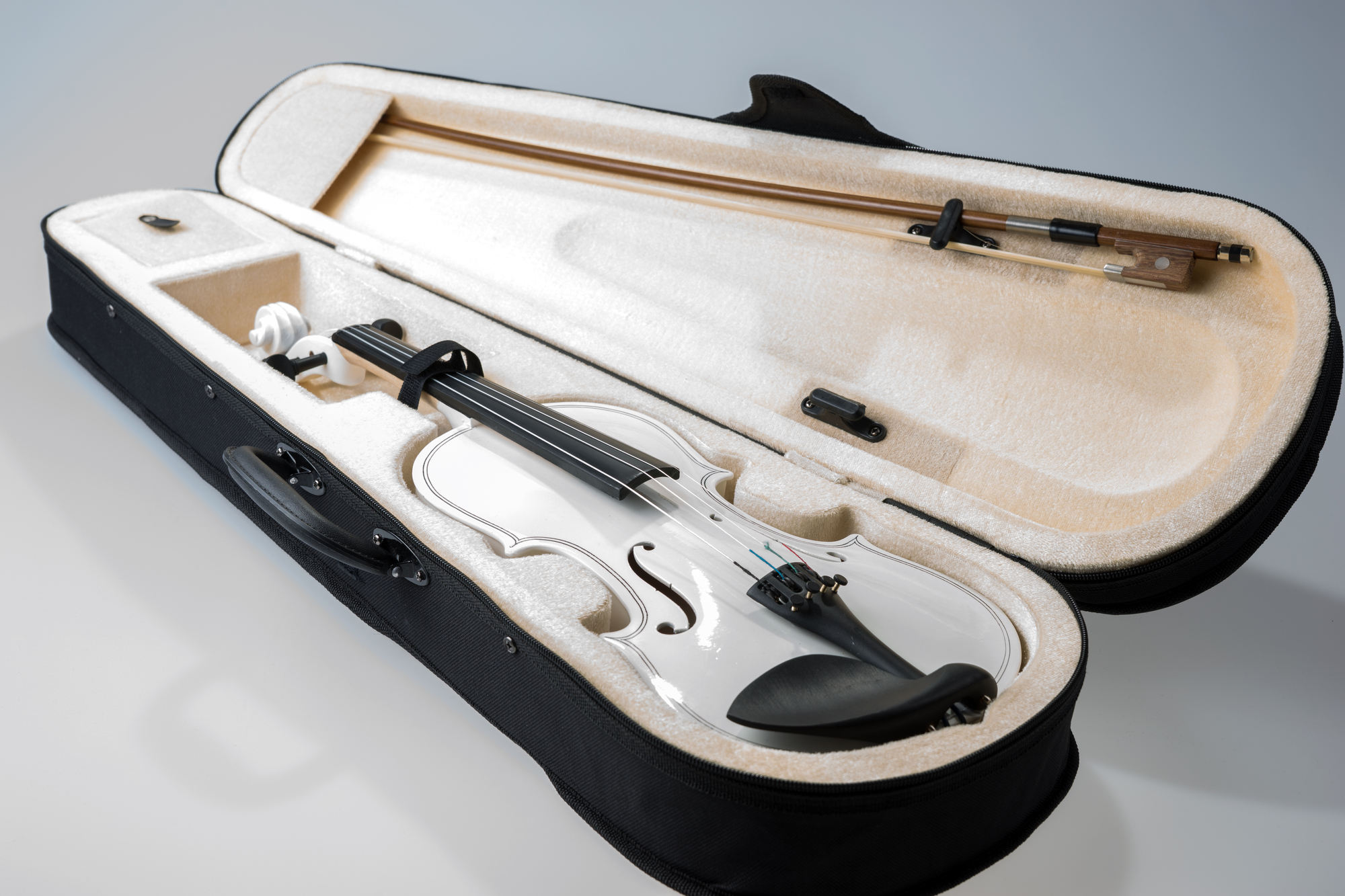
Best Violin Cases
The best violin case for most players is the BAM Hightech Cabin Violin Case. Its triple-layer ABS/Airex foam shell delivers professional-grade protection at just 2.6 pounds, and it fits in airplane overhead bins.
Your violin case matters more than most players realize. A decent instrument stored in a cheap case is exposed to impact damage, humidity swings, and temperature extremes that slowly degrade the wood, varnish, and glue joints. The right case eliminates those risks without adding unnecessary bulk or weight.
This guide covers the three main case types, the features that actually affect protection, and specific models worth considering at different budgets. If you are also shopping for a new instrument, start with our beginner violin guide or intermediate violin roundup first — the case should match the instrument’s value.
Three Types of Violin Cases
Before looking at individual models, understand the three basic case shapes. Each serves a different purpose, and many serious players end up owning more than one.
Shaped (Contoured) Cases
Shaped cases follow the outline of the violin, making them the smallest and lightest option. They typically weigh 2 to 4 pounds and fit easily into airplane overhead bins, car trunks, and lockers.
The tradeoff is storage. Most shaped cases hold only two bows and have minimal accessory space. You may need to get creative fitting a shoulder rest inside, and there is rarely room for sheet music. These cases are best as a travel or backup case rather than an everyday option.
If you fly regularly with your violin, a shaped case is almost essential. Flight attendants are less likely to question a compact case, and it fits in overhead bins even when they are nearly full.
Oblong Cases
Oblong (rectangular) cases are the most popular all-around choice. They are larger than shaped cases but offer significantly more storage: typically four bow holders, a sheet music pocket, and one or two accessory compartments for rosin, strings, a tuner, and a shoulder rest.
Materials vary widely. Budget oblong cases use foam and nylon, mid-range options use ABS plastic or polycarbonate, and premium cases use carbon fiber or fiberglass composites. Weight ranges from about 4 pounds for lightweight foam cases to 7+ pounds for reinforced models.
An oblong case is the right choice if you want one case that does everything — practice at home, rehearsals, gigs, and occasional travel.
Wood Shell Cases
Wood shell cases are the traditional option and remain popular for good reason. A quality wood case is exceptionally durable — many can support the weight of an adult without flexing. They offer excellent climate buffering because wood naturally regulates moisture exchange.
The downsides are weight (typically 6 to 9+ pounds) and bulk. Wood cases also tend to be more affordable than carbon fiber, making them a strong option for players who want solid protection without a premium price tag.
Wood shell cases from Bobelock are widely used by students and professionals in North America and have a reputation for lasting decades with minimal maintenance.
What to Look for in a Violin Case
Suspension System
This is the single most important protective feature. A suspension system holds the violin slightly elevated inside the case using padded cushions, so the instrument “floats” rather than resting directly against the shell. If the case is dropped, the impact is absorbed by the padding rather than transferred to the violin.
Any case above the budget tier should have full suspension. If a manufacturer does not mention suspension in their specs, assume it does not have it.
Shell Material and Construction
The shell determines how much impact the case can absorb. Common materials, ranked by protection and weight:
- ABS/Airex foam composites — Used by BAM in their Hightech line. Triple-layer construction (ABS outer, Airex foam core, ABS inner) provides excellent impact resistance at low weight. This is the current industry standard for premium cases.
- Carbon fiber — Extremely strong and lightweight. Used in high-end oblong and shaped cases. Scratch-prone unless treated with a matte finish.
- Fiberglass — Durable and heavier than carbon fiber but much cheaper. A solid mid-range choice.
- Molded ABS plastic — Budget-to-mid hard cases. Adequate for everyday use but less impact-resistant than the options above.
- Plywood / wood laminate — Traditional material. Heavy but durable and good at humidity buffering.
- Foam and nylon — Lightest option. Protects against bumps but not serious impacts or drops.
Interior Lining
The lining should be soft enough to avoid scratching the varnish but structured enough to keep the instrument from shifting. Velvet and velour are standard. Silk is used in some luxury cases like Musafia.
Check that the neck cradle holds the violin scroll securely, usually with a Velcro strap or padded clip. A violin that shifts inside its case can damage the bridge, soundpost, or pegs.
Weight
A full-size violin weighs about 1 pound. The case should not weigh dramatically more than the instrument — carrying fatigue is a real concern for players commuting on foot or public transit.
| Case Type | Typical Weight |
|---|---|
| Shaped (foam/fiberglass) | 2 to 4 lbs |
| Lightweight oblong (ABS/carbon) | 3.5 to 5 lbs |
| Standard oblong (fiberglass/wood) | 5 to 7 lbs |
| Heavy-duty wood shell | 7 to 9+ lbs |
Note that advertised weights often exclude straps and accessories. Add about half a pound for shoulder straps and another half pound for two bows, rosin, and a shoulder rest.
Climate Protection
Wood instruments are sensitive to humidity changes. Ideal storage humidity is around 40 to 60 percent. A well-sealed case buffers against external swings, but it is not a climate-controlled vault.
For extra protection:
- Hygrometer — Measures humidity inside the case. Some cases include one; you can also buy standalone units that clip inside. Knowing your humidity level is the first step to managing it.
- Case humidifier — Releases moisture slowly inside the case during dry months. A Dampit or Boveda 49% RH pack are the two most common options.
- Tight seal — Cases with a visible gap along the closure edge allow faster moisture exchange with the environment. A well-fitted lid that closes flush offers better buffering.
If you live somewhere with harsh winters or aggressive air conditioning, a humidifier is not optional — it is essential. The same applies if you are protecting a higher-end instrument with quality violin strings that are sensitive to environmental changes.
Storage and Bow Holders
At minimum, your case should hold two bows. If you own a quality bow and a backup, two holders are fine. Professional players who carry multiple bows (a primary bow, a carbon fiber outdoor bow, etc.) will want four holders.
Beyond bows, useful compartments include:
- An accessory pocket for rosin, mute, tuner, and spare strings
- A sheet music pocket (ideally on the exterior so it does not press against the instrument)
- A shoulder rest compartment or enough clearance to store one alongside the violin
Avoid overstuffing compartments. Heavy accessories inside the case add weight directly above or beside the violin, which increases pressure if the case is dropped.
Best Violin Cases by Category
Best Overall: BAM Hightech Cabin Violin Case
The BAM Hightech Cabin Violin Case weighs just 2.64 pounds, making it one of the lightest hard-shell cases available. Despite that low weight, the triple-layer ABS/Airex foam construction provides impact protection that rivals much heavier cases.
BAM is a French manufacturer that has been making instrument cases since 1925. Their Hightech line is widely used by professional violinists and is one of the most recommended cases in online violin communities. The cabin-sized design fits in airplane overhead bins, and the case comes in six color options.
The main limitations are storage. It requires a separate bow holder (not included) and has minimal compartment space. This is a protection-first case designed for players who prioritize safeguarding their instrument above all else. If you need more storage, pair it with an oblong case for everyday use.
Best All-Rounder: Gewa Air Oblong Violin Case
The Gewa Air is a thermoplastic shell case that weighs around 4.6 pounds and includes four bow holders, a suspension system, combination locks, a string tube, and a sheet music pocket. It comes in a wide range of colors and finishes.
What sets the Gewa Air apart is the combination of protection and features at a reasonable weight. The thermoplastic shell resists heat, cold, and impacts. The combination lock adds security — useful for students who store their instrument in a school locker or rehearsal space. Interior Velcro straps hold both the violin and shoulder rest in place.
The exterior sheet music pocket uses snap fasteners that can be stiff to operate, and the glossy finish options scratch easily. Go with a matte finish if longevity matters.
Best Budget: Crossrock 4/4 Violin Case
The Crossrock 4/4 Violin Case is a molded ABS case with a high-density foam interior. It includes two accessory compartments, backpack straps, and a lined interior that holds the violin firmly in place.
For a budget case, the Crossrock offers surprisingly solid protection. The molded ABS shell handles bumps and minor drops well. The backpack carry option is a plus for students who walk or bike to lessons. At 6.8 pounds, it is on the heavier side for its class — closer to a wood shell case than a modern composite.
The main drawbacks are the lack of a dedicated chin rest compartment and no space for sheet music inside the case. If you need to carry music, bring a separate folder.
Best Wood Shell: Bobelock Half Moon Violin Case
The Bobelock Half Moon is a classic wood shell case with all-weather insulation and a suspension system. Bobelock has been manufacturing cases in the United States for decades, and their Half Moon shape is one of the most recognizable designs in the violin world.
The velour-lined interior holds the violin securely, and the case includes a roomy accessory compartment. The all-weather insulation provides solid temperature buffering for players in variable climates. The exterior is distinctive — a puffy design that is either charming or dated depending on your taste.
At 6.25 pounds, it falls in the mid-range for weight. Some users report that the strap configuration takes time to adjust properly. If you want a wood case with a more traditional rectangular shape, the Baker Street BK-4030 is another option with a plywood shell and spacious interior, though its screws can loosen over time with heavy use.
Best for Travel: BAM France 2002XL
The BAM France 2002XL is a contoured case reinforced with three layers for protection and sealed airtight for shock and pressure resistance. At 3.5 pounds, it is light enough to carry all day without fatigue.
The airtight seal is the standout feature here. It creates a microenvironment inside the case that buffers against pressure changes during flights and temperature swings during outdoor transport. This makes it a strong choice for traveling musicians and orchestral players who move between venues.
The black carbon finish looks sharp but scuffs more easily than matte alternatives. The finish can also fade with prolonged sun exposure. For a pure travel case, this remains one of the best options on the market.
Best Lightweight: Protec MX044MT Max Case
The Protec MX044MT is a violin-shaped case made from 600D nylon with shock-absorbing foam. At 3.83 pounds, it sits between a soft gig bag and a hard case in terms of both weight and protection.
The interior features a soft, non-abrasive lining with custom-molded zippers that are more durable than standard zippers. The shaped design keeps the case compact. This is a good option for players who want something lighter than a full hard case but with more structure than a gig bag.
The tradeoff is protection. This is not the case you want for checking on a flight or for situations where the case might be dropped from any height. It handles bumps and light knocks well but does not offer the impact resistance of an ABS or fiberglass shell. Think of it as an upgraded gig bag rather than a lightweight hard case.
How to Decide
Here is a simple framework:
Choose a shaped or lightweight case if: You fly frequently, need a backup case for travel, or commute on foot and want to minimize weight. The BAM Hightech Cabin or BAM 2002XL covers this well.
Choose an oblong case if: You want one case for everything — home practice, rehearsals, gigs, and occasional travel. The Gewa Air is the strongest option in this category.
Choose a wood shell case if: You want durability and climate protection at a lower price, and you do not mind the extra weight. Bobelock is the go-to brand.
Choose a budget hard case if: You are a student or beginner with a starter instrument. The Crossrock gets the job done.
If your case budget is limited, put the money toward protection (shell material and suspension) rather than aesthetics or extras. A plain case that keeps your violin safe is worth more than a stylish case that does not.
Caring for Your Violin Case
Cases last longer with minimal maintenance:
- Wipe down the exterior after exposure to rain or dirt. A damp cloth is sufficient for most materials.
- Vacuum the interior every few months to remove rosin dust, which accumulates from your bow and can build up enough to scratch varnish.
- Check latches, zippers, and closures regularly. A latch that does not close fully compromises the case’s protective seal.
- Store the case flat (on its back) when not in use. Standing it upright for long periods can warp foam padding.
- Replace worn straps before they fail. A dropped violin is an expensive lesson in strap maintenance.
Flying with a Violin
Air travel is the highest-risk scenario for any violin. Unlike cello cases where buying a seat is common, most violinists carry their instrument in the cabin.
Under the FAA Modernization and Reform Act, US airlines must allow small musical instruments as carry-on luggage if they fit in the overhead bin or under the seat. A shaped case or compact oblong case fits most overhead bins without issue.
Tips for flying with a violin:
- Board as early as possible to secure overhead bin space.
- Use a case with an airtight or tight-fitting seal to protect against pressure changes in the cargo hold (even in the cabin, pressure fluctuates).
- Loosen the strings slightly before flying. Pressure changes can increase tension on the neck and bridge.
- If you must check your violin (strongly discouraged), use a hard case inside a padded flight cover.
Final Thoughts
The BAM Hightech Cabin Case is the best option for players who prioritize protection and portability. The Gewa Air is the best all-around choice for players who want storage and protection in a single package. And the Crossrock 4/4 is a solid budget option for students and beginners.
Whatever you choose, measure your violin before buying. Not all 4/4 violins have the same dimensions, and a case that is too large lets the instrument shift during transport. Bring your violin to a shop if possible, or compare your instrument’s measurements against the manufacturer’s interior dimensions.
If you are still building your setup, check out our guides to the best violin bows and best violin strings to round out your kit.