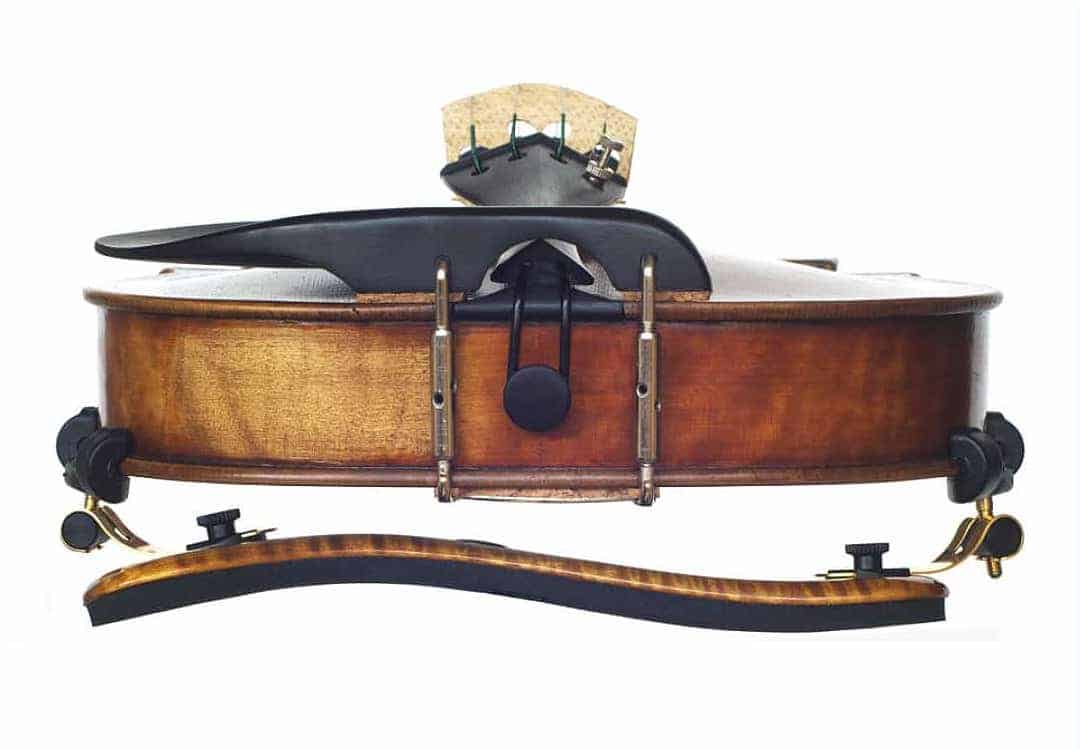
Best Violin Shoulder Rest
Picking a violin shoulder rest is one of the most personal decisions you’ll make as a player. What works for a long-necked violinist with narrow shoulders will be completely wrong for someone with a short neck and broad frame. There is no universal “best” — only the best for your body.
That said, some shoulder rests have earned their reputation through decades of use by students, teachers, and professional soloists. This guide covers the ones worth trying, organized by type, so you can narrow down your search before spending money on trial and error.
If you’re short on time: the Kun Original is still the default recommendation for most players. It’s reliable, widely available, and works for the majority of body types. But keep reading — it’s far from the only good option.
Do You Even Need a Shoulder Rest?
This is a real question, not a rhetorical one. A small but serious group of violinists — including some world-class soloists — play without any shoulder rest at all. The argument is that removing the rest allows the violin to vibrate more freely and gives the player more physical freedom.
Playing restless can work well if you have a short neck and naturally sloped shoulders. But for most players, especially beginners, the lack of friction between the instrument and your clothing makes it difficult to keep the violin stable. You’ll likely compensate by gripping harder with your chin or tensing your left shoulder, which leads to pain and overuse injuries.
The practical approach: If you’re curious, try playing with just a folded cloth or thin sponge under the violin for a few weeks. If it feels freeing, explore the pad-style rests below. If you feel unstable, stick with a traditional clip-on rest.
Types of Violin Shoulder Rests
Before diving into specific models, it helps to understand the three main categories.
Clip-On (Frame) Shoulder Rests
The most common type. Two feet clip onto the rim of the violin, with a curved frame spanning the back. Most models offer height, width, and tilt adjustments. Brands like Kun, Everest, Wolf, and BonMusica fall into this category.
Best for: Most players, especially those who need height adjustability or have longer necks.
Pad and Cushion Rests
These attach to the back of the violin with adhesive, suction, or a rubber band. They add a thin layer of padding and friction without the rigid structure of a frame rest. The OttoMusica MagicPad and small red sponge pads are popular examples.
Best for: Players who want minimal setup, prefer a low profile, or are exploring the “no rest” approach.
Inflatable Shoulder Rests
The Playonair is the main option here — an inflatable cushion that sticks to the back of the violin. You can adjust the firmness by how much air you put in.
Best for: Players who want adjustable cushioning without a rigid frame. Also available in fractional sizes for young students.
Best Clip-On Shoulder Rests
Kun Original
The Kun Original is the Honda Civic of shoulder rests — not flashy, but it just works. It’s the rest most students start with, and many professionals never switch away from it. The anatomically curved plastic base offers decent comfort, and the patented locking feet grip the violin securely.
Height and tilt are adjustable, though the base shape itself is fixed. If the pre-shaped curve doesn’t match your shoulder, you’ll notice. It’s not collapsible, which can make storage in smaller violin cases a tight fit.
Why it works: Reliable, simple, fits 4/4 and 3/4 violins. The most widely recommended rest by teachers for good reason.
Watch out for: The fixed curve won’t suit every shoulder shape. If you find yourself constantly adjusting it, try one of the more flexible options below.
Kun Bravo Collapsible
If you like the Kun Original’s design but want something more refined, the Bravo is the upgrade. It uses a maple wood base instead of plastic, which many violinists feel allows the instrument to resonate better. The collapsible feet fold flat for easy case storage — a real advantage if you travel or have a compact case.
The brass hardware feels more premium than the Original’s plastic components. Some players report the wood base transmits less dampening to the violin’s back plate compared to plastic.
Everest EZ4A
The Everest is the budget alternative to the Kun that many teachers actually prefer for students. The foam padding is thicker and softer than the Kun’s, the coated feet grip well, and the adjustable grippers can be repositioned to fit different instrument widths.
It’s available in sizes from 1/10 to 4/4, making it one of the most versatile rests for students who play fractional instruments. Everest also makes a collapsible version and a maple wood version if you want to upgrade later.
The main downside is durability — the plastic construction and foam padding wear faster than the Kun’s. If your student practices heavily, expect to replace the foam or the rest itself within a year or two.
Wolf Forte Secondo
This is the shoulder rest that serious players graduate to when they realize the Kun or Everest doesn’t quite fit their body. The Wolf Forte Secondo’s entire base is made of flexible aluminum topped with comfortable rubber, which means you can physically bend it to match the exact contour of your shoulder.
Height, width, and tilt are all adjustable, and the legs extend high enough for players with longer necks (up to about 8 cm). Sarah Chang is a notable user of this rest.
The trade-off is that the bendable metal base can feel rigid compared to foam-padded alternatives. Players with narrow shoulders sometimes find it too wide. But for those with broader shoulders or longer necks who need a customizable fit, it’s hard to beat at its price point.
Why it stands out: The most adjustable rest in its price range. If you’ve tried Kun and Everest and neither felt right, the Wolf is the logical next step.
BonMusica
The BonMusica takes a fundamentally different approach. Its metal frame extends over the shoulder in a hook shape, physically wrapping around your collarbone to prevent slipping. For violinists who constantly struggle with the instrument sliding during performance, this can be a revelation.
The entire frame is bendable, so you can shape it to your body. It’s available in sizes from 1/16 to 4/4, and there’s a viola version too. Hilary Hahn is a well-known BonMusica user.
The downsides are real, though. The hook design restricts shoulder movement more than other rests. The foam padding is on the thin side. And the bulky shape doesn’t fit neatly into most violin cases — you’ll likely need to carry it separately. The sharp metal edges can also damage your violin’s varnish if you’re not careful with installation.
Best Wooden Shoulder Rests
Wooden shoulder rests have grown in popularity because they tend to dampen the violin’s sound less than plastic. Wood transmits vibrations differently, and many players feel their instrument sounds more open with a wooden rest. The trade-off is less adjustability and typically a higher price.
Mach One Maple
The Mach One is a handsome maple shoulder rest with a pronounced curve designed to hug the shoulder. Its wooden construction allows the violin to resonate more freely than plastic alternatives. The hook shape provides a more secure hold, similar in concept to the BonMusica but with a more refined aesthetic.
It works best for players with medium to long necks who appreciate the secure, curved fit. If you have a short neck, the Mach One’s minimum height may be too tall.
Pirastro KorfkerRest Model 2
This is the premium option for players who are willing to invest significantly in their setup. The KorfkerRest is made from bendable tonewood — yes, wood that you can physically flex to match your shoulder shape. At just 32 grams, it’s lighter than almost any other frame-style rest.
The entire rest is adjustable: height, width, tilt, and curvature. It comes with an ErgoPack containing spare pads, joints, screws, and a torx screwdriver. Some violinists report that it genuinely enhances their instrument’s sound, though skeptics argue any rest that doesn’t clamp tightly to the violin would have a similar effect.
The foam pads wear out and need replacing every few months with heavy use. The small screws can be fiddly to adjust. And the price puts it firmly in professional territory. But for soloists and serious players who have tried everything else, the KorfkerRest is often the endpoint of a long search.
Best Pad and Cushion Rests
OttoMusica MagicPad
A simple circular foam pad that sticks to the back of the violin with a gentle adhesive that won’t damage the varnish. It provides just enough padding and friction to keep the instrument in place without the bulk of a frame rest. Many advanced players who want a “restless” feel without going fully bare use the MagicPad.
The adhesive can be repositioned as many times as you need. It’s a good option for players with short necks who find traditional rests too bulky.
Foam Sponge Pad
The simplest option: a shaped foam sponge held to the violin with a rubber band. This is what most violin teachers recommend for young students just starting out. It provides basic cushioning and height without locking the shoulder into place, which helps children develop natural holding habits.
If you’re an adult player curious about playing with less support, a basic foam sponge is a cheap way to experiment before committing to a dedicated pad rest.
How to Choose the Right Shoulder Rest
Forget brand loyalty. The right shoulder rest depends entirely on your body and how you play. Here’s how to narrow it down.
Start with Your Neck Length
This is the single most important factor. Stand in front of a mirror and tilt your head to the left as if holding a violin. The distance between your jaw and the top of your shoulder is roughly how much height your rest needs to provide.
- Short neck: Look at pad-style rests (MagicPad, foam sponge) or low-profile clip-ons (Everest, Kun Original at minimum height). You may not need a rest at all.
- Medium neck: Most standard clip-on rests (Kun, Everest, Wolf) at mid-height will work.
- Long neck: You need a rest with significant height range. The Wolf Forte Secondo (up to 8 cm) or BonMusica are your best bets.
Consider Your Shoulder Width and Shape
Broad shoulders do well with wider rests like the Wolf Forte Secondo. Narrow or sloped shoulders work better with smaller-footprint rests like the Kun or shaped rests like the BonMusica that hook around the shoulder.
If your shoulders are asymmetrical (most people’s are), look for rests where each leg adjusts independently — the Kun, Wolf, and Everest all allow this.
Think About Your Chinrest Pairing
Your shoulder rest and chinrest work together as a system. A tall shoulder rest paired with a tall chinrest can push your head uncomfortably high. A low shoulder rest with a low chinrest might leave you clamping down to hold the violin. If you’re changing one, consider whether the other needs adjusting too.
Sound Matters — Especially at Higher Levels
For intermediate and advanced players, the shoulder rest’s impact on sound becomes noticeable. Frame-style rests that clamp to the violin’s rim can dampen vibrations from the back plate. Wooden rests (Kun Bravo, Mach One, KorfkerRest) generally interfere less than plastic. Pad-style rests that sit loosely on the back tend to have the least impact on sound.
If you’re playing a quality instrument, it’s worth experimenting with different rest materials to hear the difference. The effect is subtle but real, particularly in the lower register where the back plate contributes more to the sound.
Don’t Forget Portability
If you carry your violin everywhere, a collapsible rest (Kun Collapsible, Everest foldable model) will save you frustration. The BonMusica’s bulk is a real drawback for gigging musicians. And if you use a compact violin case, measure the interior space before buying a non-folding rest.
Common Shoulder Rest Mistakes
Setting it too high. If your shoulder rest forces your head up or creates a gap between your jaw and the chinrest, it’s too tall. You should be able to hold the violin with a relaxed, slightly tilted head — no clamping, no reaching. The Kun ergonomics guide has useful illustrations of proper shoulder rest positioning.
Ignoring wear. Foam pads compress over time. Rubber feet lose their grip. If your rest feels less secure than it used to, check whether the padding or feet need replacing before buying an entirely new rest.
Copying a famous player’s setup. Hilary Hahn uses a BonMusica and Sarah Chang uses a Wolf, but their bodies are not your body. Use these as starting points, not prescriptions.
Never experimenting. Many violinists settle for whatever rest they started with and never try alternatives. Even if your current rest is “fine,” you might be surprised by how much better a different style feels. Ask fellow players if you can try their setup during rehearsal breaks — a two-minute test on someone else’s instrument can tell you a lot.
The Bottom Line
For most players, the Kun Original remains the safest starting point. It’s not the most adjustable or the best-sounding, but it works for the widest range of body types and playing styles.
If the Kun doesn’t feel right, the Wolf Forte Secondo gives you far more adjustability at a reasonable price. For players ready to invest in a premium setup, the Pirastro KorfkerRest is the most refined option available.
And if you’re pairing a new shoulder rest with a new bow or strings, remember that your setup is a system. Each piece affects the others. Take the time to find what works for your body, and your playing will thank you.