8 Best Drum Practice Pads: Your Best Silent Rehearsal Buddy in 2025
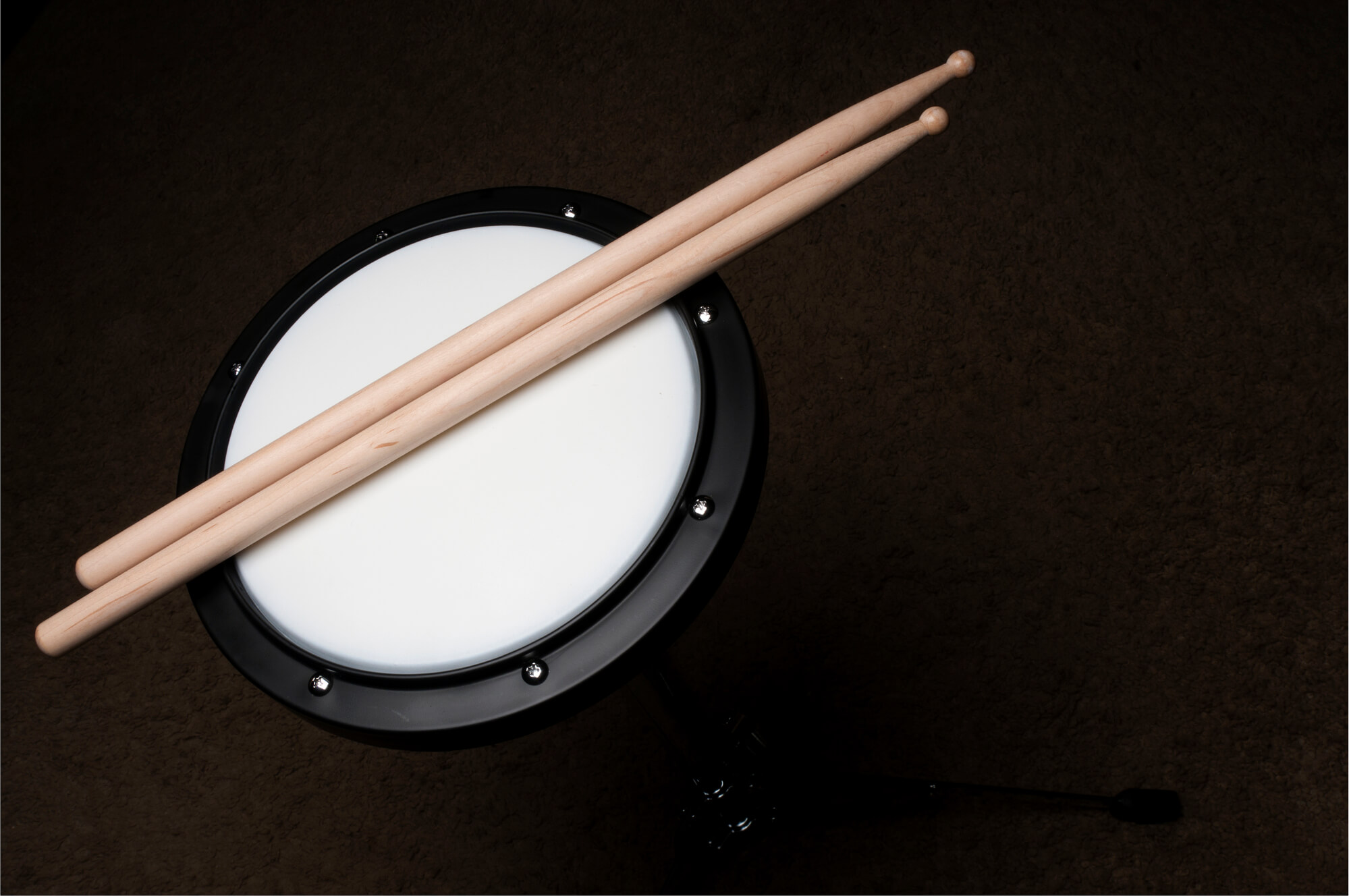
Every drummer needs a practice pad. Not as a nice-to-have, but as a core piece of gear that sits right next to your sticks. It is the one tool that lets you work on rudiments, stick control, and endurance without a full kit, a soundproofed room, or tolerant neighbors.
The problem is that practice pads vary wildly in feel, rebound, noise level, and build quality. A bad pad teaches bad habits. A good one exposes every inconsistency in your technique and makes you a better player.
After comparing materials, rebound characteristics, and real-world durability, here are the eight best drum practice pads worth your money right now.
1. Vic Firth Heavy Hitter Slim Pad — Best Overall
The Vic Firth Heavy Hitter Slim Pad is the practice pad most drummers end up recommending, and for good reason. The gum rubber surface delivers a rebound that genuinely feels close to a tuned snare head — not the dead, lifeless bounce you get from cheaper rubber pads.
It is double-sided: the top surface gives you a realistic snare feel with good bounce, while the softer underside works for quieter sessions. The wooden base adds enough weight to keep it planted on a desk or table without sliding around, but at just one pound, it still fits easily in a backpack.
Who it’s for: Any drummer who wants one reliable pad for daily rudiment practice. If you’re only buying one practice pad, this is the safe pick.
Heads up: It is not the quietest pad on this list. If you need near-silent practice, the Evans RealFeel below is a better fit.
2. Evans RealFeel 2-Sided Practice Pad — Best for Quiet Practice
The Evans RealFeel is a longtime favorite for apartment dwellers and late-night practicers. The fabric-coated natural gum rubber side absorbs a lot of the impact noise while still giving you enough rebound to work on speed exercises. Flip it over and you get a harder recycled rubber surface that is louder but bouncier — closer to a marching snare feel.
At 3.5 pounds for the 12-inch version, it is heavy enough that it will not walk across your desk during intense practice. That weight also means it is not the most portable option, but it sits beautifully on a snare stand.
The dual surfaces serve genuinely different purposes. The gum rubber side is your daily driver for rudiments and stick control. The recycled rubber side is a conditioning workout — less forgiving, more demanding on your wrists and forearms.
Who it’s for: Drummers who practice in noise-sensitive environments and want two meaningfully different playing surfaces in one pad.
3. Movement Drum Co. 2-Sided Practice Drum Pad — Best Pad With a Rim
The Movement Drum Co. pad stands out for one reason most practice pads ignore: it has a full plastic rim. If you play marching snare or do any rimshot work, practicing without a rim means you are only training half the technique.
The pad itself offers three playing surfaces — a silicone rubber top, a neoprene underside, and a separate conditioning insert. The silicone top is quiet and has moderate rebound. The neoprene side is harder and louder. The conditioning insert gives you a low-rebound workout surface for building wrist strength.
Who it’s for: Marching drummers and anyone who needs to practice rimshots and rim clicks alongside standard sticking patterns.
Watch out for: The conditioning insert is a separate piece that can wear down faster than the main pad surfaces with heavy use.
4. Remo Tunable Practice Pad — Best Budget Option
The Remo Tunable Practice Pad is the entry-level pad that still gets recommended by drum teachers everywhere. The key feature is in the name: it is tunable. You can adjust the head tension to match the feel of your snare drum, which is something no gum rubber pad can do.
The mylar head gives you a rebound that is closer to an actual drumhead than any rubber surface. That makes it excellent for developing accurate stroke technique. The tradeoff is noise — this is one of the louder practice pads because the tunable head resonates more than rubber.
At 10 inches and 1.25 pounds, it is small and light enough to throw in a bag. It works on a desk, your lap, or a snare stand.
Who it’s for: Beginners who want realistic rebound at a low price point, or any drummer who values tunability. Also a solid pick for a beginner drum set supplement.
Keep in mind: The mounting screws can work loose over time with heavy playing. A quick tighten with a drum key fixes it.
5. Slint Practice Pad and Snare Stand Bundle — Best Starter Kit
The Slint bundle is the most complete package on this list. You get a 12-inch gum rubber practice pad, a snare stand, a pair of drumsticks, carry bags for the pad and stand, and a beginner e-book. Everything a new drummer needs to start practicing right out of the box.
The pad itself is solid — natural gum rubber on a wooden base with decent rebound and reasonable noise levels. It is not going to match the Evans RealFeel in feel or the Vic Firth in bounce, but it does the job for fundamentals.
The included snare stand is functional but sized for sitting. Standing players will need to upgrade. The bundled drumsticks are basic — plan to replace them once you develop a preference.
Who it’s for: Beginners and students who need everything in one purchase. Parents buying for a kid taking drum lessons will appreciate not having to source each piece separately.
6. Drumeo P4 Practice Pad — Most Versatile
The Drumeo P4 is the practice pad for drummers who get bored with a single surface. It has four distinct playing zones, each with a different material and rebound characteristic:
- Gray gum rubber — standard snare feel with good bounce
- Black neoprene — softer, quieter, moderate rebound
- Orange conditioning surface — very low rebound, builds wrist and forearm strength
- Wooden rim area — for cross-stick and rimshot practice
This layout lets you practice coordination patterns that move between different surfaces, which is closer to playing an actual kit than hitting the same rubber circle for an hour. The conditioning surface in particular is a serious workout — five minutes of singles on the orange zone and your forearms will know about it.
Who it’s for: Intermediate to advanced players who want variety in a single pad, or anyone focused on building strength alongside technique.
The downside: It costs significantly more than single-surface pads. If you only need basic rudiment practice, the Vic Firth or Evans will serve you just as well.
7. Drum Workshop Go Anywhere 5-Piece Practice Pad Set — Best Full Kit Simulation
The DW Go Anywhere set replicates a five-piece drum kit layout using individual rubber pads mounted on a compact frame. You get pads simulating a snare, two toms, a floor tom, and a bass drum — all in a setup you can assemble on a table or desk.
This is the only option on this list that lets you practice full-kit patterns, fills, and coordination exercises. The rubber surfaces are firm and quiet enough for apartment use, though they are harder than most standalone pads and offer less rebound.
Setup is straightforward, and the whole thing packs down reasonably well. At nearly 20 pounds though, this is not something you are casually throwing in a backpack.
Who it’s for: Drummers who need to practice full-kit coordination silently. Particularly useful if you play in a situation where you cannot access your drum set regularly, or as a complement to an electronic kit.
8. RTOM Moongel Workout Pad — Best for Conditioning
The RTOM Moongel Workout Pad deserves a mention for drummers focused specifically on building hand speed and endurance. Made from the same gel material as RTOM’s popular Moongel damper pads, this pad has almost zero rebound. Every stroke requires your muscles to do all the work — there is no bounce helping you back up.
This is not an everyday practice pad. It is a training tool. Think of it as the weighted bat of drum practice. Five to ten minutes of rudiments on the Moongel pad, then switch to a standard pad, and the difference in how effortless normal rebound feels is immediately noticeable.
Who it’s for: Drummers specifically training for speed and endurance. Pair it with a standard rebound pad (like the Vic Firth or Evans) and alternate between sessions for the best results.
How to Choose the Right Practice Pad
Not every pad works for every situation. Here is what actually matters when picking one.
Rebound and Feel
This is the single most important factor. A practice pad’s rebound determines how closely it simulates a real drumhead, and that directly affects whether your practice translates to the kit.
High-rebound pads (like the Remo Tunable or Vic Firth) are better for speed work and feel more natural. They are more forgiving and better for beginners.
Low-rebound pads (like the RTOM Moongel or the Drumeo P4’s conditioning surface) force your muscles to do more work. They build strength and control but can fatigue your hands quickly. Use them in short bursts, not for hour-long sessions.
The sweet spot for most players is a standard gum rubber pad — enough bounce to feel realistic, enough resistance to build technique.
Surface Material
- Natural gum rubber — The industry standard. Good rebound, reasonable noise, durable. Found on the Vic Firth, Evans, and Slint pads.
- Recycled rubber — Harder, louder, more bounce. The second side of the Evans RealFeel uses this. Good for louder practice and marching-style conditioning.
- Silicone — Softer and quieter than gum rubber. The Movement Drum Co. pad uses this. Good for noise-sensitive practice.
- Neoprene — Medium rebound, quiet. Used on the Drumeo P4 and some two-sided pads.
- Mesh/Mylar — Closest to a real drumhead feel. The Remo Tunable uses a mylar head. Loudest option but most realistic.
- Gel (Moongel) — Near-zero rebound. Purely for conditioning.
Size
6-inch pads are ultra-portable and fit in any bag, but the small striking area means you will frequently hit stick-on-stick. Best for travel or as a secondary pad.
10 to 12-inch pads are the standard. They give you enough surface area for comfortable playing and fit on most snare stands. This is the size most drummers should buy.
Full kit sets like the DW Go Anywhere are obviously larger and heavier, but they are the only way to practice kit coordination on pads.
Noise Level
If you live in an apartment or practice late at night, noise matters. Gum rubber and silicone pads are the quietest. Tunable mylar pads and recycled rubber are the loudest. The Evans RealFeel’s fabric-coated gum rubber side is one of the best compromises — quiet enough for nighttime use, responsive enough for serious practice.
Stand Compatibility
Most 12-inch pads fit standard snare stands. If you already own a stand, almost any pad on this list will work. If you do not have a stand, the Slint bundle is the most cost-effective way to get both. Alternatively, many pads (Vic Firth, Evans, Remo) work fine on a desk or table thanks to rubber feet or non-slip bases.
Practice Pad vs. Electronic Drum Kit
A practice pad and an electronic drum set solve different problems. A practice pad is for focused technique work — rudiments, stick control, speed, endurance. An electronic kit gives you a full playing experience with sound, multiple surfaces, and often recording capability.
If you already have a kit (acoustic or electronic) and just need something to maintain your chops between sessions, a practice pad is all you need. If you do not have access to any kit and want to actually play music — not just drill technique — an electronic drum set is the better investment.
Many serious drummers own both. The practice pad lives on the desk for quick 15-minute rudiment sessions. The kit comes out for longer, more musical practice. If you are exploring electronic drum pads as a middle ground, those offer more sound variety than a practice pad but less than a full electronic kit.
How to Get the Most Out of Your Practice Pad
Owning a good pad is only half the equation. How you use it determines whether you actually improve.
Use a Metronome Every Time
This is non-negotiable. Without a metronome, you are just moving your hands. With one, you are building timing — the single most important skill for any drummer. Free metronome apps work fine. Set a tempo, play to it, and only increase speed when you can play the pattern cleanly at the current tempo.
Follow the 40 Essential Rudiments
The Percussive Arts Society’s 40 international drum rudiments are the foundation of snare drum technique. Singles, doubles, paradiddles, flams, drags, and rolls. If you do not know what to practice, work through these in order. They cover every fundamental sticking pattern you will need.
Alternate Between High-Rebound and Low-Rebound Surfaces
If you have a two-sided pad or the Drumeo P4, switch surfaces every few minutes. High-rebound practice builds speed. Low-rebound practice builds strength. Combining both produces well-rounded technique faster than either alone.
Practice Standing and Sitting
Most drummers only practice sitting down. But if you ever play standing (marching band, certain stage setups), you should train that way too. Mount your pad on a snare stand at standing height periodically to build different muscle memory.
The Bottom Line
The Vic Firth Heavy Hitter Slim Pad is the best overall drum practice pad for most players. It delivers realistic rebound, solid build quality, and a reasonable noise level in a lightweight, portable package.
For quiet practice in apartments or late-night sessions, the Evans RealFeel is the better pick. For maximum versatility in a single pad, the Drumeo P4 offers four distinct surfaces that keep practice sessions engaging. And for beginners who need the whole setup, the Slint bundle gets you a pad, stand, and sticks in one box.
Pick the pad that matches how and where you practice, then put in the time. The best practice pad is the one you actually use every day.