4 Best Drumsticks for Electronic Drums in 2025
Electronic drums respond differently to sticks than acoustic kits. The mesh heads, rubber pads, and cymbal triggers on an electronic drum set are more sensitive to stick weight, tip shape, and taper than their acoustic counterparts. The wrong sticks can cause premature wear on your pads, inconsistent trigger response, and unnecessary hand fatigue.
The good news: you do not need a special type of stick that only works on electronic drums. Any well-made pair from a reputable brand will work. But certain stick characteristics — lighter weight, longer taper, nylon tips — make a noticeable difference in how your e-kit feels and responds.
Here are the four best drumsticks for electronic drums, followed by a practical guide to choosing the right pair.
Best Drumsticks for Electronic Drums
Vic Firth American Classic eStick — Best Overall
The Vic Firth eStick is the only major drumstick designed specifically for electronic drums, and it earns its reputation. Vic Firth built this stick around a longer taper than standard models, which increases rebound off mesh heads and rubber pads. That extra bounce reduces fatigue during long practice sessions and gives you a more natural feel.
The eStick is made from hickory with a barrel-shaped wood tip. It sits close to a 5A in diameter (0.563 inches) but runs slightly longer at 16.5 inches, giving you better reach around the kit with a touch more leverage. The long taper shifts the balance point toward the butt end, so the stick feels fast and responsive without sacrificing control.
It works equally well on acoustic drums, so if you switch between kits, you do not need to keep a separate pair around. For most electronic drummers, this is the stick to start with.
Promark Rebound 5A ActiveGrip — Best Grip
The Promark Rebound 5A ActiveGrip solves the most common complaint about playing electronic drums: slippery sticks on low-resistance surfaces. The ActiveGrip coating is heat-activated — the warmer your hands get, the tackier the grip becomes. It adds almost no weight to the stick, and it feels more natural than wrapping grip tape around the handle.
These are acorn-tipped hickory sticks with a medium taper and the standard 5A dimensions (0.551 inches diameter, 16 inches length). The acorn tip shape produces a slightly fuller tone than a round tip, though on electronic drums the module handles most of the tone shaping. What matters more is that the tip is smooth and consistent, which it is.
The Rebound line also has a longer taper than Promark’s Forward Balance series, giving better bounce off mesh heads. If sweaty hands have ever caused you to lose control during a session, these are worth trying.
Vic Firth American Classic 5A Nylon Tip — Best Nylon Tip
The Vic Firth 5A Nylon Tip is the default recommendation for electronic drummers who want a nylon-tipped stick. Nylon tips are smoother than wood, which means they glide across rubber cymbal pads more quietly and create less friction on mesh heads. They are also more durable — nylon tips do not chip or splinter the way wood tips eventually do.
These are standard 5A dimensions in hickory. They balance well, absorb shock effectively, and trigger consistently across different pad types. The nylon tip produces a brighter, more articulate sound on acoustic cymbals, but on electronic drums the main benefit is durability and pad protection.
One thing to check when you get a new pair: run your finger over the nylon tip to make sure there are no seams or sharp edges from the molding process. This is rare with Vic Firth, but it is worth a quick check to protect your mesh heads.
Ahead 5B Aluminum Drumsticks — Best for Durability
The Ahead 5B takes a fundamentally different approach to stick construction. The core is an aircraft-grade aluminum alloy shaft wrapped in a replaceable polyurethane sleeve. The tips are also replaceable — you can swap between nylon and polyurethane options depending on your preference.
The aluminum core with polyurethane cover creates a built-in shock absorption system that reduces vibration transmitted to your hands. If you play for extended periods or have dealt with wrist or hand fatigue, this matters. The sticks are heavier than wood equivalents in the same size, which some drummers prefer for the added momentum and some find tiring.
The main advantage is longevity. Where wooden sticks wear out and break, Ahead sticks last indefinitely — you just replace the tips and sleeves when they wear down. The upfront cost is higher, but the ongoing replacement cost is lower if you play frequently. They come with a 60-day warranty against defects.
These are a niche choice. Most e-kit players will be happier with the Vic Firth eStick or 5A Nylon. But if durability and reduced vibration are your priorities, Ahead sticks are worth considering.
How to Choose Drumsticks for Electronic Drums
Why Electronic Drums Need Different Consideration
Acoustic drum heads are tensioned mylar that can take a beating. Mesh heads on electronic drums are thinner, more delicate, and designed to detect the force and position of each hit through piezo sensors underneath. This means:
- Chipped or splintered tips can tear mesh heads. Keep your e-drum sticks separate from your acoustic sticks. Acoustic playing roughens up tips faster, and those rough edges will damage mesh over time.
- Heavier sticks tire your hands faster on rubber pads. Rubber practice pads and older electronic kits with rubber surfaces have less give than mesh, so lighter sticks reduce fatigue.
- Tip shape affects trigger accuracy. Round and teardrop tips make more consistent contact with the pad surface regardless of stick angle, which gives you more reliable triggering from your drum module.
Stick Size: 5A vs 5B vs 7A
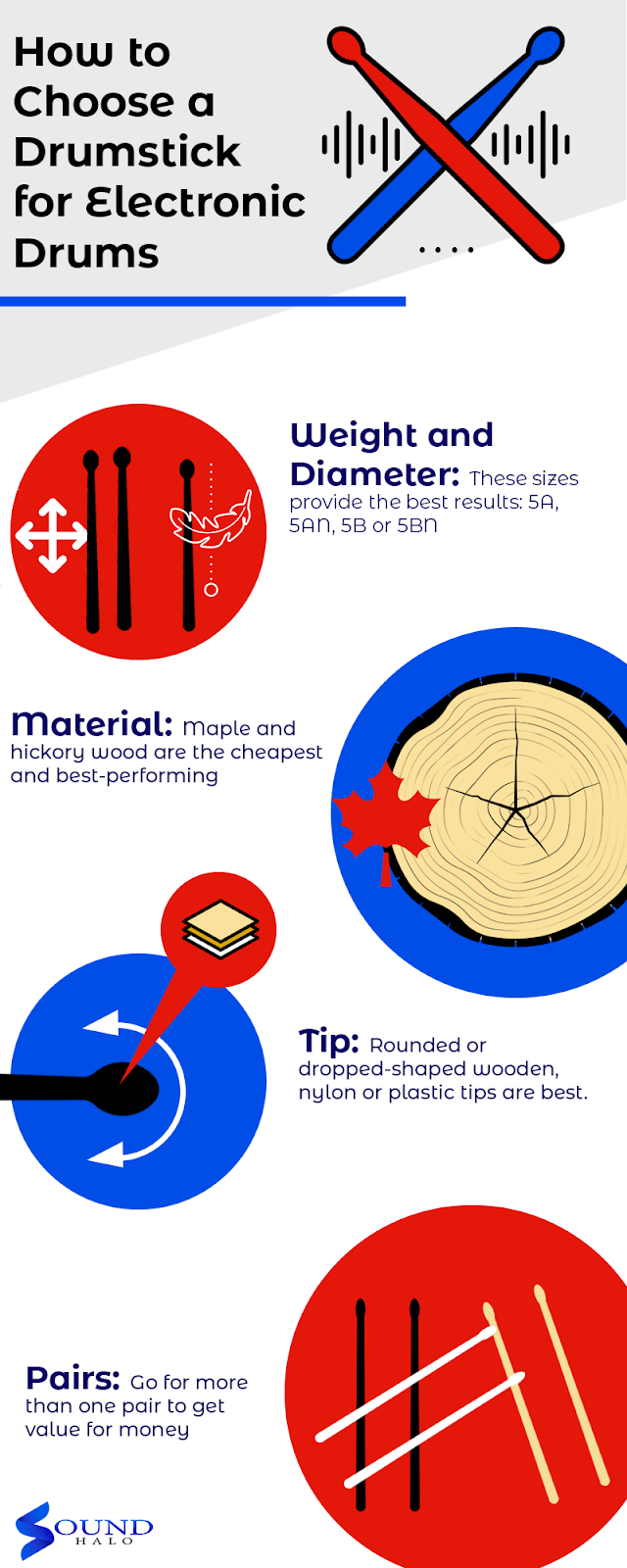
Drumstick sizing uses a number-letter system. The number indicates weight class (higher number = lighter stick), and the letter historically indicated the intended application (A = orchestra, B = band, S = street), though today it mainly describes the diameter.
For electronic drums, these are the three sizes that matter:
- 5A — The universal default. Balanced weight, moderate diameter (roughly 0.55 inches), works for everything from jazz to rock. If you are unsure what to get, start here.
- 7A — Thinner and lighter. Better for low-volume practice, jazz, or players who want faster stick speed. Less power, which is rarely an issue on electronic drums since volume is controlled by the module and your headphones or amplifier.
- 5B — Thicker and heavier. Preferred by rock and metal players who want more mass behind each hit. On electronic drums, the extra weight can cause more pad wear and hand fatigue, but some players prefer the feel.
The letter “N” after the size (e.g., 5AN) indicates a nylon tip instead of wood.
Wood Types
The three common drumstick woods each have distinct characteristics:
Hickory is the standard. It is dense enough to be durable, absorbs shock well, and provides good rebound. The vast majority of drumsticks sold — including the Vic Firth eStick and 5A — are hickory. For electronic drums, hickory is the safe default.
Maple is lighter than hickory, which means you can use a larger diameter stick without increasing weight. It has excellent flexibility and fast rebound, making it a good choice for jazz or dynamic playing. The tradeoff is durability: maple sticks wear out and break faster than hickory.
Oak is the heaviest and most durable of the three. Oak sticks can take serious punishment without breaking. However, oak absorbs less shock than hickory, which means more vibration reaches your hands. For electronic drums, where you do not need to hit hard for volume, oak is generally overkill.
Tip Material: Nylon vs Wood
This is the most debated topic in electronic drumstick selection, and the answer is simpler than most articles make it:
Both work fine. Modern mesh heads from Roland, Alesis, and other manufacturers are designed to handle standard wood-tipped drumsticks without issue. You do not need nylon tips to protect your pads.
That said, nylon tips have some practical advantages for e-drum use:
- They last longer because they do not chip or splinter
- They are smoother on rubber cymbal pads, producing less noise
- They trigger more consistently on some older or budget drum pads due to their harder, uniform surface
Wood tips have a more traditional feel and a warmer sound on acoustic cymbals if you switch between electronic and acoustic kits. Many professional drummers prefer wood tips on principle and use them on electronic drums without any problems.
Tip Shape
The tip shape matters less on electronic drums than on acoustic drums, because the drum module shapes the tone digitally rather than relying on the physical contact between stick and head. Still, here is how the common shapes differ:
- Round — Most consistent trigger response regardless of stick angle. Good default for electronic drums.
- Teardrop — Slightly more focused contact point. Produces a warmer tone on acoustic drums; triggers reliably on electronic.
- Acorn — Wider contact area than round. Produces a fuller sound on acoustic drums.
- Barrel — Large, flat striking surface. More attack and volume, common on heavier sticks.
For electronic drums, round and teardrop tips are the most reliable for consistent triggering.
Taper Length
The taper is the section of the stick between the shoulder and the tip where the diameter narrows. This is an underappreciated factor for electronic drumming:
- Long taper = more flex, faster rebound, back-weighted feel. Better for electronic drums because mesh heads have less natural rebound than acoustic heads. The Vic Firth eStick uses a long taper for exactly this reason.
- Short taper = more power, less flex, front-weighted feel. Better for hard-hitting acoustic playing.
- Medium taper = balanced. The standard 5A from most brands uses a medium taper.
If your sticks feel “dead” on your electronic kit — like they are not bouncing back the way you expect — try a stick with a longer taper before adjusting your pad tension.
Tips for Getting the Most Out of Your Sticks
Keep separate sticks for electronic and acoustic kits. Acoustic playing creates chips, dents, and rough spots on tips and shafts. Those imperfections can damage mesh heads over time. Even if you use the same model for both kits, keep dedicated pairs.
Check your tips regularly. Before each session, run a finger over the tip of each stick. If you feel any chips, splinters, or rough spots, retire that pair from e-drum duty. You can keep using them on acoustic drums or practice pads.
Adjust your technique, not just your sticks. Electronic drums do not reward hitting harder the way acoustic drums do. The velocity sensitivity on your module handles dynamics. Focus on consistent, controlled strokes rather than raw power. This extends the life of both your sticks and your pads.
Try before you commit to a bulk purchase. Stick preference is personal. Buy a single pair of two or three different options, play each for a week, and then stock up on your favorite. The difference between a 5A and a 7A, or between a wood tip and a nylon tip, is something you need to feel for yourself.
Conclusion
For most electronic drummers, the Vic Firth eStick is the best starting point. It is purpose-built for electronic drums, well-balanced, and works on acoustic kits too. If grip is your primary concern, the Promark Rebound 5A ActiveGrip handles sweaty hands better than anything else on the market. For a nylon-tipped option, the Vic Firth 5A Nylon is the industry standard. And if you want sticks that will outlast several pairs of wooden ones, the Ahead 5B is built to last.
Pick the right size (5A for most people), choose your tip material, and keep them in good condition. Your mesh heads and your hands will thank you.