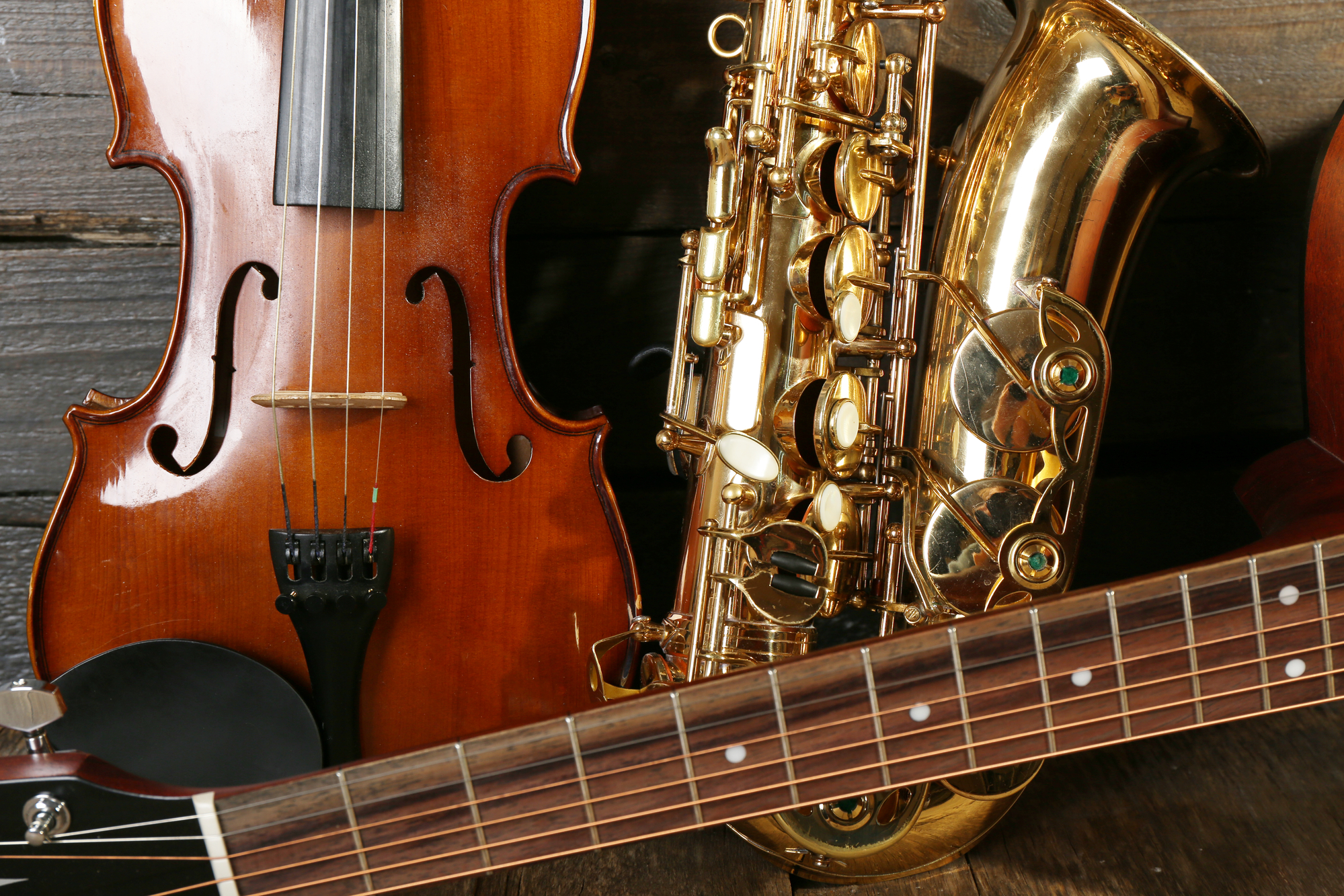
Top 10 Hardest Instruments to Play
Some instruments fight you from the first note. Others lull you in with an easy start, then reveal layers of difficulty that take years to untangle. This list covers both kinds.
The ranking weighs three things: how long it takes to produce a decent sound, the physical and coordination demands at intermediate level, and the ceiling of technical difficulty at advanced level. If an instrument is brutal on all three counts, it ranks higher.
1. Oboe
The oboe tops nearly every professional poll of hardest instruments, and for good reason. It uses a double reed — two thin cane blades bound together — that the player must shape, shave, and maintain by hand. A reed that’s too thick won’t vibrate. Too thin and it collapses. Most oboists spend as much time making reeds as practicing.
Even with a good reed, producing a stable tone demands precise embouchure (the shape and pressure of the lips) and carefully controlled breath. The oboe uses very little air, but at high pressure, which creates a paradox: you run out of fresh oxygen not because you’ve expelled it all, but because you haven’t expelled enough. Many beginners get lightheaded.
The fingering system adds another layer. The oboe has more than 20 keys with complex cross-fingerings for chromatic notes. Intonation shifts with temperature, humidity, and reed age, so the player is constantly adjusting. Despite all this, the oboe’s penetrating tone is what orchestras tune to — its pitch cuts through everything, which means every mistake is audible to the entire hall.
2. French Horn
Most brass players and conductors agree: the French horn is the hardest brass instrument. The reason is physics. The horn’s primary playing range sits high in the overtone series, where harmonics are packed close together. Miss your lip tension by a fraction and you crack the note or land on the wrong harmonic entirely. Even top professionals split notes in concert.
The instrument has just three valves, which means players produce most pitches through embouchure adjustments alone. The mouthpiece is small — smaller than a trumpet’s — requiring fine muscle control in the lips. The tubing is long (over 12 feet when uncoiled), so breath support must be steady and sustained.
Hand stopping adds another dimension. Players insert their right hand into the bell to alter pitch and tone color, a technique that has no equivalent on other brass instruments. And because the bell faces backward, the sound reaches the audience slightly delayed, making ensemble playing a constant exercise in anticipation.
3. Violin
The violin is one of the most popular instruments in the world, yet it remains one of the hardest to play well. The core problem is the absence of frets. On a guitar, metal frets define each note. On a violin, finger placement is entirely by feel and ear. A millimeter off and the note is out of tune.
Meanwhile, the other hand is managing the bow — controlling pressure, speed, angle, and contact point on the string. Too much pressure produces a crunchy, forced tone. Too little and the sound thins out or disappears. Beginners typically spend one to two years producing sounds that most listeners would describe as unpleasant.
Add the physical setup: the instrument is clamped between chin and shoulder with no hand support, while both hands perform completely different motor tasks. Unlike piano, where you can look at your hands, violinists can’t easily see their left-hand fingers. It’s largely a tactile and auditory skill.
The payoff is an instrument with extraordinary expressive range. The violin can imitate the human voice more closely than almost any other instrument, which is why it has dominated Western music for four centuries. If you’re weighing violin against a related string instrument, our cello vs violin comparison breaks down the differences.
4. Organ
The organ is not a bigger piano. That misconception trips up even accomplished pianists who sit down at a console and discover they’re lost.
A pipe organ can have two to five manual keyboards (some large instruments have more), each controlling a different set of pipes. Below the keyboards sits a full pedalboard played with the feet — not just sustain pedals, but an entire keyboard spanning two and a half octaves. The organist reads three or more staves of music simultaneously and coordinates hands and feet in independent rhythms.
Then there are the stops — knobs or tabs that select which ranks of pipes sound. Changing registration mid-piece requires pulling stops with a free hand (or using preset pistons), all while continuing to play. The instrument has no sustain pedal like a piano; notes only sound while keys are depressed, which demands a legato technique built on finger substitution rather than the damper pedal.
Access is another barrier. You can’t buy a pipe organ for your apartment. Practice typically requires booking time at a church or university, which slows progress compared to instruments you can practice at home. For players coming from a piano or keyboard background, the transition is steeper than expected.
5. Bassoon
The bassoon is the largest standard woodwind, with a bore over eight feet long folded into a compact frame. Its tone holes and keys are spaced far apart, demanding large hand stretches and quick finger transitions. The thumb alone operates nine keys on some models.
Like the oboe, the bassoon uses a double reed, which means players face the same reed-making and maintenance challenges. But the bassoon’s reed is larger and requires more air, and the instrument’s range — over three and a half octaves — means the player must master dramatically different embouchure settings across registers.
Intonation on the bassoon is notoriously unstable. Many notes have inherent tuning tendencies that the player must correct in real time with embouchure, air pressure, and alternate fingerings. The learning curve is steep, and the instrument is expensive, which is partly why bassoon sections in community orchestras are perpetually short-staffed.
The reward is a voice unlike anything else in the orchestra: warm and sonorous in its low register, reedy and expressive in the tenor range, and capable of both dry humor and genuine pathos. Stravinsky’s opening solo in The Rite of Spring — written at the extreme top of the bassoon’s range — remains one of the most exposed passages in orchestral music.
6. Harp
A concert harp has 47 strings and seven pedals, each with three positions (flat, natural, sharp). There are no frets, no keys, no valves. The player plucks strings with the fingers of both hands while operating pedals with both feet to change key in real time.
String identification is partly by color — C strings are red, F strings are blue or black — but in fast passages, harpists rely on spatial memory. The strings are close together, and a misplaced finger lands on the wrong note with no way to hide it.
Pedal changes must be planned in advance, sometimes several bars ahead, because moving a pedal during a rest is the only way to avoid an audible “buzz” on the string being altered. This means harpists are constantly reading ahead in the score while playing the current passage — a cognitive demand that few other instruments require to the same degree.
The instrument is also physically imposing. A concert harp weighs roughly 80 pounds and stands about six feet tall. It tilts back against the player’s right shoulder while they play. Transporting it requires a vehicle, a cover, and considerable care.
7. Bagpipes
The Great Highland Bagpipe is one of the few instruments where you cannot stop playing to breathe. The bag serves as an air reservoir: the piper blows air in through a blowstick, then squeezes the bag with the arm to push air through the drones and chanter simultaneously. Maintaining constant, even pressure while also refilling the bag is a coordination challenge that takes months to develop.
The chanter has no rests — bagpipes cannot produce silence. Every note transition must use gracenotes (rapid ornamental notes) to separate one pitch from the next, because simply lifting a finger doesn’t stop the sound. This ornamentation system is unique to bagpipes and is a significant part of the learning curve.
Tuning is another headache. The three drones must be tuned to each other and to the chanter, and all of them drift with temperature and humidity. Pipers tune constantly, even during performances. The volume is also fixed — there’s no way to play softly — which means practice annoys everyone within a hundred yards.
Most pipe teachers start students on a practice chanter (a quiet, standalone version of the melody pipe) for six months to a year before they touch an actual bagpipe. The patience required filters out all but the most committed.
8. Accordion
The accordion demands that both hands perform entirely different tasks while the arms simultaneously pump the bellows. The right hand plays melody on a piano-style keyboard or button board. The left hand operates a grid of bass buttons — up to 120 on a full-size instrument — arranged in a layout that bears no visual resemblance to a standard keyboard.
Bellows control is the foundation. The speed, direction, and pressure of the bellows determine volume, articulation, and phrasing. Reversing bellows direction mid-phrase without an audible gap is a technique that takes significant practice. A beginner who focuses only on the keys will sound mechanical; expression lives in the bellows.
The instrument’s weight adds a physical dimension. A full-size accordion weighs 20 to 35 pounds and is strapped to the player’s body. Long practice sessions are physically taxing, and the weight distribution shifts as the bellows expand and contract.
Despite its reputation as a niche folk instrument, the accordion is used across an enormous range of genres: tango, zydeco, classical, jazz, and pop. Its ability to produce melody, harmony, and bass simultaneously makes it essentially a portable orchestra — but that versatility comes at the cost of complexity.
9. Drums
A drum kit is not a single instrument. It’s a collection of instruments — kick drum, snare, toms, hi-hat, ride cymbal, crash cymbals — played simultaneously with all four limbs doing different things. The right hand might ride a steady eighth-note pattern on the hi-hat while the left hand plays backbeats on the snare, the right foot drives the kick drum on beats one and three, and the left foot controls the hi-hat pedal tension. That’s four independent limbs, four independent rhythms.
Drummers are responsible for tempo. If the guitarist rushes or the singer drags, the drummer holds the band together. This requires an internal clock that most people must develop through years of metronome work. Playing ahead, behind, or right on the beat are all deliberate choices that change the feel of a song, and skilled drummers control this with precision.
Reading drum notation is its own system, different from melodic instruments. Drum parts use a staff where each line and space represents a different drum or cymbal rather than a pitch. Sight-reading a drum chart while maintaining groove is a skill that takes years to develop.
The physical demands are real. Long performances cause fatigue in the arms, wrists, and legs. Grip technique matters — improper stick grip leads to blisters, tendinitis, and inconsistent tone. If you’re drawn to a string instrument instead, our guide on the best way to teach yourself guitar covers what that path looks like.
10. Piano
The piano is the easiest instrument on this list to start. Press a key and a perfectly tuned note sounds. No embouchure, no bowing, no reed. A child can play “Mary Had a Little Lamb” in the first lesson. This accessibility is deceptive.
Advanced piano repertoire is among the most technically demanding music written for any instrument. Rachmaninoff’s Third Concerto, Liszt’s Transcendental Etudes, and Ravel’s Gaspard de la nuit require the hands to execute rapid passages, wide leaps, complex polyphony, and extreme dynamic contrasts — often all within a few bars. The 88 keys span over seven octaves, and the pianist must navigate them without looking down.
Hand independence is the central challenge. The left hand might play a bass line in one rhythm while the right hand plays a melody in another, with inner voices moving between both hands. Sight-reading piano music means processing two staves (treble and bass clef) simultaneously — the equivalent of reading two books at once.
The piano also demands pedal technique. The sustain pedal blends notes together, but sloppy pedaling turns harmony into mud. Half-pedaling and flutter pedaling are advanced techniques that affect tone quality in ways beginners never notice but advanced listeners always do.
What Makes an Instrument Hard
Difficulty isn’t a single axis. An instrument can be hard to start (violin, oboe), hard to master (piano, drums), or hard in ways that have nothing to do with playing technique (harp transport, organ access, reed maintenance). The instruments on this list tend to score high on multiple dimensions.
A few patterns emerge across the hardest instruments:
- No visual guides. Fretless strings, valve-free brass, and unmarked keyboards all force the player to develop pitch accuracy by ear rather than by sight.
- Multi-limb independence. Organ, drums, harp, and accordion all require the hands and feet to operate independently, which goes against the brain’s natural tendency to synchronize limbs.
- Air management. Wind instruments and bagpipes demand breath control that must be trained separately from finger technique.
- Maintenance overhead. Double-reed instruments require handmade reeds. Harps need frequent tuning. Pipe organs need voicing and climate control. Time spent on maintenance is time not spent practicing.
If you’re choosing an instrument and difficulty is a concern, don’t let this list scare you off. Every instrument on this list has been learned by millions of people. The question isn’t whether you can learn it — it’s whether you’re willing to push through the frustrating early months. The instruments that fight you hardest at the start often reward you the most once you break through.
For those leaning toward strings, our beginner violin guide covers what to expect in the first year. If you’re curious about the banjo — an instrument that didn’t make this list but has its own challenges — we have guides on how to play banjo and how to learn the banjo that walk through the process step by step.