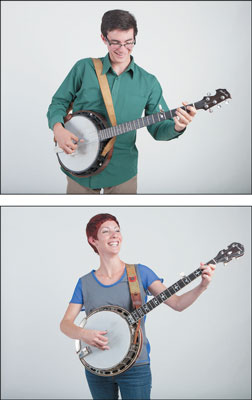
How to Attach a Banjo Strap
Banjo straps attach differently than guitar straps. There are no strap buttons. Instead, the strap hooks onto the bracket hooks (J hooks) that hold the head tension hoop in place. The exact method depends on your strap type and whether you have a resonator or open-back banjo.
This guide covers the three main strap types and how to install each one correctly.
Before You Start: Know Your Banjo’s Attachment Points
Every banjo has bracket hooks (also called J hooks) spaced around the rim. These hooks pull the tension hoop down to tighten the banjo head. They also serve as attachment points for your strap.
To orient yourself, hold the banjo upright in your lap with the strings facing you and the neck pointing straight up (12 o’clock position). The key positions are:
- 2 o’clock — second or third bracket hook to the right of the neck. This is where the neck-side strap end goes.
- 5 o’clock — one or two bracket hooks to the right of the tailpiece. This is where the tailpiece-side strap end goes.
Both attachment points should be on the same side of the banjo (the right side when strings face you, for right-handed players). This puts the strap under the neck heel for support and under the pot near the tailpiece for balance.
How to Attach a Cradle Strap
A cradle strap is the most common type for resonator banjos. It threads through multiple bracket hooks, distributing weight across the rim instead of hanging from just two points. Cradle straps are made entirely of leather or padded material, so nothing metal touches your banjo’s finish.
A standard cradle strap has three pieces: one wide shoulder pad with adjustment slots, and two narrow leather ends with eyelet holes. It also comes with shoelaces (or Chicago screws) for securing the two ends together.
Important: Cradle straps require enough space between the bracket hooks and the rim to thread leather through. Most bluegrass banjos with a one-piece flange have plenty of room. Beginner banjos and open-back banjos often do not — if yours doesn’t, skip to the hook strap or tab strap methods below.
Method 1: Shoelace Attachment (Recommended)
This is the standard method recommended by Deering and other manufacturers. It uses no metal hardware, so there is zero risk of scratching your instrument.
- Remove the shoelaces from both narrow strap ends before starting.
- Thread the neck-side end. Take one narrow leather end and slide it under the bracket hook at the 2 o’clock position, with the finished (smooth) side of the leather facing outward. Thread from left to right, away from the neck.
- Continue threading under the next four or five bracket hooks, moving toward the 3 o’clock position. Pull some excess through so you have room to adjust length later.
- Thread the tailpiece-side end. Take the other narrow end and slide it under the bracket hook at the 5 o’clock position, again with the finished side facing out. Thread from left to right, away from the tailpiece.
- Continue threading under the next three or four hooks until the two narrow ends meet somewhere around 3-4 o’clock.
- Adjust the length. Put the strap over your neck and pull more or less leather through the hooks until the banjo sits at a comfortable playing height. The banjo should hold itself in playing position without your hands.
- Secure the ends together. Where the two leather ends overlap, thread a shoelace through the eyelet holes in both pieces. Tie a double knot — a single knot can work loose and drop your banjo.
- Tuck the overlap back into the bracket hook channel so it sits flush against the rim.
Method 2: Chicago Screw Attachment
Chicago screws (small two-piece metal fasteners) give you more length than shoelaces because each end only needs to pass through one or two hooks instead of four or five. This method works well if the shoelace method leaves your strap too short.
- Thread each narrow leather end under just one or two bracket hooks at the 2 o’clock and 5 o’clock positions.
- Attach the Chicago screws through the eyelet holes to lock each end in place.
- Tighten the screws with a small flathead screwdriver. Check them periodically — they can loosen over time.
Tip: If you thread through multiple hooks with Chicago screws, skip the second-to-last hook so the metal screw heads don’t sit flush against the banjo rim and scratch the finish.
How to Attach a Hook Strap
Hook straps have metal or leather-covered hooks on each end that clip directly onto individual bracket hooks. They are quicker to put on and remove than cradle straps, but they only attach at two points rather than cradling the pot.
- Clip one hook onto the bracket hook at the 2 o’clock position (second or third hook below the neck on the floor side).
- Clip the other hook onto the bracket hook at the 5 o’clock position (one or two hooks past the tailpiece).
- Adjust the length using the buckle or slider on the strap.
Preventing Rattling and Scratches
Metal hooks can cause two problems: rattling against the bracket hooks while you play, and scratching the wood at the neck heel. Here are fixes:
- Wrap the hooks with a small piece of electrical tape, moleskin, or heat-shrink tubing before attaching them.
- Use plastic cable ties as intermediaries — loop a zip tie around the bracket hook, then clip the strap hook to the zip tie instead of directly to the metal.
- Choose leather-covered hooks when buying a strap. They grip better and won’t mar the finish.
As banjo teacher Ross Nickerson recommends, leather tabs are always preferable to bare metal clips for long-term use.
How to Attach a Tab Strap (Open-Back and Beginner Banjos)
If your banjo doesn’t have enough space between the bracket hooks and the rim to thread a cradle strap through, a tab strap is your best option. This is common on beginner banjos and open-back banjos with bracket shoes instead of a one-piece flange.
A tab strap has leather tabs or loops on each end that tie or hook onto individual bracket hooks.
- Tie or loop one tab around the bracket hook at the 2 o’clock position (under the neck). Use a sturdy knot or the snap/hook that came with your strap.
- Tie or loop the other tab around the bracket hook at the 5 o’clock position (near the tailpiece).
- Adjust the length. If the strap is too long, tie a knot in the strap body near one attachment point. If too short, add a strap extender or use a longer strap.
Note on strap buttons: Some inexpensive banjos come with small metal rings or strap buttons screwed into the rim. These are usually positioned poorly (often at 3 and 9 o’clock) and don’t provide neck support. You’ll get better balance attaching to the bracket hooks at 2 and 5 o’clock instead. If your banjo only has strap buttons and no accessible bracket hooks, they’ll work in a pinch, but consider having a luthier install hooks at better positions.
How to Wear the Strap
There are two common wearing positions:
Over one shoulder (guitar style). The strap goes over your right shoulder (for right-handed players) and the banjo hangs at your side. This is simpler but less secure — the strap can slip off your shoulder, especially with a lightweight open-back banjo.
Over the head and across the body. The strap goes over your head and rests on your left shoulder, crossing your chest. This is more secure and keeps the banjo stable. Most experienced players prefer this method, particularly when standing.
For sitting, many resonator banjos are heavy enough to stay in your lap without much strap tension. In that case, loosen the strap slightly so it catches the banjo if it slips but doesn’t fight against your lap positioning.
Adjusting for the Right Height
The banjo should hang so that the neck angles slightly upward and the pot rests against your midsection. A few guidelines:
- Too high: Your fretting hand will be cramped and your picking hand will be awkwardly close to your chest. Lengthen the strap.
- Too low: The neck will angle downward, forcing your fretting wrist into an uncomfortable bend. You’ll also lose picking accuracy. Shorten the strap.
- Just right: Your fretting hand can reach the first few frets without straining, and your picking hand falls naturally over the head near the bridge.
Spend a few minutes adjusting before you commit to tying off your cradle strap ends. Once shoelaces are tied and leather is tucked into the bracket channel, readjusting means untying and re-threading.
Troubleshooting Common Problems
Leather Ends Won’t Fit Under the J Hooks
This is the most common issue with cradle straps. The space between the bracket hooks and the rim varies by banjo model.
- Apply leather conditioner to the strap ends. Stiff new leather softens up and slides through more easily.
- Use a shoehorn or butter knife to guide the leather under tight hooks. Slide the tool under the hook first, then feed the leather along it.
- Trim the leather width slightly with sharp scissors if there’s just a fraction too much material. Only trim a small amount — you can’t add it back.
- Switch to Chicago screws if threading through multiple hooks isn’t feasible. You only need one hook per end with this method.
Strap Is Too Short
- Use the Chicago screw method instead of threading through multiple hooks. This gives you several inches of extra usable length.
- Buy a strap extender — a short leather piece that adds 4-6 inches.
- If you play while seated most of the time, a shorter strap is less of a problem. Adjust it to support the banjo in your lap rather than when standing.
Strap Is Too Long
- Tie a simple overhand knot in the strap near one attachment point to take up slack.
- Thread through additional bracket hooks to use up more strap length.
- If the excess is significant (more than 6 inches), trim the strap and re-punch the attachment holes. Use a leather hole punch, not scissors.
Banjo Feels Neck-Heavy
This is common with lightweight open-back banjos. The pot is too light to counterbalance the neck.
- Move the neck-side attachment point one hook closer to the neck (toward 1 o’clock). This gives the strap more leverage to support the neck.
- Use a wider, padded strap that grips your shoulder better and reduces the feeling of the banjo tipping forward.
Choosing the Right Strap for Your Banjo
If you haven’t bought a strap yet, here’s a quick guide:
| Banjo Type | Best Strap Type | Why |
|---|---|---|
| Resonator with one-piece flange | Cradle strap | Distributes weight, no metal contact, most secure |
| Open-back | Tab strap or hook strap | Not enough space for cradle threading |
| Beginner (budget resonator) | Tab strap | Bracket spacing is often too tight for cradle straps |
| Lightweight open-back | Wide padded tab strap | Extra padding offsets the neck-heavy feel |
For strap recommendations, see our guide to the best banjo straps.
FAQ
Can I use a guitar strap on a banjo?
Not directly. Guitar straps attach to strap buttons, and most banjos don’t have them. You’d need to add strap buttons or use an adapter. It’s better to use a strap designed for banjo bracket hooks.
How tight should a banjo strap be?
Tight enough that the banjo holds itself in playing position when you let go with both hands, but loose enough that you can shift the instrument slightly. When seated, the strap should be a bit looser since your lap does most of the supporting.
Do I need a strap if I only play sitting down?
Heavier resonator banjos usually stay in your lap fine without a strap. But a strap is still useful as a safety net — if the banjo slips, the strap catches it instead of hitting the floor. For lighter open-back banjos, a strap helps prevent the neck from diving forward even when seated.
Will the strap damage my banjo’s finish?
Leather and fabric straps won’t scratch your banjo. Metal hooks and clips can. If you use a hook strap, wrap the hooks with tape or choose a strap with leather-covered hooks. Also, over many years, leather straps can wear the finish at the neck heel where the strap passes under it. Keeping the leather conditioned and clean minimizes this.
Wrapping Up
Attaching a banjo strap is straightforward once you know which type fits your instrument. For resonator banjos with a one-piece flange, a cradle strap threaded through the bracket hooks gives the best weight distribution and security. For open-back and beginner banjos, a tab or hook strap attached at the 2 o’clock and 5 o’clock positions works well.
Whatever method you use, take the time to adjust the length properly before locking everything down. A well-fitted strap makes a noticeable difference in how comfortable and stable your banjo feels, whether you’re practicing rolls at home or standing through a long jam session. If you’re still setting up a new instrument, you might also want to check our guides on how to string a banjo and how to tune a banjo.