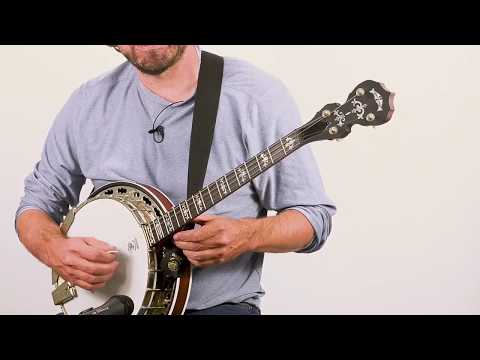
How to Play a 4 String Banjo - The Complete Guide
The 4-string banjo comes in two main forms — the tenor banjo and the plectrum banjo — and each one has a different neck length, tuning, and musical identity. Unlike the 5-string banjo, which uses fingerpicks and a thumb string for bluegrass rolls, the 4-string is played with a flat pick (plectrum) and focuses on chord strumming, melody playing, and single-note runs.
This guide covers both types of 4-string banjo, their tunings, right- and left-hand technique, chords, rhythm patterns, and a clear path from first strum to playing songs.
Tenor vs Plectrum: Know Which One You Have
Before anything else, identify what you are holding. The two 4-string banjos look similar but differ in scale length and tuning, which changes everything about how you play them.
Tenor banjo — Has a shorter neck, typically 17 or 19 frets. The 17-fret version is common in Irish traditional music. The 19-fret version appears in jazz, Dixieland, and swing. Tenor banjos are tuned in fifths, which means chord shapes are compact and moveable.
Plectrum banjo — Has a longer neck with 22 frets, the same scale length as a 5-string banjo but without the short fifth string. Plectrum banjos were the backbone of 1920s jazz rhythm sections and are still used in Dixieland and trad jazz.
If you are not sure which you have, count the frets. A 22-fret neck means plectrum. A 17- or 19-fret neck means tenor. The number of strings is the same on both, so fret count is the quickest way to tell them apart.
Tuning Your 4-String Banjo
Getting the tuning right is the first real step. A 4-string banjo that is even slightly out of tune will sound harsh because the bright, metallic tone of the instrument amplifies pitch problems.
Standard Tenor Tuning: CGDA
The standard tenor tuning is C-G-D-A, from the lowest (4th) string to the highest (1st) string. The intervals between each string are all perfect fifths — the same interval pattern as a viola or cello. This tuning is used in jazz, Dixieland, and American folk styles.
Starting chords in CGDA tuning:
- C major — open 4th string, open 3rd string, 2nd fret on the 2nd string, 3rd fret on the 1st string
- F major — move the C shape over one string set: open 4th, 2nd fret on the 3rd, 3rd fret on the 2nd, open 1st
- G major — 2nd fret on the 4th, open 3rd, open 2nd, 2nd fret on the 1st
With just these three chords you can play dozens of songs in the key of C.
Irish Tenor Tuning: GDAE
Irish players tune the tenor banjo G-D-A-E, one octave below a mandolin or violin. This tuning was popularized by Barney McKenna of The Dubliners and is now the standard for Irish traditional music. If you play fiddle or mandolin, all your scale patterns and fingerings transfer directly to this tuning.
Plectrum Tuning: CGBD
The standard plectrum tuning is C-G-B-D. This is essentially the same as the top four strings of a 5-string banjo in open C tuning, minus the drone string. Some plectrum players use “Chicago tuning” (D-G-B-E), which matches the top four strings of a guitar and makes it easy for guitarists to cross over.
Tuning Tips
- Use a clip-on chromatic tuner. They are inexpensive, accurate, and work well on banjos where the bright overtones can confuse phone apps.
- Always tune up to pitch, not down. If a string is sharp, drop it below the target note and then tune up. This seats the string properly at the nut and bridge.
- New strings stretch significantly. Expect to retune several times during your first few playing sessions after a string change.
Choosing Between Open-Back and Resonator
This choice affects your volume and tone more than any playing technique. An open-back banjo has a mellower, quieter sound because the sound radiates out the back and dissipates. A resonator banjo has a wooden plate on the back that reflects the sound forward, making it louder and brighter.
For 4-string players:
- Resonator is the traditional choice for jazz and Dixieland, where you need to project alongside horns and drums.
- Open-back works well for quieter settings, home practice, or folk styles where you want a softer tone.
- Resonator banjos are heavier. If you are going to play standing for long periods, factor in the weight.
If you are just starting out and shopping for your first banjo, a resonator model gives you the classic 4-string sound. You can always remove the resonator later for a different tone.
How to Hold the Banjo
Sit in a straight-backed chair with both feet flat on the floor. Rest the banjo body on your right thigh (if you are right-handed) with the pot (drum head) angled slightly toward you — roughly 15 to 20 degrees from vertical. The neck should angle upward at about 45 degrees.
Your right forearm rests on the upper edge of the pot, roughly where the armrest is (most 4-string banjos have one). The weight of your forearm helps stabilize the instrument. Your wrist should float near the bridge but not touch it — touching the bridge or the strings near it will mute the sound.
If you play standing, use a strap attached to the bracket hooks or a strap button on the heel of the neck. Keep the same angle — pot slightly toward you, neck at 45 degrees.
Right Hand: Flat Pick Technique
This is where the 4-string banjo differs most from the 5-string. You do not use fingerpicks. You use a single flat pick (plectrum), held between your thumb and index finger.
Choosing a Pick
- Thickness: Medium to heavy (0.73mm to 1.0mm) gives the best tone on a banjo. Thin picks produce a weak, slappy sound.
- Material: Nylon or Delrin picks are durable and provide consistent tone. Celluloid picks sound good but crack easily. Tortex picks are a reliable middle ground.
- Grip surface: Picks with a textured or raised-grip surface (like Snarling Dogs Brain Picks) prevent slipping during fast strumming.
How to Hold the Pick
Rest the pick on the side of your curled index finger, then press your thumb down on top. The pick tip should extend about 5-8mm beyond your fingertip. Keep your grip firm enough that the pick does not fly out, but loose enough that your hand stays relaxed.
Basic Strumming
Start with all downstrokes. Strum across all four strings in a single fluid motion, leading with the wrist rather than the whole forearm. Keep the pick angle nearly parallel to the strings — tilting it too much causes the pick to catch and stutter.
Once downstrokes feel natural, add upstrokes. The fundamental rhythm pattern for most 4-string banjo playing alternates between down and up:
Down-Down-Up-Up-Down-Up (a common pattern in jazz and trad styles)
Practice this at a slow tempo with a metronome set to 60 BPM. Speed comes from relaxation, not effort.
Left Hand: Fretting Technique
Place your thumb on the back of the neck, roughly behind the 5th fret dot. This is your anchor point. Your fingers should arch over the fretboard so that your fingertips press the strings straight down, just behind (not on top of) the fret wire.
Common mistakes to avoid:
- Flat fingers — If your fingers lay flat across the fretboard, they will mute adjacent strings. Curl them.
- Thumb creeping over the top — Unlike guitar, a banjo’s narrow neck does not accommodate a thumb-over grip. Keep it behind the neck.
- Squeezing too hard — Banjo strings have relatively low tension. You need less pressure than you think. Excessive pressure causes hand fatigue and pulls notes sharp.
Learning Your First Chords
The chord shapes you learn depend entirely on your tuning. Here are starter chords for the two most common 4-string tunings.
Chords in CGDA (Standard Tenor)
| Chord | 4th (C) | 3rd (G) | 2nd (D) | 1st (A) |
|---|---|---|---|---|
| C | 0 | 0 | 2 | 3 |
| F | 0 | 2 | 3 | 0 |
| G | 2 | 0 | 0 | 2 |
| Am | 0 | 2 | 2 | 0 |
| Dm | 0 | 0 | 3 | 1 |
(0 = open string, numbers = fret position)
Chords in GDAE (Irish Tenor)
| Chord | 4th (G) | 3rd (D) | 2nd (A) | 1st (E) |
|---|---|---|---|---|
| G | 0 | 0 | 2 | 0 |
| D | 0 | 0 | 2 | 2 |
| C | 0 | 2 | 0 | 0 |
| Em | 2 | 2 | 0 | 0 |
| Am | 0 | 2 | 2 | 0 |
Practice switching between two chords at a time. Set a metronome to 50 BPM and change chords on every beat. When that feels clean, increase the tempo by 5 BPM. This is more effective than playing full songs with sloppy chord transitions.
Strumming Patterns and Rhythm
Once you can switch between chords smoothly, start applying these rhythm patterns. All are written as a sequence of downstrokes (D) and upstrokes (U) across one measure of 4/4 time.
Pattern 1 — Quarter note strum (simplest) D - D - D - D
Pattern 2 — Eighth note alternating D U D U D U D U
Pattern 3 — Boom-chuck (common in jazz/Dixieland) Bass note (pluck the lowest note of the chord) then strum the remaining strings upward. This creates a rhythmic “oom-pah” feel.
Pattern 4 — Swing strum Long-short, long-short. Accent the downbeats and make the upstrokes lighter and quicker. This shuffle feel is the foundation of jazz banjo rhythm.
To develop your sense of rhythm, practice with recordings rather than just a metronome. Play along with simple songs at a comfortable tempo and focus on locking in with the beat.
Single-Note Melody Playing
The 4-string banjo is not just a rhythm instrument. Tenor banjo players in Irish music play fast single-note melodies (jigs, reels, hornpipes), and jazz plectrum players play chord-melody arrangements that combine melody with harmony.
To start playing melodies:
- Learn the major scale in your tuning. In CGDA, start on the open 4th string (C) and play C-D-E-F-G-A-B-C across the strings. Map out where every note lives on the fretboard.
- Practice scale runs with alternate picking — strict down-up-down-up. This is how you build speed for melody playing.
- Learn melodies by ear first. Pick a simple tune you know well — “Twinkle Twinkle Little Star,” “When the Saints Go Marching In” — and find the notes on the fretboard without looking at tab. This trains your ear and your knowledge of the fretboard simultaneously.
For Irish tenor players specifically, the Online Academy of Irish Music (OAIM) offers structured courses that teach tunes phrase by phrase in GDAE tuning.
Techniques That Add Expression
Once you have basic strumming and melody playing down, these techniques make your playing more musical.
Hammer-ons — Fret a note by “hammering” a finger down onto the string without picking it. Produces a smooth, connected sound between two notes.
Pull-offs — The reverse of a hammer-on. Pluck a fretted note and then pull your finger off to let a lower note ring. Useful for ornaments in Irish music.
Slides — Pick a note and then slide your fretting finger up or down to a different fret while the note is still ringing. Slides add a vocal quality to melodies.
Triplets — A three-note ornament played in the space of one beat. In Irish music, triplets (usually a combination of hammer-ons and pull-offs) are one of the defining sounds of the tenor banjo style.
Muting — Lightly rest the edge of your right palm against the strings near the bridge to produce a short, punchy “chick” sound. Used heavily in jazz rhythm playing to create a percussive backing.
Songs to Start With
The best way to learn the banjo is to play actual music as early as possible. Here are good first songs organized by style.
For jazz/Dixieland (CGDA or CGBD tuning):
- “When the Saints Go Marching In” — three chords, strong melody
- “Five Foot Two, Eyes of Blue” — classic plectrum banjo song
- “Alabama Jubilee” — a bit faster, good for developing your strum speed
For Irish traditional (GDAE tuning):
- “The Mist Covered Mountain” — a slow reel, good for learning ornaments
- “The Kesh Jig” — standard session tune, moderate tempo
- “Drowsy Maggie” — another common reel with a satisfying melody
For general folk/pop (any tuning):
- “You Are My Sunshine”
- “Ring of Fire”
- “Wagon Wheel”
Find tablature or chord charts for your specific tuning. The Banjo Hangout forums have a large archive of 4-string tab and discussion threads for both tenor and plectrum players.
Building a Practice Routine
Consistent, focused practice beats long, unfocused sessions every time. Here is a 30-minute daily routine that covers the fundamentals.
Minutes 1-5: Warm up. Play open strings with alternate picking (down-up). Focus on even tone and consistent volume across all four strings.
Minutes 5-12: Scales. Play the C major scale (or G major for Irish tuning) up and down the neck. Then play it in different positions. Use a metronome.
Minutes 12-20: Chord changes. Pick two or three chords and practice switching between them on the beat. Start slow, aim for clean changes.
Minutes 20-28: Song practice. Work on a specific song or tune. Break it into 4-bar phrases. Master each phrase before connecting them.
Minutes 28-30: Cool down. Play something you already know well, or just strum freely. End each session on a positive note.
Track your metronome speeds in a notebook or app. Seeing your tempo go from 60 BPM to 100 BPM on a scale run over a few weeks is concrete proof of progress.
Common Mistakes to Avoid
Using the wrong tuning. The biggest mistake beginners make with 4-string banjos is tuning to a 5-string tuning like Open G (gDGBD). A 4-string banjo without the short 5th drone string does not work with 5-string tunings. Use CGDA (tenor), GDAE (Irish tenor), or CGBD (plectrum) depending on your instrument and style.
Using fingerpicks instead of a flat pick. Fingerpicks are for 5-string banjo styles like Scruggs picking and clawhammer. The 4-string banjo was designed for flat pick playing.
Ignoring the metronome. The banjo is a rhythm instrument first. If your timing is shaky, nothing else will sound right. Use a metronome from day one.
Trying to play too fast too soon. Speed is a byproduct of accuracy. If you cannot play a passage cleanly at 60 BPM, playing it at 120 BPM will just reinforce bad habits.
Neglecting your banjo setup. High action (strings too far from the fretboard) makes a banjo physically harder to play. If fretting notes requires excessive force, take the banjo to a luthier for a setup. A properly set-up banjo transforms the playing experience.
Where to Go from Here
Once you can strum chords, play basic melodies, and keep time, you are ready to branch out.
- Join a jam session. Playing with other musicians develops your timing and ear faster than anything else. Look for local Irish sessions, Dixieland bands, or folk jams.
- Study chord voicings up the neck. Learning the same chord in multiple positions gives you smoother voice leading and more interesting arrangements.
- Work on chord-melody. This technique — playing the melody on the top string while filling in harmony with the lower strings — is what separates intermediate 4-string players from advanced ones.
- Listen widely. Study recordings of Eddy Davis (jazz plectrum), Barney McKenna (Irish tenor), and Gerry O’Connor (Irish tenor) to hear the range of what a 4-string banjo can do.
- Find the right instrument for your advancing skill level if you started on a budget model. A better banjo with a quality tone ring and proper setup makes advanced techniques easier to execute.
The 4-string banjo has a distinct voice — bright, rhythmic, and cutting — that fills a role no other instrument can. Whether you are driving a Dixieland rhythm section or tearing through an Irish reel, the fundamentals are the same: solid timing, clean technique, and knowing your fretboard. Put in the practice and the music will follow.