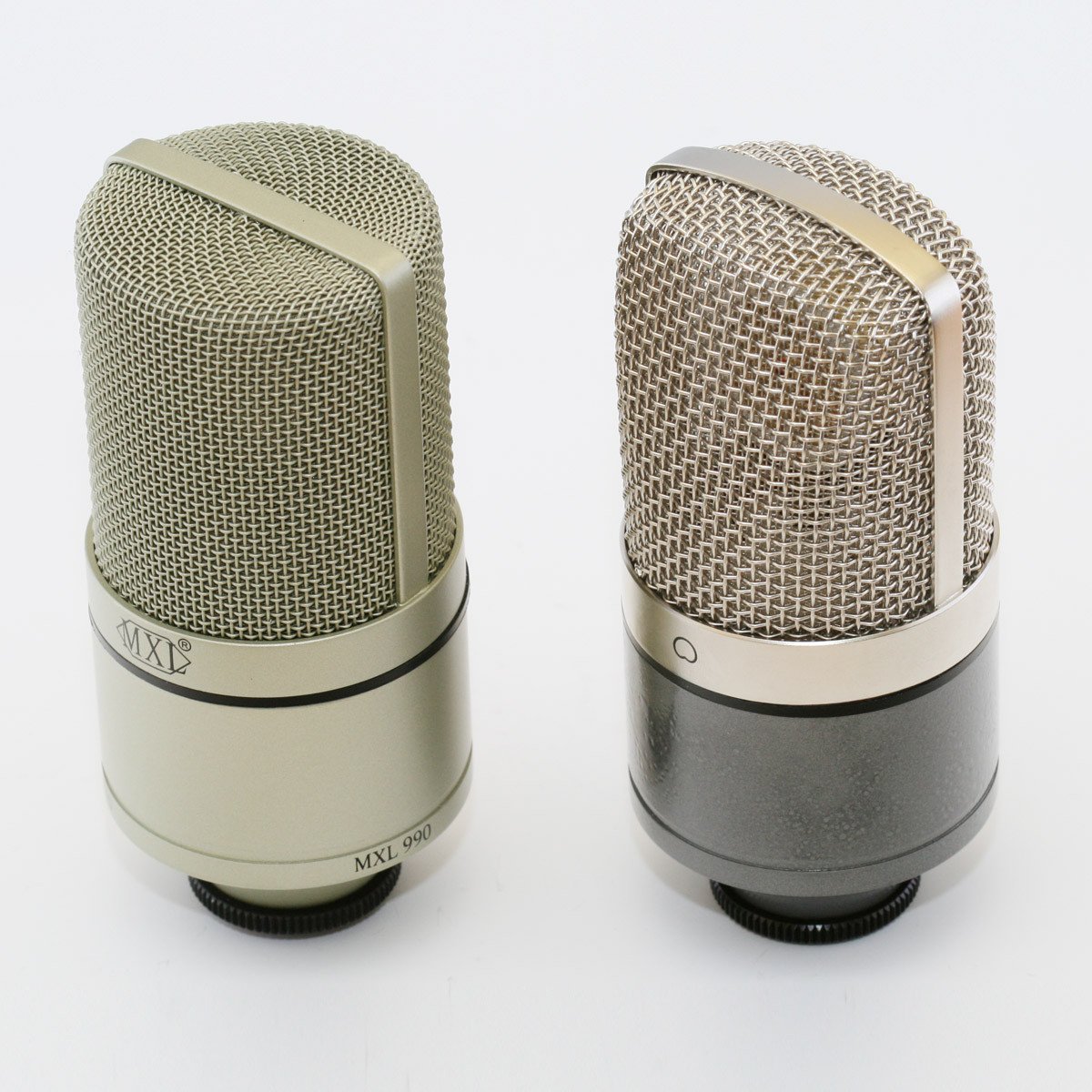
MXL 770 Vs. MXL 990 Microphones: Complete Comparison
The MXL 770 and MXL 990 are two of the most common entry-level condenser microphones you will find recommended for home studios. They come from the same manufacturer, sit at a similar price point, and look almost interchangeable on a spec sheet. But they sound noticeably different, and picking the wrong one for your use case means fighting your recordings in post instead of working with them.
This comparison covers the real differences between these two microphones — how they actually sound, where each one works best, and which one makes more sense depending on what you record.
Who Are These Microphones For?
Both the MXL 770 and MXL 990 are large-diaphragm cardioid condenser microphones. They require 48V phantom power, which means you need an audio interface or mixer to use them. You will also need an XLR cable — these are not USB microphones.
They are aimed at the same buyer: someone setting up a home studio or project studio for vocals, podcasting, voiceover, or acoustic instrument recording. Neither microphone is intended for live performance or high-SPL applications like close-miking a guitar amp.
If you are still deciding between condenser and dynamic microphones, or evaluating other options in this range, our best condenser microphones under 200 guide covers the full landscape. For an even tighter budget, the best vocal mic under 100 guide has solid picks.
Sound Character: The Main Difference
This is where the comparison actually matters, and where these two microphones diverge the most.
MXL 770: Fuller and Smoother
The MXL 770 has a warmer, more balanced sound. The low end is present without being boomy, and the high frequencies are lifted gently rather than aggressively. The result is a sound that sits well in a mix without needing heavy EQ work.
On spoken word and vocal recordings, the 770 sounds natural. It does not thin out male voices the way some budget condensers do, and it handles female vocals without adding harsh sibilance. The presence peak is restrained enough that you can record a podcast episode or voiceover session and get a usable take without reaching for a de-esser immediately.
The 770 also handles acoustic instruments well. Guitar recordings have body and detail, and piano captures sound balanced across the frequency range.
MXL 990: Brighter and Thinner
The MXL 990 has a more pronounced high-frequency character. The upper mids and treble are pushed forward, which gives recordings an airy, bright quality. On the right source — a darker voice that needs some lift, or an acoustic guitar that needs sparkle — this can work in your favor.
The tradeoff is that the 990’s low end is noticeably thinner than the 770’s. Male vocals can sound slightly hollow, and spoken word recordings lack the chest resonance that makes a voice sound authoritative. The brightness in the high end can also become fatiguing on sources that are already bright, like a soprano voice or a steel-string acoustic.
If you listen to direct A/B comparisons (and there are several good ones from Podcastage and other reviewers on YouTube), the 770 consistently sounds fuller and more polished. The 990 is not a bad microphone, but it requires more corrective EQ to get to a similar place.
Build Quality and Design
Both microphones are solidly built for their price range. The bodies are metal construction with metal grilles, though they are lighter than you might expect — neither feels cheap, but neither feels like a premium studio microphone either.
MXL 770
The 770 has a matte black finish with gold accents. It is the physically larger microphone of the two, measuring roughly 59 mm x 158 mm and weighing about one pound. The overall look is understated and modern.
MXL 990
The 990 has a champagne-gold finish with a black grille. It is shorter and slightly heavier at about 1.2 pounds, measuring approximately 60 mm x 130 mm. The aesthetic has a vintage feel that some people prefer.
Design preference is subjective, but it has zero impact on recording quality. Pick whichever look you prefer — or, more practically, whichever sound signature matches your needs.
Features: Where the 770 Pulls Ahead
This is the clearest objective advantage the MXL 770 has over the 990.
Pad and Filter Switches
The MXL 770 includes two switches on the body:
- -10 dB attenuation pad — reduces the signal level before it hits the capsule, allowing you to record louder sources without distortion. Useful if you are recording a loud singer, a brass instrument, or anything that pushes high SPL levels.
- High-pass filter (150 Hz, 6 dB/octave) — rolls off low frequencies below 150 Hz. This cuts out room rumble, HVAC noise, and proximity effect buildup when you are recording close to the microphone.
The MXL 990 has neither of these switches. What you hear is what you get, with no onboard adjustments. You can achieve similar results with EQ and gain adjustments in your DAW or on your audio interface, but having hardware switches on the microphone is faster and cleaner — especially the pad, which prevents clipping at the capsule level where software cannot fix it after the fact.
Accessories
Both microphones ship with a shock mount and a hard carrying case. The shock mounts are functional and adequate for home studio use, though neither is as robust as what ships with higher-end condensers. Both microphones use standard large-diaphragm shock mount threading.
Technical Specifications
Here is a side-by-side of the specs that actually matter for making a decision.
| Specification | MXL 770 | MXL 990 |
|---|---|---|
| Type | Large-diaphragm condenser | Large-diaphragm condenser |
| Polar Pattern | Cardioid | Cardioid |
| Frequency Response | 30 Hz — 20 kHz | 30 Hz — 20 kHz |
| Sensitivity | 15 mV/Pa | 15 mV/Pa |
| Max SPL (0.5% THD) | 137 dB | 130 dB |
| Self-Noise (S/N Ratio) | 74 dB | 80 dB |
| Impedance | 150 ohms | 200 ohms |
| Pad Switch | -10 dB | None |
| High-Pass Filter | 150 Hz, 6 dB/octave | None |
| Power Requirement | 48V phantom | 48V phantom |
| Weight | 1 lb (420g) | 1.2 lb (544g) |
A few things to note in these specs:
Max SPL: The 770’s higher max SPL of 137 dB (plus the -10 dB pad that effectively extends it to 147 dB) means it can handle louder sources without distorting. The 990 tops out at 130 dB with no pad option. For vocals and spoken word this difference rarely matters, but for recording louder instruments it is significant.
Signal-to-Noise Ratio: The 990 has a better S/N ratio on paper (80 dB vs 74 dB), meaning it produces slightly less self-noise. In practice, both microphones are quiet enough for home recording, and the difference is unlikely to be audible in a treated room.
Frequency Response: Both claim 30 Hz to 20 kHz, but the frequency response curves are shaped differently. The 770’s curve is flatter and warmer, while the 990 has more energy in the upper frequencies. The numbers alone do not tell you how a microphone sounds — the shape of the curve matters more than the endpoints.
Best Use Cases
MXL 770 Works Best For
- Vocals (singing and spoken word) — The balanced sound and gentle presence lift flatter most voice types without requiring heavy post-processing. It handles both male and female vocals well.
- Podcasting and voiceover — The warmth and fullness make spoken word recordings sound professional. The built-in high-pass filter is genuinely useful for cutting room noise during podcast sessions.
- Acoustic instruments — Guitar, piano, and strings all sound natural through the 770. The fuller low end adds body without muddiness.
- Home studios with variable acoustics — The pad switch and high-pass filter give you more control over your signal chain, which matters when your recording environment is not perfectly treated.
MXL 990 Works Best For
- Bright or airy vocal styles — If you want an upfront, present vocal sound and your voice is on the darker side, the 990’s natural brightness can help without needing EQ boost.
- Acoustic guitar (steel string) — The high-frequency emphasis can add clarity and shimmer to acoustic guitar recordings, particularly fingerpicking styles.
- Paired with a small-diaphragm mic — MXL sells the 990 bundled with the MXL 991 pencil condenser, which is a strong value if you want a two-mic setup for recording acoustic guitar and vocals simultaneously.
Common Questions
Do I Need a Pop Filter With Either Microphone?
Yes. Both microphones are sensitive to plosives (the burst of air from hard “P” and “B” sounds). A basic pop filter or foam windscreen is a worthwhile addition. Condenser microphones generally perform best when you maintain at least six inches of distance, and a pop filter helps enforce that spacing naturally.
Can I Use These Without an Audio Interface?
No. Both are XLR condenser microphones that require 48V phantom power. You need an audio interface, mixer, or standalone preamp that supplies phantom power. If you are just getting started, our beginner audio interface guide covers reliable options that pair well with these microphones.
Are These Good for Streaming or Gaming?
They can work, but they are not ideal. Condenser microphones pick up more ambient noise than dynamic microphones, which means your keyboard clicks, mouse sounds, and room noise will be audible. A dynamic microphone like the Shure SM58 or Audio-Technica ATR2100x is a better fit for untreated rooms with background noise.
How Do These Compare to the Audio-Technica AT2020?
The AT2020 sits in the same general category and price range. Its sound is cleaner and more neutral than either MXL, but it ships with fewer accessories (no shock mount, no carrying case). The MXL 770 is warmer with more low-end body, while the AT2020 is flatter and more transparent. The 990 is brighter than both. Our condenser microphone guide covers all three in detail.
The Verdict
The MXL 770 is the better microphone for most people. It sounds more balanced, has more onboard features (pad and high-pass filter), handles a wider range of sources, and costs roughly the same as the 990. The included accessories are equivalent between the two, so there is no savings advantage to the 990 either.
The MXL 990 is not a bad microphone — it is a capable budget condenser that has worked well for thousands of home recordings. But it is a more specialized tool. Its bright character suits specific voices and specific sources, and it lacks the flexibility that the 770’s switches provide.
If you are choosing between these two and do not have a specific reason to prefer the 990’s brighter sound, get the MXL 770. It is more versatile, more forgiving of imperfect recording conditions, and easier to get a good sound out of without extensive post-processing.
For a broader look at what is available in this price range, including options from Audio-Technica, AKG, and Rode, see our full condenser microphones under 200 guide.