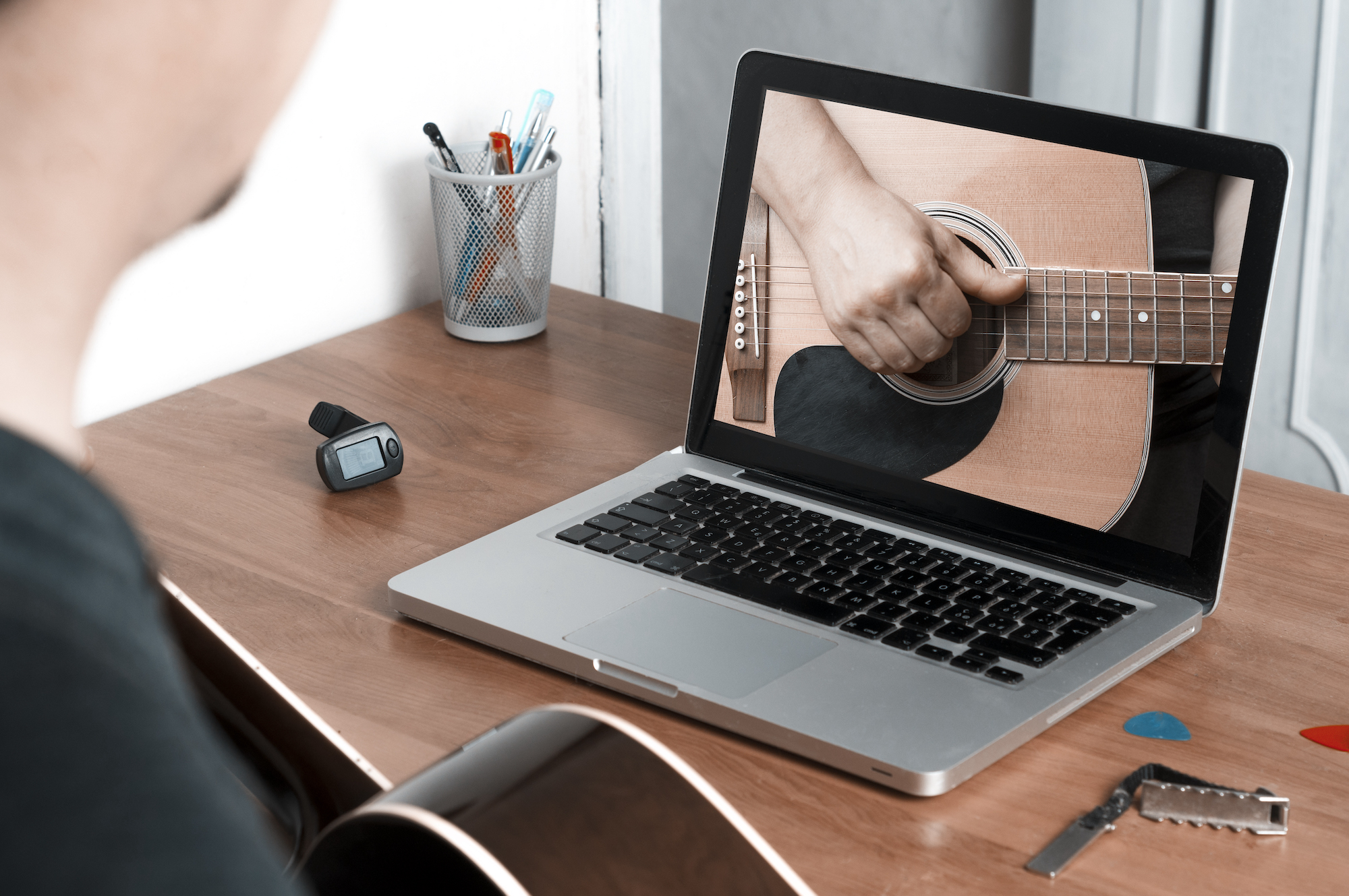
The Best Online Guitar Lessons Beginner Guitarists Should Try Out
The barrier to learning guitar has never been lower. Between structured subscription platforms, free YouTube channels, and apps that listen to your playing in real time, a beginner in 2026 has access to better instruction than most music school students had twenty years ago.
But the sheer number of options creates its own problem. Some platforms are built for total beginners who have never held a guitar. Others assume you already know your open chords and want to dive into blues phrasing or jazz voicings. Picking the wrong one wastes your time and your motivation.
This guide breaks down the platforms worth your attention, what each one actually does well, and how to choose based on where you are right now as a player.
How Online Guitar Lessons Actually Work
Most platforms follow one of three models:
- Structured video courses — You follow a curriculum from lesson one through increasingly advanced material. Instructors record lessons in advance. You watch, practice, and move on. Guitar Tricks and TrueFire work this way.
- App-based interactive learning — Your phone or tablet listens to your guitar through the microphone and gives you real-time feedback on whether you are playing the right notes. Fender Play, Simply Guitar, and Yousician use this approach.
- Personalized feedback — You submit video recordings of your playing, and an instructor reviews them and sends back targeted advice. Pickup Music is the standout here.
Each model has tradeoffs. Structured courses give you depth but no accountability. Apps give you instant feedback but can miss technique problems (posture, hand tension, muting). Personalized feedback platforms bridge that gap but require more commitment.
The Best Online Guitar Lesson Platforms
Guitar Tricks — Best Overall for Structured Learning
Guitar Tricks has been around for over 25 years, and that longevity shows in the depth of its library. The platform has more than 11,000 video lessons organized into a Core Learning System that lets you pick your skill level and preferred genre, then follow a clear path through the material.
What stands out:
- The Artist Studies section breaks down the playing styles of guitarists like Stevie Ray Vaughan, Jimmy Page, and Eddie Van Halen, taught by instructors who genuinely understand those styles
- Over 1,000 songs in the learning library with step-by-step tutorials
- Most instructors are Musicians Institute graduates with professional teaching and performing backgrounds
- Downloadable lessons for offline practice
Where it falls short:
- Video streaming can lag even on fast connections
- No dedicated bass guitar curriculum
- Genre coverage leans heavily toward rock, blues, and country — limited material for reggae, gospel, or Latin styles
Guitar Tricks works well for self-motivated players who want a structured path but do not need someone looking over their shoulder. If you are past the absolute beginner stage and want to build real technique across genres, this is a strong starting point.
Fender Play — Best for Complete Beginners
Fender Play was built by one of the most recognizable guitar brands in the world, and the platform reflects that pedigree. It is designed specifically to get beginners playing songs as quickly as possible — often within the first few lessons.
What stands out:
- Over 11,000 video lessons, organized into bite-sized segments that respect short attention spans
- You start playing simplified versions of real songs by lesson four
- Covers electric guitar, acoustic guitar, bass, and ukulele
- Clean, minimal interface that does not overwhelm new players
- Learning paths organized by genre (rock, pop, blues, country, folk)
Where it falls short:
- The platform leans heavily on promoting Fender products — every lesson features Fender guitars, amps, and pedals
- Intermediate and advanced players will outgrow it quickly
- No community forum or peer interaction
Fender Play is the right choice if you have never played before and want a low-friction way to start. It is less useful once you have the basics down. If you are figuring out the best way to teach yourself guitar, Fender Play handles the earliest stage well.
JustinGuitar — Best Free Option
JustinGuitar is the exception to the rule that you get what you pay for. Justin Sandercoe has been teaching guitar online since 2003, and his free beginner course is genuinely one of the best-structured guitar curricula available at any price.
What stands out:
- The entire beginner and intermediate course is free, with no paywall
- Lessons are organized in a logical progression that builds on previous material
- Justin’s teaching style is patient, clear, and focused on practical skills
- A large community of self-taught players who share the same learning path
- Companion app available for structured practice
Where it falls short:
- The website organization can feel cluttered, especially for new visitors trying to find the right starting point
- Advanced material is thinner than paid platforms
- No interactive feedback — you are watching videos, not getting evaluated
If budget is a concern, start here. JustinGuitar covers more ground for free than some platforms cover in their paid tiers. The Berklee College of Music has acknowledged the quality of his teaching approach, and the sheer number of players who learned through his courses speaks for itself.
TrueFire — Best for Intermediate and Advanced Players
TrueFire is not trying to teach you your first chord. With over 50,000 lessons from more than 600 instructors, it is built for players who already have the fundamentals and want to go deeper into specific styles, techniques, or theory.
What stands out:
- The deepest library of any platform, covering extremely niche topics (upright jazz, fingerstyle arrangements, hybrid picking masterclasses)
- Tabs and notation sync to the video in real time — they pause when the instructor talks and resume during playing
- Covers guitar, bass, banjo, ukulele, mandolin, and harmonica
- One-time purchase options for individual courses alongside the subscription
- Learning Paths provide structured curricula organized by genre and skill level
Where it falls short:
- The volume of content can overwhelm newer players who do not know what they should focus on
- The professional tone may intimidate beginners
- Some courses are clearly better produced than others given the large instructor roster
TrueFire is where you go when you know what you want to work on. If you want to learn chord melody jazz, or nail Telecaster country licks, or understand modes in a practical context, TrueFire probably has a course from someone who has spent their career doing exactly that.
Pickup Music — Best for Personalized Feedback
Pickup Music solves the biggest problem with online learning: nobody is watching you play. The platform combines structured courses with one-on-one video feedback from real instructors, which fills the gap that video-only platforms cannot.
What stands out:
- You submit videos of your playing, and an instructor sends back personalized feedback
- Personalized learning plans based on your goals and current level
- Day-by-day lesson structure removes the guesswork from practice sessions
- Over 60 courses covering everything from CAGED system deep dives to genre-specific playing
- Rated 4.8 out of 5 on Trustpilot
Where it falls short:
- The feedback model requires you to actually record and submit videos, which takes more effort than passive watching
- Smaller song library compared to Guitar Tricks or Fender Play
- Less content for absolute beginners compared to Fender Play
Pickup Music is worth considering if you have been playing for a while but feel stuck. The personalized feedback catches technique problems — hand position, tension, timing — that no pre-recorded video can identify.
Simply Guitar — Best App-Based Learning
Simply Guitar takes the gamified approach pioneered by its sister app Simply Piano and applies it to guitar. The app listens to your playing through your device microphone and scores your accuracy in real time.
What stands out:
- The app detects what you are playing and gives immediate right/wrong feedback
- Points-based scoring system that makes practice feel more like a game
- Simple, swipeable interface designed for phones and tablets
- Short, focused lessons that work well for daily practice in small windows
Where it falls short:
- Only one native instructor walks through the concepts
- The gamified approach works for chords and simple melodies but struggles with nuanced technique
- Designed primarily for beginners — intermediate players will hit the ceiling quickly
Simply Guitar works best as a supplement to other learning, or as a way to build the daily practice habit before committing to a more structured platform.
Electric or Acoustic — Which Should You Start With?
This question comes up constantly, and the honest answer is that either one works. The better question is which one you will actually pick up and play every day.
Acoustic guitar builds finger strength faster because the strings require more pressure. You do not need any additional gear — no amp, no cables, no pedals. You sit down and play. For most beginners, that simplicity removes friction.
Electric guitar is physically easier to play. The strings are thinner, the action is typically lower, and fretting requires less force. If you are drawn to rock, blues, or metal, starting on electric keeps you motivated because you are playing the sounds you actually want to hear. You will need an amp, though — even a small practice amp or a headphone amp counts. If you end up recording guitar at home later, you will want a beginner audio interface regardless of which type you choose.
The guitar that keeps you practicing is the right guitar. Do not overthink this.
What Online Lessons Cannot Replace
Online platforms are genuinely good now. The instruction quality on the best platforms rivals what you would get from a competent private teacher. But there are real limitations worth understanding before you commit:
Technique Correction
A video lesson cannot see that your thumb is wrapped too far over the neck, that your wrist is at a bad angle, or that you are tensing your shoulder. These are the kinds of problems that compound over months and create pain or plateaus. According to research from Edith Cowan University, the absence of immediate physical feedback is the most significant drawback of remote music instruction.
Platforms with video submission feedback (like Pickup Music) partially address this. But nothing fully replaces having someone in the room with you, at least occasionally.
Accountability
Self-paced learning only works if you actually do it. The flexibility that makes online lessons appealing — learn anytime, anywhere, at your own speed — is the same flexibility that lets you skip a week, then a month, then quietly cancel your subscription.
If you struggle with consistency, consider combining an online platform with a monthly check-in lesson from a local teacher. The online platform handles the curriculum. The teacher handles accountability and technique checks.
Playing With Other People
Guitar is ultimately a social instrument. You can learn every scale and chord voicing in isolation, but playing with a drummer, locking into a groove with a bassist, or trading solos with another guitarist develops skills that no online platform teaches.
Once you have the basics down, find a jam session, an open mic, or another beginner to play with. That experience will accelerate your progress more than any additional subscription.
How to Choose the Right Platform
Skip the feature comparison charts and ask yourself three questions:
Where are you right now? If you have never played, Fender Play or JustinGuitar will get you started without overwhelming you. If you can play basic chords and want to level up, Guitar Tricks or Pickup Music give you more structure. If you already have solid fundamentals and want to specialize, TrueFire has the depth.
How do you learn best? If you are disciplined and self-directed, structured video courses work. If you need external motivation, app-based platforms with gamification (Simply Guitar, Yousician) keep you coming back. If you want genuine feedback, Pickup Music is the only platform doing this well at scale.
What do you want to play? If you want to strum campfire songs, you do not need TrueFire’s 50,000-lesson library. If you want to play jazz or advanced fingerstyle, Fender Play will not get you there. Match the platform to your actual goals, not to a feature list.
Most platforms offer free trials. Try two or three before committing. And remember — the platform matters less than the practice. Thirty minutes of focused, daily practice on a mediocre platform will always beat sporadic sessions on the best one.
Frequently Asked Questions
Can You Actually Learn Guitar From Online Lessons?
Yes. The structured platforms available now are significantly better than what existed even five years ago. Players who follow a curriculum consistently and supplement with regular practice can reach an intermediate level within a year. The key word is consistently — the platform provides the material, but you provide the discipline.
Are Free Guitar Lessons Good Enough?
JustinGuitar proves that free lessons can be excellent. YouTube also has outstanding individual teachers. The tradeoff with free resources is that you have to curate your own learning path, which requires knowing what to work on next. Paid platforms solve this by sequencing the material for you.
How Long Does It Take to Get Good?
With daily practice of 30 to 60 minutes, most beginners can play simple songs within a few weeks, strum confidently through common chord progressions within two to three months, and handle more complex material within six months to a year. “Good” is subjective — define what it means to you, then work backward from there.
Do I Need Any Gear Beyond a Guitar?
At minimum, you need a guitar, a tuner (free phone apps work fine), and a few picks. A capo is useful for playing along with songs. If you are using an app-based platform, you need a phone or tablet. If you are playing electric, you need some kind of amplification. Beyond that, gear is optional until you start recording at home or performing. A good vocal mic can double as a room mic for acoustic guitar practice recordings if you want to review your playing.
Should I Take Private Lessons Instead?
Ideally, both. Online platforms excel at delivering curriculum at your pace. Private teachers excel at correcting technique and providing accountability. If you can afford one private lesson per month alongside a daily online practice routine, that combination will outperform either approach alone.