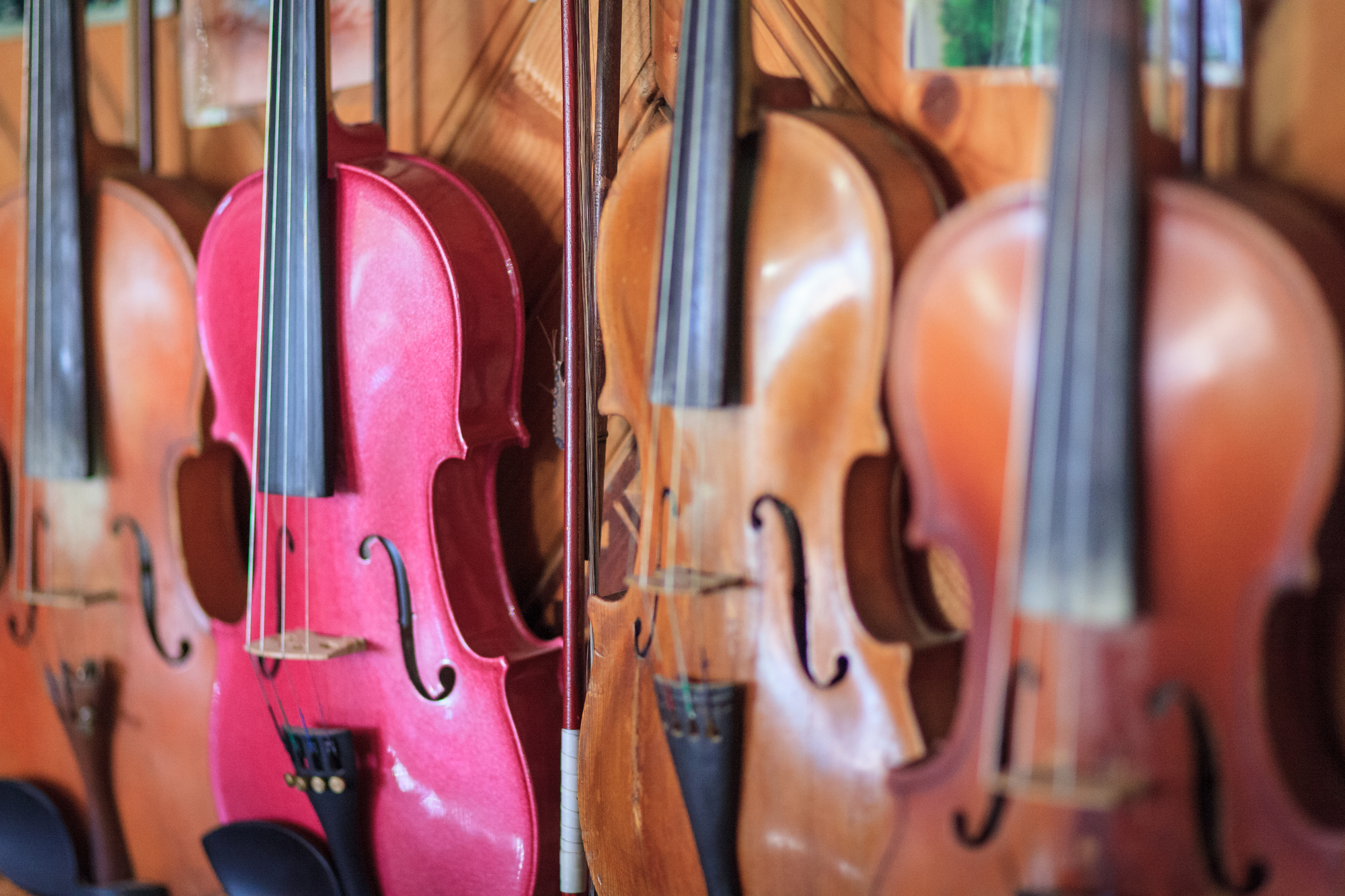
Viola vs Violin: 4 Key Differences
The viola and violin share the same basic shape, the same playing position on the shoulder, and the same number of strings. Side by side, a non-musician might not notice the difference. But pick one up and play it, and the differences become obvious fast.
Here are the four differences that actually matter if you are deciding between these instruments or just want to understand them better.
1. Size and Construction
The violin’s body measures about 14 inches (35.5 cm). A full-size viola ranges from 15.5 to 16.5 inches (39 to 42 cm), though some models go up to 17 inches. That extra inch or two changes everything about how the instrument sounds and feels.
Violas are also wider and have thicker ribs (the sides of the body). The deeper body cavity gives the viola its characteristic warm resonance. Some luthiers also use thicker front and back plates on violas to further enrich the low-end tone.
Both instruments come in smaller sizes for younger players. Violins are measured in fractions (1/16 up to 4/4), while violas are measured in inches (12” through 16.5”). A 14-inch viola is the same body length as a full-size violin, but the internal construction differs to accommodate the lower strings. Check our violin sizes guide for detailed sizing charts.
The extra size means the viola weighs roughly 6 to 10 ounces more than a violin. That weight adds up during long rehearsals, which is why a good viola shoulder rest matters even more than a violin shoulder rest does.
2. Strings and Tuning
Both instruments have four strings, but they share only three pitches. From lowest to highest:
- Violin: G3 - D4 - A4 - E5
- Viola: C3 - G3 - D4 - A4
The viola is tuned a perfect fifth lower than the violin. It drops the high E string and adds a low C string. That C string gives the viola access to pitches a full fifth below anything the violin can play, putting it squarely between the violin and cello in range.
Viola strings are thicker and longer than violin strings. They carry more tension and take more finger pressure to stop cleanly. If you have played violin and try a viola for the first time, the string resistance is the first thing you notice.
Both instruments tune the same way. You match the A string to a reference pitch (tuning fork, electronic tuner, piano, or the oboe in an orchestra), then tune the remaining strings in fifths from there. The process uses the pegs for large adjustments and fine tuners on the tailpiece for precision. Neither instrument has frets, so intonation depends entirely on ear and finger placement.
3. Clef, Range, and Sound
This is where the instruments diverge most for musicians who read music.
Violins use the treble clef (G clef). The curl of the symbol wraps around the second line of the staff, marking it as G above middle C. Most musicians learn this clef first, and plenty of method books and repertoire exist for it.
Violas use the alto clef (C clef). It looks like the letter B or the number 3, and the point in the middle marks middle C on the third line of the staff. The viola is the only orchestral instrument that uses the alto clef as its primary notation, which means violists develop a specialized reading skill. For very high passages, viola parts switch to treble clef temporarily.
In terms of range, the violin covers roughly four octaves from G3 to about E7 (with harmonics pushing higher). The viola spans about three and a half octaves from C3 to around E6. The violin’s smaller body and shorter string length make it easier to access the extreme upper register. On the viola, the wider finger spacing and larger body make high positions physically harder to reach, which is part of why viola parts rarely go as high as violin parts.
The sound difference is unmistakable. The violin is bright, projecting, and clear, the soprano of the string section. The viola is darker, warmer, and more nasal, often described as the alto voice. Because of the thicker strings, the viola’s sound “speaks” a bit more slowly. Violists need to stay right on top of the beat and use more deliberate articulation to avoid sounding late in an ensemble.
In an orchestra, violas sit between the violins and cellos and serve as the harmonic glue. They fill in the inner voices that give orchestral music its depth. It is a less flashy role than first violin, but the ensemble falls apart without it.
If you want to hear both instruments together, listen to Mozart’s Sinfonia Concertante in E-flat, K. 364. It is one of the best demonstrations of how the two instruments contrast and complement each other.
4. Playing Technique and Bow Differences
The physical demands of each instrument differ more than most people expect, though both are considered among the hardest instruments to play.
Fingering. Viola strings require stronger finger pressure because they are thicker and under greater tension. The wider spacing between notes on the fingerboard means violists need to stretch their fingers more. Players with smaller hands sometimes find the viola uncomfortable, especially in the lower positions. Both instruments use position shifting to access higher notes, but the half position (shifting toward the scroll for lower pitches) is far more common on the viola.
Bowing. The viola bow is slightly shorter and heavier than the violin bow, typically weighing around 70 grams versus 60 grams for a violin bow. Violists need more arm weight and bow pressure to get the thicker strings vibrating properly. Without enough pressure, the strings produce a thin, whistling sound instead of a full tone. The frog (where you grip the bow) also differs: viola bow frogs have a rounded back, while violin bow frogs have a sharper, more squared-off edge.
Vibrato. Both instruments use vibrato, but viola vibrato tends to be wider and slower to match the instrument’s darker tone. A tight, fast violin-style vibrato can sound thin on a viola.
Physical demands. The viola’s extra weight and size put more strain on the left shoulder, neck, and arm. Proper setup, including a well-fitted chin rest and shoulder rest, is essential for avoiding injury. Regular instrument maintenance applies equally to both, but viola players should pay extra attention to string height and bridge fit because of the higher string tension.
Which Should You Learn?
If you are trying to decide between the two, here is what to consider.
Choose violin if you want the widest range of repertoire, solo opportunities, and teaching resources. The violin has centuries of concerto, sonata, and chamber music written for it. Most string programs start children on violin, and it is easier to find teachers. If you are drawn to bright, singing melodies and fast, agile passages, the violin is the better fit. Our beginner violin guide covers what to look for in a starter instrument.
Choose viola if you prefer a warmer, deeper tone and do not mind being less in the spotlight. Violists are in high demand in orchestras and chamber groups because fewer people play the instrument. That means more opportunities for ensemble placement and, at the college level, often better scholarship offers. If you have larger hands, the viola’s wider fingerboard spacing may actually feel more comfortable than the violin’s tighter layout.
Switching between them is common. Many professional violists started on violin. The left-hand technique transfers well, though you will need to adjust to the alto clef and wider finger spacing. Going from viola to violin is less common but equally doable. The Juilliard School and many conservatories expect viola applicants to have solid violin fundamentals.
The honest answer is that neither instrument is easier. Both demand years of dedicated practice, a good ear, and physical endurance. Pick the one whose sound you want to hear every day.