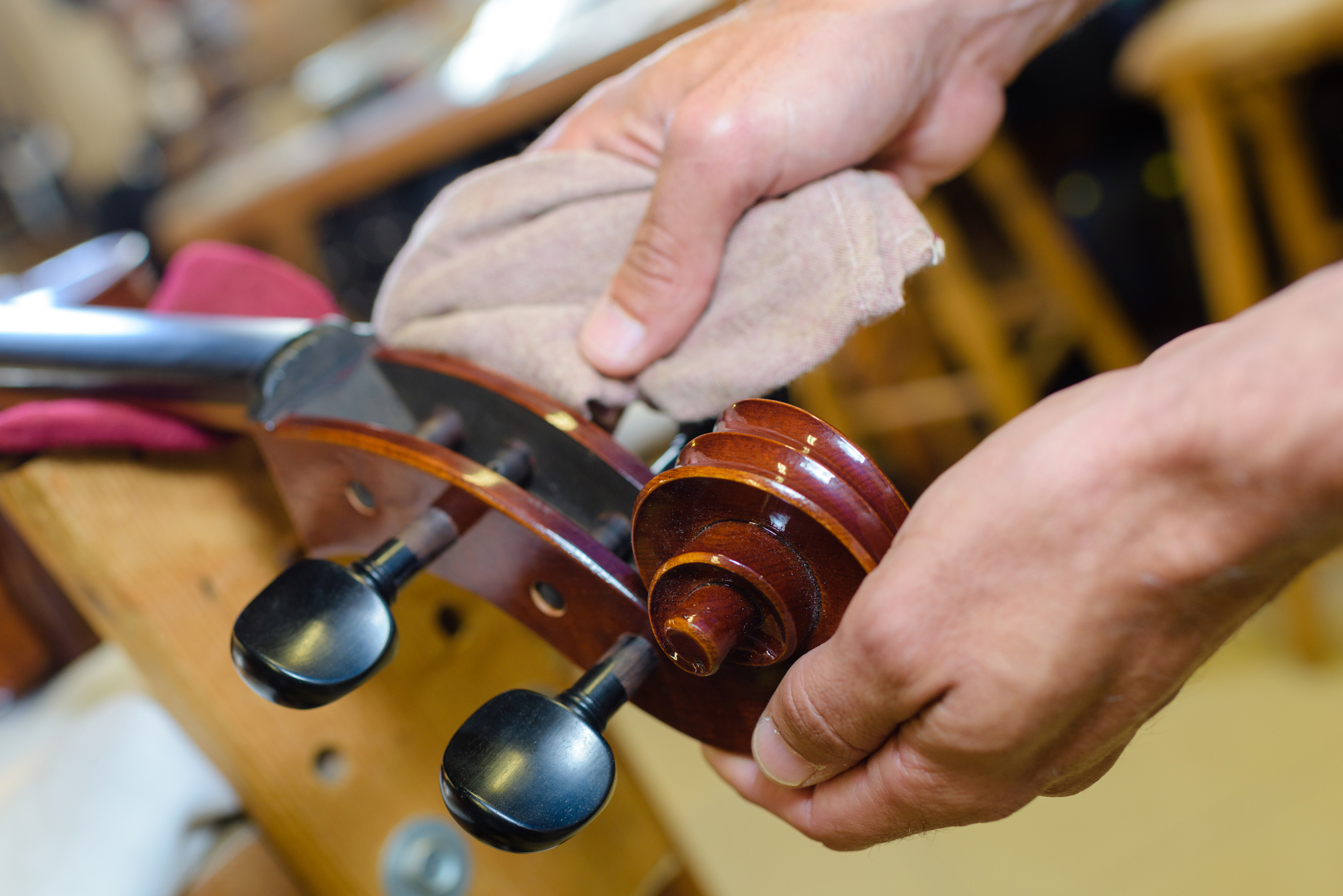
Violin Care and Maintenance Guide
A violin that’s well maintained sounds better, plays easier, and holds its value. One that’s neglected develops cracks, loses tone, and ends up on a luthier’s bench for repairs that could have been avoided. The good news is that violin care is straightforward. Most of it comes down to a few habits after each playing session and knowing what to watch for over time.
This guide covers daily cleaning, string and bow care, proper storage, and how to handle common problems like slipping pegs and a leaning bridge.
Daily Cleaning
The single most important maintenance habit is wiping your violin down after every playing session, no matter how short. Rosin dust, finger oils, and sweat are all mildly acidic. Left on the instrument, they eat into the varnish, dull the strings, and gradually degrade the wood underneath.
What you need
Two soft, lint-free cloths — one for the strings and fingerboard, one for the body. Microfiber cloths designed for cleaning eyeglasses or camera lenses work well. Avoid paper towels, tissues, or rough fabrics that can scratch the varnish.
Keep the cloths separate. The one you use on the strings picks up rosin particles, and dragging those across the body of the instrument will scratch the finish.
How to wipe down
- Strings and fingerboard. Pinch the cloth around each string and slide it from the nut to the bridge. Then wipe the fingerboard surface where your fingers contact the wood. This removes rosin buildup and sweat.
- Top plate. Wipe the area between the bridge and fingerboard where rosin dust settles most heavily. Use gentle, straight strokes rather than circular rubbing.
- Chin rest, back, and sides. Wipe anywhere your skin touches the instrument. The chin rest and the back of the neck accumulate oils quickly.
About violin polish
If you wipe your violin after every use, you will rarely need polish. When you do want a deeper clean, use only a polish formulated specifically for violins. Never use furniture polish, all-purpose cleaner, or water. These can dissolve the varnish, weaken glue joints, and permanently damage your instrument’s acoustics.
Polishes that contain abrasives will remove a thin layer of varnish each time you use them. For older or valuable instruments, consult a luthier before applying any polish.
Cleaning the inside
Dust accumulates inside the body over time and can muffle the sound. An effective method is to sprinkle a teaspoon of uncooked rice through the f-holes, gently roll the grains around inside, then tip the instrument upside down over a cloth and shake the rice out through the f-holes. The rice picks up the dust as it moves. Do this once or twice a year.
String Maintenance
Rosin buildup on the strings deadens their vibration and makes them sound dull and scratchy. Daily wiping handles most of it, but strings also wear out from play and need periodic replacement.
When to replace strings
There is no universal timeline because it depends on how much you play, what type of strings you use, and your playing style. As a general guide:
- Active daily practice (1+ hours): Every 3-6 months
- Regular practice (a few times a week): Every 6-9 months
- Occasional playing: Every 9-12 months
Signs that strings need replacing include a dull or flat tone that does not improve after cleaning, visible fraying or discoloration, difficulty staying in tune, and a rough texture under your fingers. Fresh violin strings make a noticeable difference in brightness and responsiveness.
How to change strings
Replace strings one at a time. Removing all four at once drops the tension that holds the bridge and sound post in place, and both can shift or fall. If either moves, you will need a luthier to reset them.
When winding a new string onto the peg, thread the end through the peg hole so a few millimeters poke out the other side. Wind the string so it wraps closely against the wall of the pegbox — this helps the peg grip. Avoid criss-crossing or bunching the string on the peg, which creates pressure points that can cause breaks.
Before winding, rub a soft pencil (graphite) in the string grooves on the bridge and nut. This lubricates the contact points and helps the string slide smoothly into tune without binding and snapping. It also reduces the chance of the bridge being pulled forward during tuning.
New strings need a break-in period of a few days to a week before they stabilize and hold pitch reliably. A chromatic tuner helps during this period since you will be retuning frequently.
Deep cleaning strings
For a monthly deep clean, you can use a small amount of isopropyl alcohol on a cloth. Wipe each string from nut to bridge in one direction — do not rub back and forth. Place a cloth over the body of the violin first to protect the varnish, because alcohol will damage it on contact. This technique works especially well on wound G and D strings where rosin and skin oils get trapped between the windings.
Bow Care
Your violin bow needs as much attention as the instrument itself. A warped or poorly maintained bow makes it nearly impossible to produce good tone, no matter how fine the violin is.
After every session
Loosen the hair. This is the single most important bow care habit. Turn the screw counterclockwise until the hair goes slack. Leaving the bow under tension when you are not playing will eventually warp the stick and destroy the camber (the stick’s precise inward curve that gives it spring and responsiveness). Once the camber is lost, the bow plays poorly and re-cambering is expensive.
Wipe the stick. Use a dry cloth to remove rosin dust from the stick, especially near the frog where it accumulates. Do not touch the hair with your fingers — the oils from your skin will coat the strands and prevent them from gripping the strings.
Rosin application
Apply rosin in a few slow, even strokes across the full length of the hair. More is not better. Excess rosin creates a gritty, scratchy sound and leaves heavy dust on the instrument. If you see a visible cloud of rosin when you play, you are using too much.
Bow rehairing
Bow hair stretches, breaks, and loses its grip over time. How often you need to rehair your bow depends on playing frequency:
- Daily players: Every 3-6 months
- Regular players: Every 6-12 months
- Occasional players: Once a year
Environmental changes also affect the hair. In dry conditions it shrinks and can pull the tip or frog; in humid conditions it stretches and goes slack even when tightened. If your bow hair no longer grips the strings well despite fresh rosin, or if you have lost a significant number of hairs on one side, it is time for a rehair.
The tip plate
The tip plate (made from ivory, bone, silver, or synthetic material) protects the fragile end of the bow. Check it periodically for cracks or looseness. A damaged tip plate should be replaced by a professional promptly — if it falls off during a rehairing, the exposed wood can crack.
The eyelet
The eyelet is the small threaded metal cylinder inside the frog that the screw engages. Over time the threads wear down, and the screw no longer holds tension. If turning the screw feels loose or the hair will not tighten properly, have a luthier replace the eyelet.
Storage
Proper storage protects your violin from physical damage, temperature swings, and humidity shifts — the three biggest threats to a wooden instrument.
Use a hard case
Always store your violin in a quality hard case when it is not being played. Remove the shoulder rest before placing the violin inside. Check that every latch and zipper is secure before you pick the case up. Many violin cases have a blanket or cover to drape over the instrument before closing the lid — use it to prevent the bow frog from scratching the varnish.
Never leave a violin out on a chair, table, or bed. It takes one accidental bump to crack the top plate or snap the neck.
Temperature
Wood expands and contracts with temperature changes. Rapid shifts can crack the top or back plates and cause seam separations, which produce buzzing and whistling sounds.
Follow these rules:
- Never leave your violin in a car. A closed car in summer can exceed 60 C (140 F) internally. Even in winter, the temperature swings between a cold trunk and a heated building are enough to cause damage.
- Avoid placing the case near heat sources like radiators, heating vents, or sunny windows.
- Let the case acclimate. If you are moving from a cold outdoor environment to a warm room, leave the case closed for 10-15 minutes so the temperature change is gradual rather than sudden.
Humidity
The ideal relative humidity for a violin is between 40-60%. Problems arise at both extremes:
- Too dry (below 35%): The wood shrinks. This causes cracks, open seams, a buzzing sound, and the fingerboard can separate from the neck. Common in winter when heating systems dry out indoor air.
- Too humid (above 70%): The wood swells, the sound becomes muffled, and glue joints can soften. Common in tropical climates and during summer in humid regions.
Managing dry conditions. Use an in-case humidifier like a Dampit or Boveda humidity pack during winter or in arid climates. A room humidifier also helps if you keep your violin in a specific practice space. Monitor humidity levels with a small hygrometer — many violin cases have built-in ones, or you can buy one cheaply.
Managing humid conditions. Store the instrument in an air-conditioned room when possible. Silica gel packs inside the case can absorb excess moisture. Avoid basements and ground-floor rooms where humidity tends to be higher.
Common Problems and Fixes
Slipping pegs
Pegs that will not hold pitch are one of the most common frustrations, especially during seasonal changes. When the air dries out, the wood of the pegs contracts and they lose their grip.
Quick fix: Apply peg compound (also called peg drops or peg dope). This is a waxy substance that lubricates the peg while also increasing friction. Chalk-based peg paste works for slipping pegs; soap-based compound works for stiff pegs. Apply sparingly.
When winding strings: Guide the string so it wraps closely against the wall of the pegbox. This adds lateral pressure that helps the peg stay in place.
If pegs continue to slip despite compound, the pegs or peg holes may need reshaping by a luthier.
Leaning bridge
Over time, the pull of the strings tugs the top of the bridge forward toward the fingerboard. If the bridge leans more than a couple of degrees from perpendicular, it affects the sound and can eventually warp or snap the bridge.
How to check: Look at the bridge from the side. The back face (tailpiece side) should be roughly perpendicular to the top plate.
How to straighten: Hold the violin firmly on a flat surface. Place both thumbs on the top edge of the bridge and gently pull it back toward the tailpiece until it stands straight. Apply pressure evenly on both sides. If you are uncomfortable doing this, ask your teacher or a luthier to show you — a bridge that falls during adjustment can dent the top plate.
Get in the habit of checking the bridge angle each time you tune. Regular tuning gradually pulls it forward, so catching it early prevents bigger problems.
Buzzing sounds
Buzzing while playing usually has one of these causes:
- An open seam. Run your fingernail gently along the edges where the top and back plates meet the ribs. If you feel a gap, a seam has opened. This requires a luthier to re-glue.
- A loose chin rest. Tighten the clamps with the cork-tipped key that came with the chin rest.
- A loose fine tuner. If a fine tuner is screwed all the way in or out, it can rattle. Keep them in their mid range.
- Something touching the strings. Check that the shoulder rest is not contacting the tailpiece or strings when attached.
Seasonal Maintenance Checklist
A few times a year — typically at the start of winter and summer — give your violin a more thorough check:
- Inspect the body for new cracks, open seams, or varnish damage
- Clean the inside with the rice method
- Check bridge alignment and straighten if needed
- Assess string condition and replace if worn
- Verify peg function and apply compound if slipping
- Check bow hair condition and schedule rehairing if needed
- Inspect the bow tip plate for cracks
- Calibrate your case humidifier and replace desiccant packs
- Wipe down the case interior to remove accumulated rosin dust
When to See a Luthier
Some maintenance tasks require professional tools and training. Take your violin to a qualified luthier for:
- Cracks in the top or back plates
- A fallen sound post (the small dowel inside the body that transmits vibrations between the top and back — if it falls, loosen the strings immediately and bring the instrument in)
- Bridge replacement or fitting
- Peg reshaping or replacement
- Severe varnish damage or restoration
- Bow re-cambering
- Any structural repair
An annual checkup with a luthier is a worthwhile investment, even if nothing seems wrong. They can spot developing problems before they become expensive repairs.
What Not to Do
A short list of things that damage violins:
- Do not use household cleaners, furniture polish, or water. These dissolve varnish and weaken glue.
- Do not store the violin without a case. Even a brief fall from a table can be catastrophic.
- Do not leave the bow tightened when not playing. This warps the stick.
- Do not remove all strings at once. The bridge and sound post depend on string tension to stay in position.
- Do not attempt to reset a fallen sound post yourself. It requires a specialized tool and precise placement.
- Do not expose the instrument to direct sunlight. UV degrades varnish and unevenly heats the wood.
Final Thoughts
Violin maintenance is mostly about consistency rather than effort. Wiping the instrument after every session, loosening the bow, and putting everything back in the case takes less than two minutes and prevents the vast majority of problems.
Beyond those daily habits, stay aware of your environment — temperature and humidity are the biggest threats to a wooden instrument. A hygrometer and an in-case humidifier cost very little compared to a crack repair.
If you are just starting out with a beginner violin or moving up to an intermediate instrument, building good care habits early protects your investment and keeps your violin sounding its best. And when you do need help, find a luthier you trust. A good relationship with a skilled repair person is one of the most valuable things a string player can have. For a deeper look at how violin size affects playability and care, see our sizing guide.