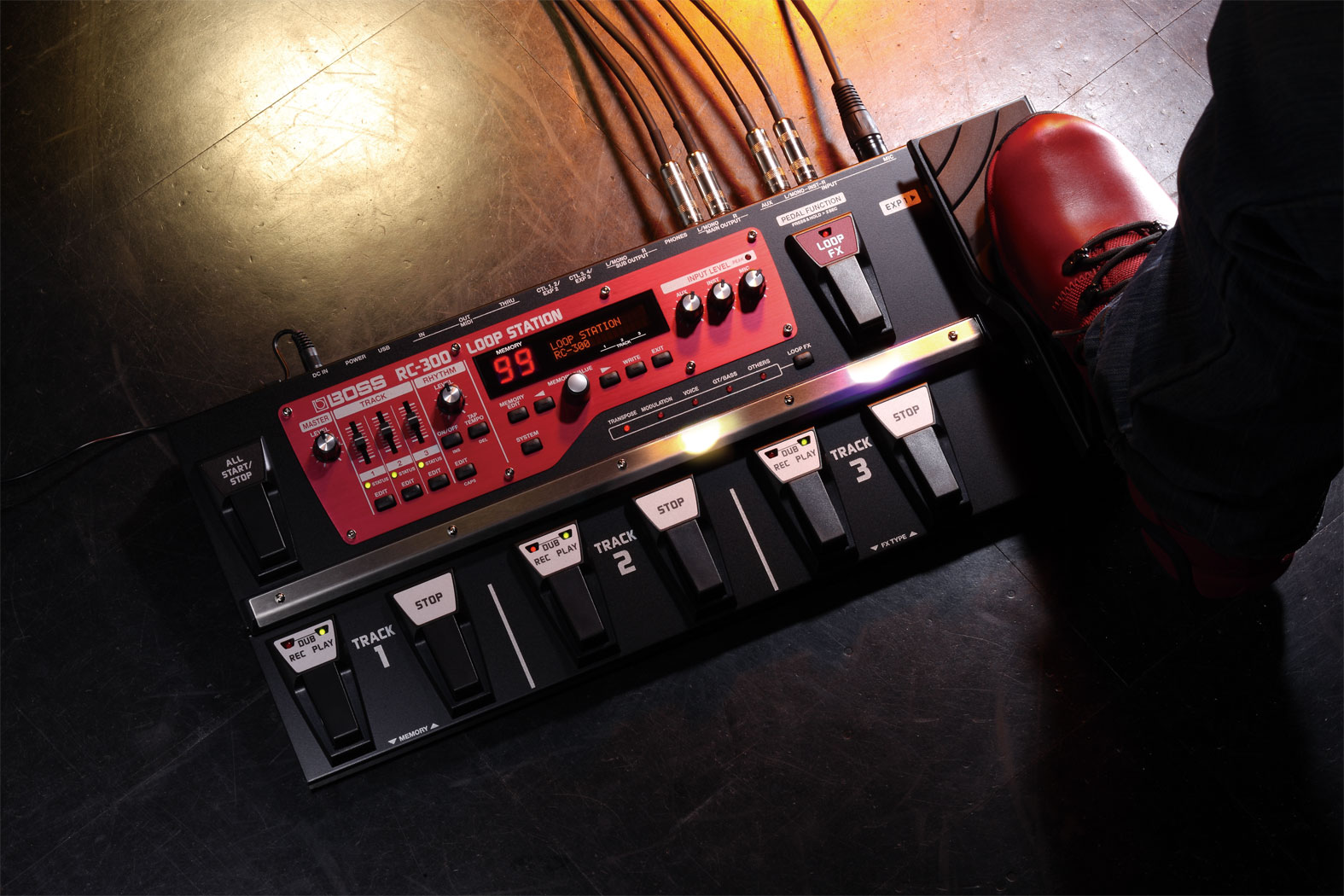
5 Best Looper Pedals For Vocals in 2025
Looper pedals used to be a guitarist’s tool. You stomped a switch, laid down a riff, and jammed over it. Singers were an afterthought — you could technically plug a mic into a guitar looper with a 1/4-inch adapter, but the signal quality suffered and there was no phantom power for condenser mics.
That changed. Manufacturers now build loopers specifically for vocalists, with XLR inputs, onboard mic preamps, phantom power, and vocal effects baked in. Whether you want to build a cappella arrangements, add beatbox layers to a live set, or just write songs without needing a band, there is a looper designed for exactly that.
Here are five worth your attention, ranging from a dead-simple two-button pedal to a full tabletop loop station.
Boss VE-22 Vocal Performer — Best All-in-One for Singers
The Boss VE-22 is the successor to the VE-20 and represents a major leap forward for vocal performers who want looping and effects in one floor unit. It combines a multi-effects processor with a looper, and every feature is aimed squarely at singers.
What makes it stand out
The VE-22 ships with 50 factory presets covering different genres and vocal styles, with room for 99 user patches. It includes a harmonizer, 39 effect types, echo, reverb, modulation, and pitch correction. Three color-coded footswitches (Harmony, Echo, Effect) let you toggle processing on the fly without looking down. The large color LCD screen makes it easy to see your current patch from a standing position.
The looper records up to 38 seconds of audio with unlimited overdub layers. All looping is controlled from a single footswitch — record, stop, and play by tapping, double-tap to clear. That single-switch design keeps the unit compact but does mean you need precise footwork to stop cleanly during a performance.
Vocal-specific features
The VE-22 provides 48V phantom power, so you can plug in a condenser mic directly without an external supply. It runs on batteries too, which makes it genuinely portable for busking or small acoustic sets. The 24-bit AD / 32-bit DA conversion keeps your vocal signal clean even after stacking multiple loop layers.
It also doubles as a USB audio interface, so you can route your processed vocal straight into a DAW for recording or songwriting sessions. If you already own a good vocal effects processor, you might not need every feature here — but for anyone building a vocal rig from scratch, the VE-22 covers a lot of ground in one box.
Boss RC-505 MKII Loop Station — Best for Serious Vocal Loopers
The Boss RC-505 MKII is the tabletop looper that artists like Ariana Grande, Tash Sultana, and DubFX have made famous. It is not a pedal you stomp on — it sits on a table or stand and you operate it with your hands, which is ideal if you are holding a mic and not playing an instrument.
Why vocalists choose it
Five independent stereo tracks with dedicated faders and large, backlit buttons give you granular control over your arrangement. You can mute, solo, or clear any track independently, which means you can build a verse loop on track one, a chorus on track two, beatbox a rhythm on track three, and switch between them during a performance.
The MKII adds two XLR mic inputs with phantom power, so you can run two condenser mics simultaneously — useful for a duo act or for separating a close mic and a room mic. It records over 13 hours of stereo audio across 99 memory banks with 297 phrase memories. That is not a typo.
Effects and connectivity
The unit includes 49 input effects (applied before recording) and 53 track effects (applied to recorded loops). This distinction matters: you can record a clean vocal, then add vinyl warble or stutter effects to the playback without permanently altering the loop. MIDI I/O and USB connectivity let you sync with a DAW or external gear.
The RC-505 MKII has a learning curve. This is not a plug-and-play pedal for your first open mic. But if looping is central to your act, it is the industry standard for a reason.
TC Helicon Ditto Mic Looper — Best for Simplicity
The TC Helicon Ditto Mic Looper strips vocal looping down to its essentials. Two footswitches (loop and stop), one volume knob, and nothing else. If you want to loop your voice without menu-diving or reading a manual, this is the one.
Why it works for singers
Unlike the original TC Electronic Ditto (which was designed for guitar with a 1/4-inch input), the Ditto Mic Looper has a proper XLR input with a built-in mic preamp and 48V phantom power. You can plug in any microphone — dynamic or condenser — and get a clean, studio-grade signal. The 24-bit uncompressed audio quality means your loops sound exactly like your voice, with no digital degradation across overdub layers.
The metal enclosure is built for stage abuse. Infinite overdubbing lets you keep stacking layers as long as you want. There is no loop time limit displayed in the specs — just keep going until you run out of ideas.
What it does not do
There are no onboard effects. No harmonizer, no reverb, no pitch correction. If you want those, you will need a separate vocal effects pedal in your signal chain before the Ditto. That is actually a feature for many performers — the Ditto captures exactly what you feed it, so you maintain full control over your tone with dedicated processors.
For singer-songwriters or beatboxers who already have their effects sorted and just need a reliable, transparent looper on the floor, the Ditto Mic Looper is hard to beat. Compatible mics with built-in control buttons (like the TC Helicon MP-75 or Sennheiser e835 FX) let you start and stop loops from the microphone itself, so you are free to move around the stage.
Boss RC-500 Loop Station — Best Floor Looper with XLR
The Boss RC-500 sits between the simplicity of the Ditto and the complexity of the RC-505 MKII. It is a dual-track floor looper with an XLR mic input and phantom power — a genuine vocal looper that you control with your feet.
Two tracks, one floor unit
Having two synchronized stereo tracks is a significant upgrade over single-track loopers. You can put your verse loop on track A and your chorus on track B, then switch between them with a footswitch. This gives your performance actual song structure instead of one continuous loop that you can only add to or erase entirely.
The RC-500 provides 13 hours of recording time, 99 memory slots, and 57 preset rhythm patterns with 16 drum kits. The built-in rhythms serve as a click track or backing beat — start a bossa nova pattern, loop a vocal melody over it, then add a harmony layer. It is a surprisingly complete performance tool for a floor pedal.
Loop effects and undo/redo
Dedicated loop effects include reverse, scatter, shift, and vinyl flick — all accessible via footswitch without stopping playback. Full undo/redo on each track means you can strip back a layer that did not work without losing everything underneath.
The RC-500 also accepts an external footswitch or expression pedal for additional control, which is useful if you want hands-free start/stop while keeping the main switches free for track selection. If you play an instrument while singing and need a floor-based looper with real vocal connectivity, the RC-500 is the one to get.
Zoom V6-SP Vocal Processor — Best for Expressive Performances
The Zoom V6-SP takes a different approach. Instead of being a looper with some effects bolted on, it is a full vocal processor with a looper section built in. The standout feature is the built-in expression pedal, which lets you sweep effects in real time with your foot while singing.
Hands-on control layout
Every effect parameter is right on the front panel — no LCD menus to scroll through. Two large dials select between 12 voice effects and 12 sound effects. Pitch correctors, vocoders, octave shifts, talkbox emulations, multiple delays — all accessible by turning a knob. A row of footswitches toggles individual effects on and off, while a separate row of three switches controls the looper (record, play/pause, memory bank).
This layout means you can loop an effected vocal — record a harmonized layer, then switch to an octave-down voice for a bass line, then add a dry lead vocal on top. Each layer captures whatever processing was active when you recorded it.
The expression pedal advantage
The built-in expression pedal is what separates the V6-SP from other vocal processors. You can assign it to any parameter — sweep a delay feedback, morph between two effect states, or control vocal formant in real time. This turns static vocal effects into dynamic, performance-driven sounds. Most vocal processors treat effects as on/off toggles; the V6-SP lets you play them like an instrument.
Zoom also offers the optional SGV-6 shotgun microphone, designed to pair with the V6-SP for better isolation in loud stage environments. It is not required — any standard dynamic or condenser mic with XLR works fine. If you already have a reliable stage mic, save the money and put it toward learning the pedal’s deeper features.
How to Choose a Vocal Looper Pedal
Not every looper works the same way for singers. Here is what actually matters when you are shopping.
XLR input with phantom power
This is non-negotiable if you use a condenser microphone. Guitar loopers with only 1/4-inch inputs will force you to use adapters and external preamps, adding noise and complexity. Every pedal on this list has a proper XLR input. If yours does not, you are fighting your gear instead of performing.
Floor pedal vs. tabletop
Floor loopers (VE-22, Ditto Mic, RC-500) work with footswitches, which is what you want if you play guitar or keyboard while singing. Tabletop loopers (RC-505 MKII) use hand-operated buttons, which is better if you hold a microphone and need precise track control. The Zoom V6-SP splits the difference with both footswitches and hand-operated dials.
Loop time and track count
A single 30-second loop limits you to short phrases. For building actual song arrangements, look for multiple tracks (the RC-500’s two tracks or the RC-505 MKII’s five tracks) and longer recording times. Multiple tracks let you separate verse, chorus, bridge, and rhythm elements so you can transition between song sections during a live set.
Onboard effects vs. dedicated processors
All-in-one units like the VE-22 and V6-SP bundle harmonizers, reverb, delay, and pitch correction with the looper. This is convenient and keeps your signal chain short. But if you already own a dedicated vocal effects processor or harmonizer pedal that you like, a transparent looper like the Ditto Mic lets you keep your existing sound intact.
Undo/redo capability
Being able to strip back your last overdub without erasing the entire loop is critical for live performance. One bad layer should not force you to start from scratch. The RC-500 and RC-505 MKII both offer full undo/redo. The Ditto Mic Looper supports undo as well. Check this feature before you buy — some budget loopers lack it entirely.
Storage and memory
If you want to save loops for recall at a gig or use pre-recorded backing layers, you need onboard memory slots. The Boss units store 99 phrases. The Ditto Mic Looper retains your last loop in memory but does not offer multiple save slots. For songwriting, the ability to save and recall loops is more useful than you might expect.
Tips for Getting Started with Vocal Looping
Nail your timing first
The foundation loop sets the length for everything you overdub on top of it. If your first layer is sloppy, every subsequent layer will drift. Use the built-in rhythm patterns on the RC-500 or VE-22 as a metronome, or count yourself in before pressing record. Start and stop recording on beat one — think “1, 2, 3, 4” and press the switch on the downbeat.
Build from rhythm to melody
Start with a percussive or rhythmic element — beatbox a kick and snare pattern, snap a rhythm, or hum a bass line. This gives your subsequent layers a timing anchor. Then add a chord-tone harmony, then a melody. Working from the bottom up creates fuller, more stable arrangements than starting with a lead vocal and trying to build underneath it.
Practice the transitions
The hardest part of live looping is not recording a loop — it is stopping one cleanly and starting the next. Double-tapping to stop, clearing a track, and switching between sections all require muscle memory. Practice your transitions at home until they are automatic before bringing a looper to a gig.
Keep it simple at first
It is tempting to stack ten layers and use every effect at once. Resist that. Start with two or three layers and build from there. Audiences are more impressed by a tight three-layer arrangement than a muddy eight-layer wall of sound. As Ableton’s guide to live looping points out, restraint is often what separates a compelling loop performance from a chaotic one.
Frequently Asked Questions
Can you use a guitar looper pedal for vocals?
Yes, technically. If you have a dynamic microphone (which does not need external power), you can plug it into a guitar looper using a 1/4-inch adapter. It will work. But dedicated vocal loopers with XLR inputs, built-in preamps, and phantom power will give you cleaner signal, lower noise, and better overall sound quality. If you already own a guitar looper and want to test vocal looping before investing, try it — but expect to upgrade once you hear the difference.
What is the difference between a floor looper and a tabletop looper?
Floor loopers use footswitches and sit on the ground, designed for hands-free operation when you are playing an instrument. Tabletop loopers use hand-operated buttons and sit on a table or stand, designed for vocalists who hold a microphone and need precise control over multiple tracks. The Boss RC-500 is a floor looper; the Boss RC-505 MKII is a tabletop looper. Your choice depends on whether your hands are free during performance.
How much loop time do you actually need?
For most vocal looping, 30 to 60 seconds per track is enough to capture a full musical phrase. Where loop time becomes important is in total recording capacity — how many layers and tracks you can store. The Boss RC-500 and RC-505 MKII both offer over 13 hours of total recording time, which is far more than you will ever use in a single session. Do not choose a looper based on maximum loop time alone; track count and undo/redo are more practically useful features.
Do you need phantom power on a vocal looper?
Only if you use a condenser microphone. Dynamic mics (like the Shure SM58 or Sennheiser e835) do not need phantom power and will work with any looper. Condenser mics require 48V phantom power to operate, so if that is your mic of choice, make sure your looper provides it — or plan to run an external preamp or mixer between your mic and the pedal.
The Bottom Line
For singers building a vocal rig from scratch, the Boss VE-22 offers the best combination of looping, effects, and vocal-specific features in a single floor unit. It handles harmonies, pitch correction, looping, and even works as a USB audio interface.
If looping is the centerpiece of your act and you want maximum creative control, the Boss RC-505 MKII is the standard that professional vocal loopers perform on. Five tracks, massive effects library, and bulletproof reliability.
For a no-frills looper that captures your voice transparently and gets out of the way, the TC Helicon Ditto Mic Looper does one thing and does it well.
Singer-songwriters who play an instrument and need floor-based control with real song structure should look at the Boss RC-500 and its dual-track design.
And performers who want their effects to be as dynamic and expressive as their voice will find the Zoom V6-SP and its expression pedal genuinely different from everything else on this list.