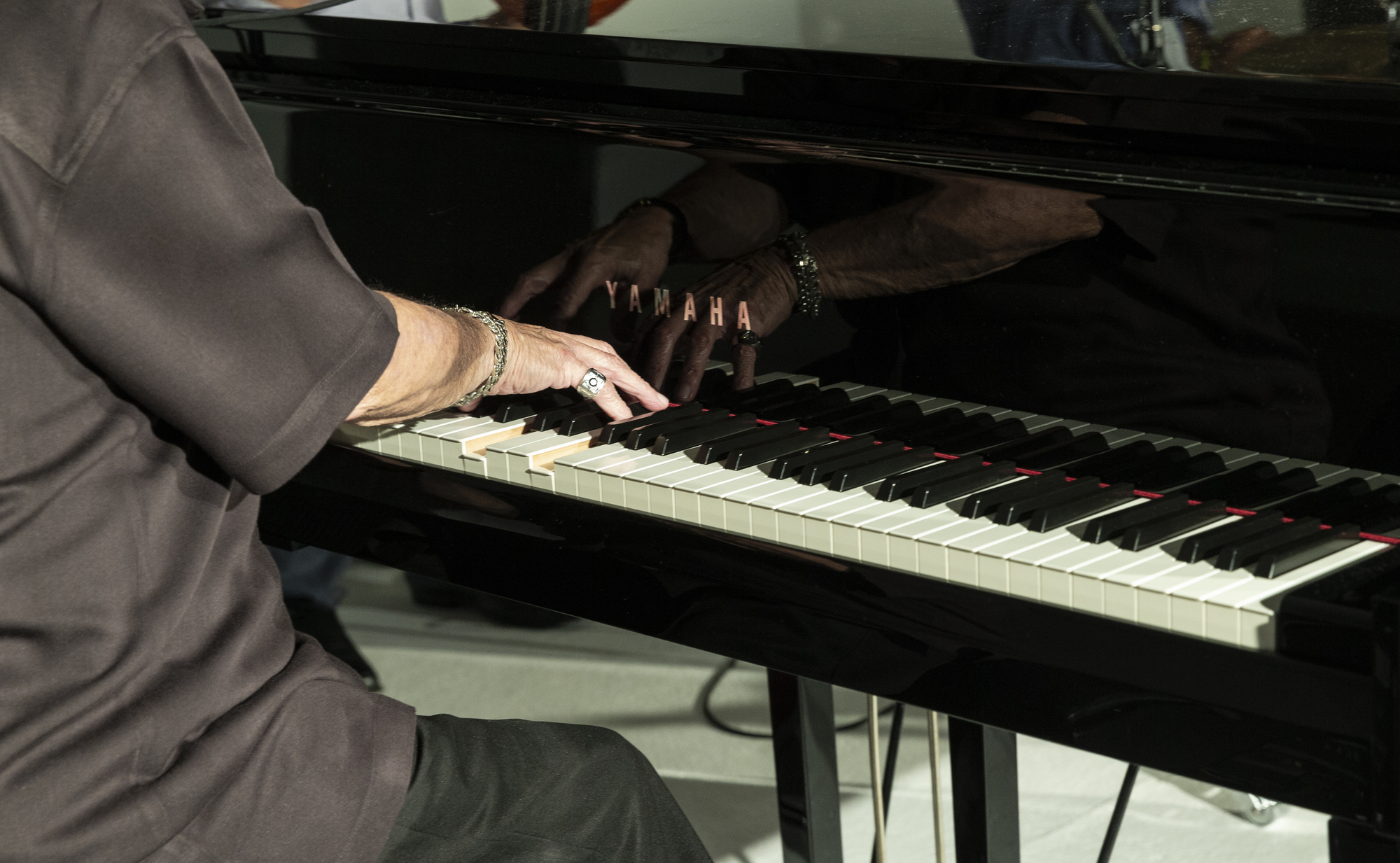
Best weighted keyboards and pianos in 2025
If you are shopping for a digital piano, the weight of the keys matters more than almost any other spec. A keyboard with proper weighted action builds the finger strength, dynamic control, and muscle memory you need to play expressively. A keyboard without it teaches you where the notes are — but not how to actually play piano.
The problem is that “weighted keys” is a marketing term used loosely across the industry. Some keyboards have fully graded hammer action that closely replicates an acoustic grand. Others use spring-loaded resistance and call it “weighted.” The difference in playing feel is enormous, and the product listings rarely make the distinction clear.
This guide breaks down the key action types you will encounter, explains what actually matters for different skill levels, and recommends specific instruments worth considering — whether you are buying your first keyboard or upgrading to something that feels closer to the real thing.
Why Weighted Keys Matter
On an acoustic piano, pressing a key activates a mechanical lever that swings a felt-covered hammer into a string. The weight you feel under your fingers is the mass of that entire mechanism. Bass notes have larger hammers and longer strings, so the low keys feel heavier than the high keys. This graded weight is fundamental to how pianists control dynamics and expression.
When you play softly on a weighted keyboard, the key moves slowly and the sound is gentle. Press harder and the key responds with a louder, more forceful tone. This velocity sensitivity — the relationship between finger force and volume — is what allows a pianist to shape phrases, build crescendos, and create the subtle dynamic changes that make music feel alive.
Students who learn on unweighted keyboards develop a flat-fingered, high-speed typing approach that falls apart the moment they sit at a real piano. Their fingers lack the strength to control heavier keys, their dynamic range is nonexistent, and they have to essentially relearn their technique. If you plan to ever play an acoustic piano — or even an advanced digital one — starting on weighted keys saves months of frustration later.
Types of Key Action Explained
Not all weighted keyboards use the same mechanism. The type of key action determines how realistic the playing feel is, and understanding the differences will keep you from overpaying for marketing language.
Fully Weighted (Hammer Action)
This is what you want for serious piano practice. Fully weighted keys use actual hammer mechanisms (or precise simulations of them) inside each key. The hammers are graded — heavier at the bottom of the keyboard, lighter at the top — just like an acoustic piano. Most 88-key digital pianos from Yamaha, Roland, Kawai, and Casio use some form of graded hammer action.
Within this category, quality varies significantly. Entry-level hammer actions like Yamaha’s GHC (Graded Hammer Compact) and Casio’s Scaled Hammer Action II are perfectly adequate for beginners. Mid-range actions like Roland’s PHA-4 Standard add features like an escapement mechanism (a subtle click that simulates the hammer release point on an acoustic piano) and synthetic ivory key surfaces. High-end actions like Kawai’s Grand Feel III and Yamaha’s GrandTouch use longer wooden keys and counterweights that are nearly indistinguishable from a concert grand.
If you are looking for the most realistic key feel at an accessible price point, check out our guide to the best digital pianos under $500 — several models in that range offer surprisingly good hammer action.
Semi-Weighted
Semi-weighted keys use a spring mechanism with added resistance to make them feel heavier than a standard synth keyboard, but lighter than a hammer action. They respond to velocity (how hard you press), so you get some dynamic control, but the feel is nothing like an acoustic piano.
Semi-weighted action is common on arranger keyboards and portable performance instruments where quick key response matters more than piano realism. If your primary goal is playing piano repertoire, semi-weighted is not enough. If you play a mix of synth, organ, and piano sounds and need fast action for non-piano techniques, semi-weighted can be a reasonable compromise.
Unweighted (Synth Action)
Unweighted keys use simple spring-loaded mechanisms with minimal resistance. They feel light and fast, which makes them ideal for synthesizer playing, organ parts, and rapid passages that would be physically exhausting on heavy hammer action. But they provide almost no dynamic sensitivity, and practicing piano technique on them is counterproductive.
Most keyboards designed for children use unweighted action because young fingers lack the strength for heavy keys. This is fine for developing basic musicality and note recognition, but students should transition to weighted keys as soon as they are physically able.
What to Look for in a Weighted Keyboard
Number of Keys
A full-size piano has 88 keys. If you are learning classical piano or plan to play anything beyond simple melodies, you need all 88. Some digital pianos come in 73-key or 76-key versions that cut the extreme low and high notes — these work for gigging keyboardists who rarely venture into those ranges, but they limit what repertoire you can play.
For beginners, 88 keys is still the right choice. You may not use the full range immediately, but you will reach it faster than you think. Many intermediate pieces use the full keyboard, and buying a second instrument because you outgrew the first is an expensive lesson.
Key Surface Material
Cheaper digital pianos use smooth plastic keys that become slippery when your hands sweat. Better instruments use textured surfaces — often marketed as “ivory feel” or “ebony feel” — that provide grip similar to natural ivory and ebony on acoustic pianos. This matters more than it sounds. A secure grip under your fingers lets you play with more confidence and precision, especially during fast passages or when using specific fingering techniques.
Polyphony
Polyphony is the number of notes a keyboard can produce simultaneously. Every time you press a key, it uses one voice of polyphony. Use the sustain pedal, and all the sustained notes continue consuming voices. Layer two sounds (like piano and strings), and each key press uses two voices.
For beginners, 64-note polyphony is the minimum. It handles most simple to intermediate repertoire without notes cutting out. For serious playing with heavy pedal use, look for 128-note polyphony or higher. Most current models from Roland and Kawai start at 128 or 192, which is more than enough for all but the most extreme situations. The Royal Conservatory of Music recommends at least 128-note polyphony for exam preparation.
Sound Engine
Digital pianos generate sound in two ways: sampling (playing back recordings of real pianos) and modeling (mathematically simulating the physics of piano strings, hammers, and soundboard). The best instruments use a combination of both.
What matters in practice is how the piano responds to your playing dynamics. A good sound engine does not just switch between “soft sample” and “loud sample” — it smoothly transitions across dozens of velocity layers and adds sympathetic resonances, damper noise, and key-off effects that make the instrument feel responsive and alive. The MIDI Association maintains specifications that define how velocity data translates to sound, which all major manufacturers follow.
Yamaha’s CFIIIS and CFX sound engines, Roland’s SuperNATURAL, Kawai’s Harmonic Imaging, and Casio’s AiR are all competent modern sound engines. The differences between them are more about tonal character (bright vs. warm, focused vs. wide) than outright quality.
Speaker System
If you primarily play through headphones, speaker quality is irrelevant. If you practice without headphones in a room, it matters a lot. Speaker wattage tells you volume potential, but the quality of the cabinet design and speaker placement affects how natural the sound is.
Most budget digital pianos have 10-16W speaker systems that work fine for personal practice in a quiet room. If you want to fill a living room or play alongside other musicians without amplification, look for 30W or more. The Korg B2 series, for example, packs 30W speakers into an otherwise budget-friendly package. For more options, our digital piano under $1000 guide covers models with significantly better built-in audio.
Connectivity
At minimum, you want a USB-MIDI port for connecting to a computer or tablet for recording and practice apps. Most current digital pianos include USB Type-B for this purpose. Bluetooth MIDI is increasingly common and lets you connect wirelessly to apps like Simply Piano or Flowkey without a cable.
Audio outputs (quarter-inch or 3.5mm) matter if you plan to connect to an external amplifier or recording interface. MIDI in/out ports (the old-style 5-pin DIN connectors) are rarely needed for home use but remain important for complex stage setups with multiple keyboards and sound modules.
Weighted Keyboards for Different Skill Levels
Beginners
For your first weighted keyboard, prioritize key action quality over feature count. You need 88 fully weighted hammer-action keys, a sustain pedal (even a basic one), and a sound engine that responds convincingly to dynamic playing. Everything else — Bluetooth, recording functions, hundreds of built-in sounds — is secondary.
The Yamaha P-145, Roland FP-10, and Casio CDP-S110 are the entry-level standards that piano teachers most commonly recommend. All three offer genuine graded hammer action, reasonable sound quality, and reliability. For a detailed comparison of these and other models, see our best digital pianos under $500 guide.
A critical but often overlooked detail: get a proper stand and bench. A keyboard sitting on a dining table at the wrong height teaches bad posture and hand position. An adjustable X-stand and a height-adjustable bench cost relatively little and make a real difference in how comfortable (and therefore how long) you practice.
Intermediate Players
Once you have been playing for a year or two, you start noticing the limitations of entry-level instruments. The key action feels shallow compared to acoustic pianos you have played elsewhere. The sound engine does not respond to the subtle dynamic variations you are now capable of. The speakers distort when you play fortissimo.
Intermediate players benefit most from upgrading key action quality. Look for longer key pivots (which give you more control when playing further up the key surface), escapement simulation, and counterweighted keys. The Roland FP-30X, Kawai ES520, and Yamaha P-525 represent the sweet spot where you get significantly better action and sound without the price tag of a professional instrument.
If you have outgrown a budget model, our best digital pianos under $1000 guide covers the intermediate range in depth.
Advanced Pianists
Advanced players need an instrument that disappears under their fingers — one where the key action and sound response are so natural that they can focus entirely on musical expression without fighting the keyboard. At this level, the differences between digital piano actions and a real acoustic grand are noticeable, and minimizing that gap becomes the priority.
High-end digital pianos from Kawai (the CA and Concert Artist series), Yamaha (the CLP Clavinova series), and Roland (the LX series) use wooden keys, advanced counterweight systems, and sophisticated multi-sensor detection that captures every nuance of your playing. The Yamaha CLP-835 and Kawai CA901 are two of the strongest options in this category. Our digital piano guide for advanced pianists covers this segment in full.
Portable vs. Console: Which Format Is Right?
Portable (Slab) Digital Pianos
Portable digital pianos are flat, standalone units without built-in stands or furniture-style cabinets. They typically weigh between 23-35 lbs and can be placed on any flat surface or stand. This format is ideal if you need to move your instrument between rooms, take it to gigs, or store it when not in use.
The tradeoff is that portable models usually have smaller speakers and a less stable playing platform (especially on lightweight X-stands). For serious home practice, pair a portable piano with a sturdy fixed stand and an external sustain pedal for the best experience.
Console (Furniture-Style) Digital Pianos
Console digital pianos come with integrated stands, three-pedal units, and sometimes closing lids that make them look and function more like traditional upright pianos. The fixed cabinet allows for larger, better-positioned speakers and provides a stable, wobble-free playing surface.
The obvious downside is weight and immobility. Console models weigh 75-150 lbs and are meant to stay in one place. If you have a dedicated space for your piano and want the best possible home practice experience, a console is the way to go. Brands like Casio (Privia PX-870), Kawai (KDP series), and Yamaha (Clavinova CLP series) all make excellent console digital pianos.
Stage Pianos
Stage pianos are built for performing musicians. They prioritize sound quality, connectivity, and durability over built-in speakers (most stage pianos have no speakers at all, requiring external amplification). Models like the Nord Piano 5, Yamaha CP88, and Roland RD-2000 offer premium key action and extensive sound libraries designed for live performance.
Unless you regularly perform on stage, a stage piano is not the right choice for home practice. The lack of speakers means you always need headphones or an amplifier, and the prices are higher than comparably-equipped home digital pianos.
Common Mistakes to Avoid
Buying on key count alone. A 61-key unweighted keyboard with “piano sound” is not a piano substitute, no matter how many keys it has. Key action type matters far more than key count for piano practice.
Ignoring the stand and pedals. The keyboard itself is only part of the equation. A wobbly stand, a pedal that slides across the floor, and a bench at the wrong height all degrade your practice quality. Budget for these accessories from the start.
Chasing features over fundamentals. Bluetooth, hundreds of built-in sounds, recording functions, and light-up learning modes are nice additions, but they should never come at the expense of key action and sound quality. A piano with great action and mediocre features will serve you far longer than one with terrible action and every feature imaginable.
Buying online without testing. If you have access to a music store, play as many keyboards as possible before buying. Key action feel is deeply personal — what one pianist loves, another finds mushy or stiff. Even 10 minutes of hands-on testing tells you more than hours of reading reviews. The Piano Technicians Guild maintains a directory of piano dealers and technicians who can help you evaluate instruments.
Overlooking used options. Digital pianos from major brands hold up well over time. A 3-5 year old Roland, Yamaha, or Kawai in good condition can be an excellent value, often available at half the original price. The key action does not wear out quickly on quality instruments, and the sound engines in models from the last five years are all very good.
Frequently Asked Questions
What is the difference between weighted keys and touch-sensitive keys?
These are two separate features that are often confused. Weighted keys refer to the physical resistance of the key — how heavy it feels when you press it down. Touch sensitivity (also called velocity sensitivity) means the keyboard detects how fast or hard you press a key and adjusts the volume accordingly. A keyboard can be touch-sensitive without being weighted (many cheap keyboards are), but virtually all weighted keyboards are also touch-sensitive. For piano practice, you want both.
Can I learn piano on a keyboard without weighted keys?
You can learn where the notes are and develop basic reading skills, but you cannot learn proper piano technique. Your finger strength will not develop, your dynamic control will be poor, and transitioning to a real piano later will require significant relearning. If weighted keys are not in your budget right now, they should be the first upgrade you save for.
How many keys do I actually need?
For piano: 88. For general keyboard playing, arrangement, and production: 61 or 76 can work depending on the music you play. If there is any chance you will play classical repertoire or follow a structured curriculum, get 88 keys from the start. The last thing you want is to hit the edge of your keyboard during a piece.
Are wooden keys worth the extra cost?
Wooden keys are found on high-end digital pianos and provide a playing feel closer to an acoustic piano. The longer pivot point and natural material give a more realistic touch response. Whether that is “worth it” depends on your level and sensitivity. Most beginners and intermediate players will not notice a meaningful difference. Advanced players who regularly switch between digital and acoustic pianos often consider wooden keys essential. Our advanced pianist guide covers models with wooden key action.
Do weighted keys wear out?
Quality hammer-action mechanisms from major brands (Yamaha, Roland, Kawai, Casio, Korg) are built to last decades of regular use. The hammer mechanisms can eventually develop inconsistencies after hundreds of thousands of keystrokes, but this takes many years of heavy daily practice. Cheaper off-brand keyboards may develop problems sooner, which is one more reason to stick with established manufacturers.
Bottom Line
A weighted keyboard is the minimum entry point for anyone who wants to learn piano properly. The key action type — fully weighted, graded hammer action — matters more than the brand name, the number of built-in sounds, or the connectivity features. Start with the best hammer action you can afford, add a decent stand and sustain pedal, and focus on playing. Everything else is secondary.
If you are narrowing down your search, these guides cover specific price ranges and use cases in detail:
- Best digital pianos under $500 — entry-level instruments with real hammer action
- Best digital pianos under $1000 — the intermediate sweet spot
- Best digital pianos for advanced pianists — high-end action and sound
- Best keyboard for kids — age-appropriate options for young beginners
- Best arranger keyboards — for players who need more than just piano sounds