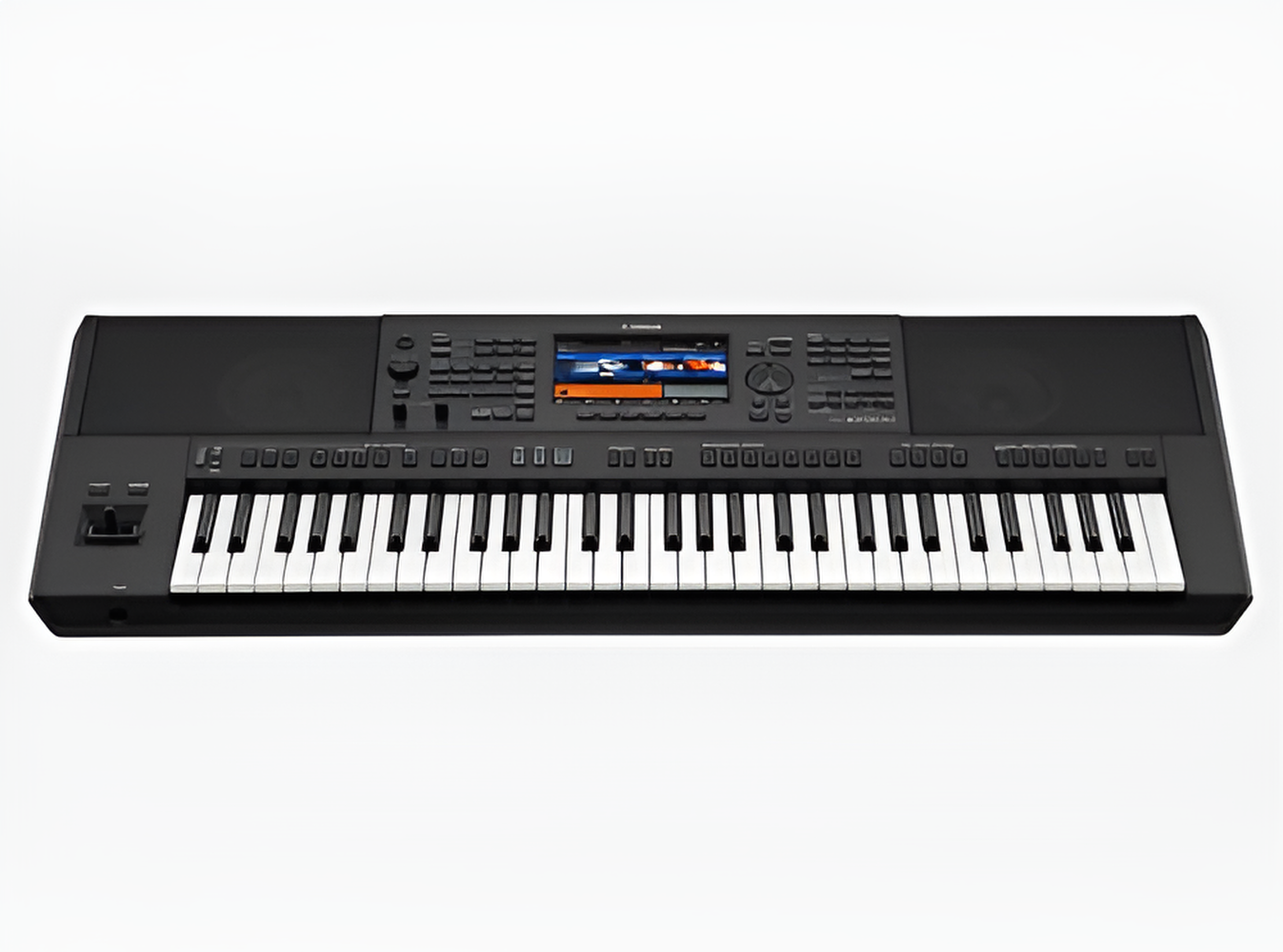
Yamaha Keyboard PSR SX900 Review
The Yamaha PSR-SX900 is a 61-key arranger workstation that sits near the top of Yamaha’s PSR lineup, slotting just below the flagship Genos. It launched in 2019 as a replacement for the PSR-S975 and has since been succeeded by the PSR-SX920, but the SX900 remains widely available and continues to hold its own as a gigging and songwriting instrument.
This review covers what the SX900 does well, where it falls short, and who should consider buying one. If you are shopping across the full category, our best arranger keyboards roundup is a good starting point.
Sound Quality
The SX900 carries over 1,300 voices, and many of them are genuinely impressive. The electric keyboard sounds are the highlight. The Fender Rhodes patch (labeled “Suitcase” in the voice bank) captures that glassy, bell-like tone with convincing accuracy, and the Wurlitzer preset nails the signature bark that the real instrument produces in the lower register. If you play pop, funk, or neo-soul, these voices alone may justify the keyboard.
The organ section is strong as well. You get several Hammond variations ranging from warm and round to bright and overdriven, plus a Vox Continental patch that sounds surprisingly close to the original. The one weak spot in the organ department is the rotary speaker simulation. Instead of a smooth slow-to-fast transition, there is a noticeable break in the sound during the crossover, which can be distracting during live performance.
The brass and wind voices cut through a mix cleanly without the brittle, synthetic quality that plagues many arrangers in this class. Yamaha clearly put extra work into the articulation samples here.
Where the SX900 stumbles is its acoustic piano. The grand and upright patches sound thin and lack the tonal depth you would expect from Yamaha, a company that literally builds concert grand pianos. Notes decay faster than they should when you use the sustain pedal, and the overall character is one-dimensional compared to the electric keyboard voices. If acoustic piano is your primary need, you will want to look at a dedicated keyboard workstation or a stage piano with weighted keys instead.
Keyboard Feel and Playability
The 61 semi-weighted keys are responsive enough for most arranger-style playing. They handle ballads, walking bass lines, and rhythm comping without issue. The action is light, which makes it easy to play fast passages but means you lose some of the dynamic control that a heavier keybed provides.
There are no weighted options in the SX900 line. If hammer action is important to your playing style, check our guide on weighted keyboards and pianos for alternatives. The trade-off is size and weight: at just over 11 kilograms, the SX900 is genuinely portable and easy to load in and out of gigs.
One thing worth knowing is how Yamaha handles chord recognition in the accompaniment section. Unlike Roland, Korg, and Casio arrangers, the SX900 does not trigger a full major chord from a single note. Playing a lone C in the chord zone produces a unison (C in two octaves) rather than a C major chord. You need to play at least two notes (like C and E) to trigger proper chord recognition. This is not a dealbreaker, but it does require a slightly different technique if you are coming from other arranger brands, and beginners may find it frustrating at first. The keyboard offers several fingering modes to help with this, and most players adapt quickly once they understand the system.
The 7-Inch Touchscreen
The color touchscreen is one of the SX900’s best ergonomic features. At seven inches, it is large enough to read at a glance during a performance, and the interface is responsive and logically organized. You can see your current voice and style assignments, adjust settings, and navigate the menu system without any lag or frustration.
Compared to the button-heavy interfaces on older PSR models, the touchscreen makes the SX900 feel modern. It is also a significant step up from the smaller, non-touch displays found on cheaper arrangers. If you have used a modern smartphone or tablet, the learning curve here is minimal.
Styles and Accompaniment
The SX900 ships with over 400 accompaniment styles spanning rock, pop, jazz, Latin, EDM, country, and dozens of world music genres. The quality is consistently high. The drum patterns sound musical rather than mechanical, and the bass and chord voices respond dynamically to your playing.
The style section reset button is a small but genuinely useful feature for live performance. It instantly resets the accompaniment to beat one of bar one, which saves you when playing with other musicians who come in at the wrong time. One tap and everything is back in sync.
Chord Looper
The chord looper lets you record a chord progression and have the style engine loop it automatically. You can store up to eight different progressions, which gives you enough variety for a full song arrangement. Once the loop is running, both hands are free for soloing, adding melodies, or layering additional voices.
This is a genuinely useful tool for solo performers and songwriters. You can sketch out an entire arrangement without needing a backing band or a DAW, and the workflow is fast enough to use on stage between songs. Practicing musicians will also find it helpful for working on improvisation over specific changes.
Built-In Speakers and Amplification
The SX900 features a redesigned bi-amped speaker system with 15 watts per side. The speakers project both toward the player and toward the audience, which is a thoughtful design choice that previous PSR models lacked. Bass frequencies come through with real body, and the high end stays clear even at higher volumes without the crackling or buzzing that cheaper keyboards tend to produce.
For practice and small rooms, the built-in speakers are genuinely sufficient. A solo performer in an intimate venue could potentially skip external amplification entirely. For larger spaces, you will want to run the SX900 through a keyboard amp or a PA system, but the onboard speakers give you a usable fallback.
Vocal Processing and Mic Input
The SX900 includes a microphone input with built-in vocal processing. You can add real-time harmonies to your voice based on the chords you are playing, which is a powerful feature for solo performers who want to fill out their sound without a backing singer. There is also a vocoder mode for more experimental vocal effects.
The harmony engine tracks your chord changes accurately, and the processing sounds natural enough for live use. This is not a replacement for a dedicated vocal processor, but as a built-in feature on an arranger keyboard, it adds real value for singer-songwriters.
Connectivity and Storage
The SX900 offers USB-to-host and USB-to-device connections, a standard headphone jack, line outputs, and Bluetooth audio connectivity. The Bluetooth feature lets you stream backing tracks or audio from a phone or tablet through the keyboard’s speakers, which is convenient for practice sessions.
Internal storage sits at 4GB, which is enough to hold a substantial library of custom voices, styles, and audio recordings. You can expand further via USB flash drives.
Who Should Buy the PSR-SX900
The SX900 makes the most sense for three types of players:
Solo performers and gigging musicians who need a self-contained instrument with quality sounds, built-in accompaniment, and vocal processing. The combination of the style engine, chord looper, mic input, and capable speakers means you can run a complete one-person show from a single keyboard.
Songwriters who want to quickly sketch arrangements and hear them played back with realistic instrumentation. The workflow from idea to full arrangement is faster on the SX900 than on most DAW setups for this kind of writing.
Intermediate to advanced players who are upgrading from a lower-tier PSR model and want a significant jump in sound quality, features, and build without stepping up to the Genos price point.
The SX900 is less ideal if your primary need is realistic acoustic piano, if you require weighted keys, or if you are a complete beginner who would be better served by a simpler and less expensive instrument.
SX900 vs. PSR-SX920: Is the Successor Worth It?
Yamaha released the PSR-SX920 as a direct replacement for the SX900. The SX920 adds updated styles, additional voices, and some interface refinements, but the core architecture and feature set remain very similar. If you can find the SX900 at a lower price, it still represents excellent value. If you are buying new at full retail, the SX920 is worth the look since the incremental improvements add up over time.
Verdict
The Yamaha PSR-SX900 is a capable and well-rounded arranger workstation. Its electric keyboard and organ sounds are among the best in the category, the style engine is deep and musical, and features like the chord looper and vocal harmony processing give solo performers tools that would otherwise require separate gear. The acoustic piano voices are a notable weakness, and the lack of weighted keys limits its appeal for classically trained pianists, but for the audience this keyboard is designed for, it delivers. Check the current price on Amazon and see our best arranger keyboards guide for alternatives in this category.