
The Best Way to Teach Yourself Guitar
Guitar sales have been climbing steadily since 2020, and the resources available to self-taught players have never been better. Between structured online courses, free YouTube channels, and tab sites with millions of songs, you can go from zero to playing full songs in a matter of weeks — if you approach it the right way.
This guide covers the exact steps that work, in the order that matters.
Pick a Guitar That Is Set Up Properly
The single biggest reason beginners quit is that their guitar fights them. A cheap, poorly set up instrument with high action (the distance between strings and fretboard) requires more finger pressure, causes more pain, and makes everything sound worse than it should.
You do not need to spend a lot. You need a guitar with low action, decent intonation, and tuning machines that hold. Here is what to look for:
- Action height. Press a string at the 12th fret. The gap between string and fret should be roughly 2mm on an electric or 2.5mm on an acoustic. If the strings feel like they are a mile off the fretboard, the guitar needs a setup or a different instrument.
- Intonation. Play an open string, then play the same string at the 12th fret. They should sound like the same note an octave apart. If the fretted note sounds noticeably sharp or flat, the intonation is off.
- Tuning stability. Tune the guitar, strum hard for a minute, then check tuning again. If it drifts badly, the tuning machines or nut may need attention.
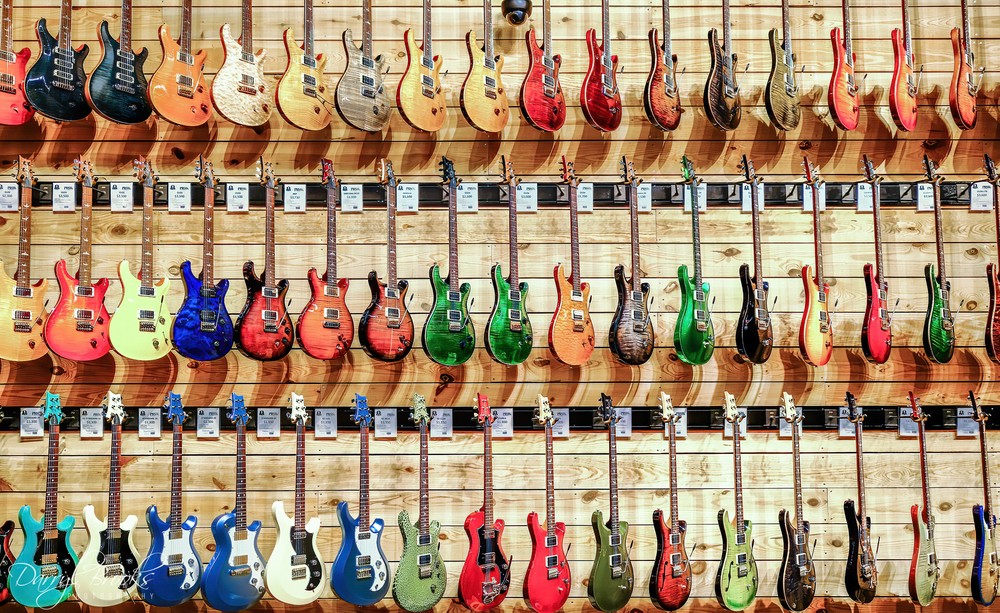
Solid beginner guitars by price range
Under $200:
- Squier Affinity Stratocaster or Telecaster
- Epiphone Les Paul Special or SG Special
- Yamaha Pacifica 012
- Ibanez GIO series (great for players drawn to metal and rock)
$200 — $400:
- Squier Classic Vibe series
- Epiphone Les Paul Standard or ES-335
- Sterling by Music Man CT30 or S.U.B. series
- Yamaha Revstar Element
- PRS SE Standard 24
Acoustic under $300:
- Yamaha FG800 (the most recommended beginner acoustic for a reason)
- Fender CD-60S
- Epiphone DR-100
Whatever you pick, get it set up by a guitar tech. A professional setup costs $40 — $70 and transforms how any guitar plays. This is the single best investment a beginner can make.
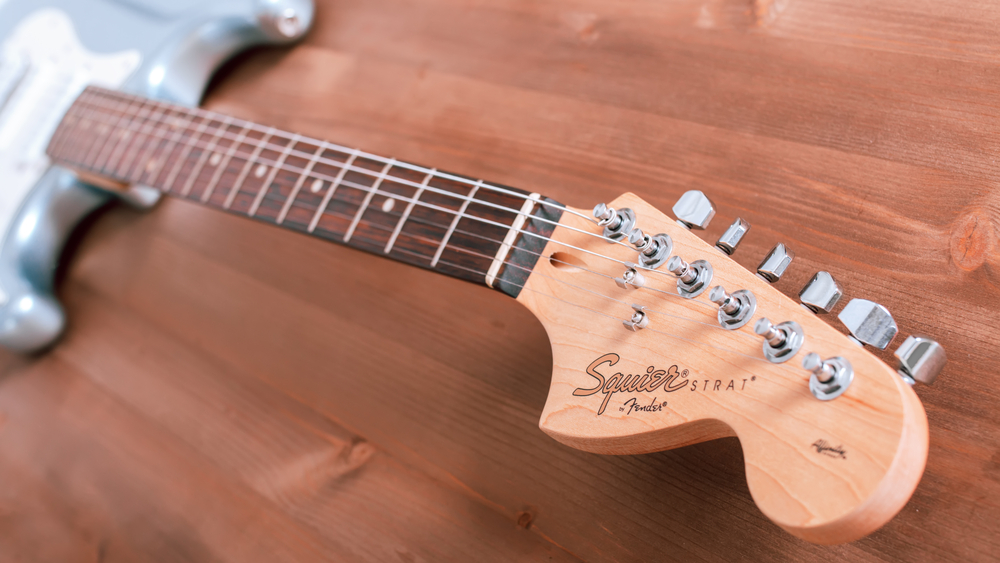
Electric or acoustic first?
Either works. But if finger pain is a concern, electric guitars are genuinely easier on your hands. They have thinner necks, lower action, and lighter string gauges. The idea that you “should” start on acoustic is a myth. Start on whatever excites you.
Keep Your Guitar Visible
Buy a guitar stand or wall mount. Place the guitar somewhere you pass every day — next to the couch, by your desk, in the living room. If your guitar lives in a case in a closet, you will not practice. Every professional guitarist who teaches beginners gives this same advice because it works.
Learn Proper Technique from Day One
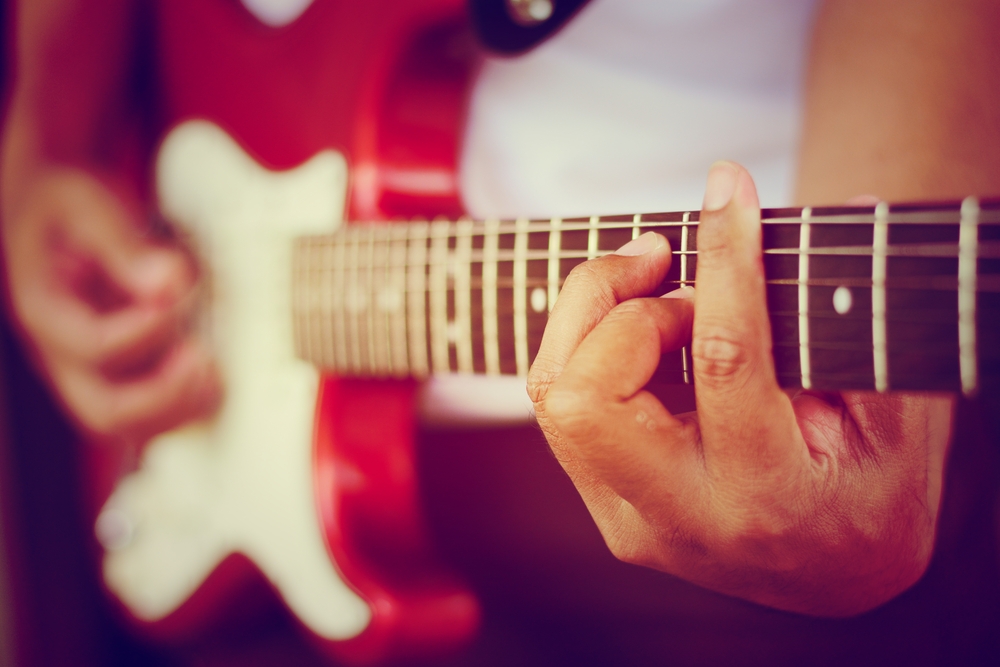
Bad habits formed in the first few weeks can take months to undo. Spend your first session or two focused entirely on how you hold the guitar and fret notes — not on learning songs yet.
Fretting hand:
- Use your fingertips, not the flat pads of your fingers. Curl your fingers so they come down on the strings at a steep angle.
- Place your finger just behind the fret wire (toward the headstock), not on top of it and not in the middle of the fret space. This produces the cleanest tone with the least pressure.
- Keep your thumb behind the neck, roughly opposite your middle finger. Avoid gripping the neck like a baseball bat.
- Use only enough pressure to get a clean note. Pressing too hard wastes energy and slows you down.
Picking hand:
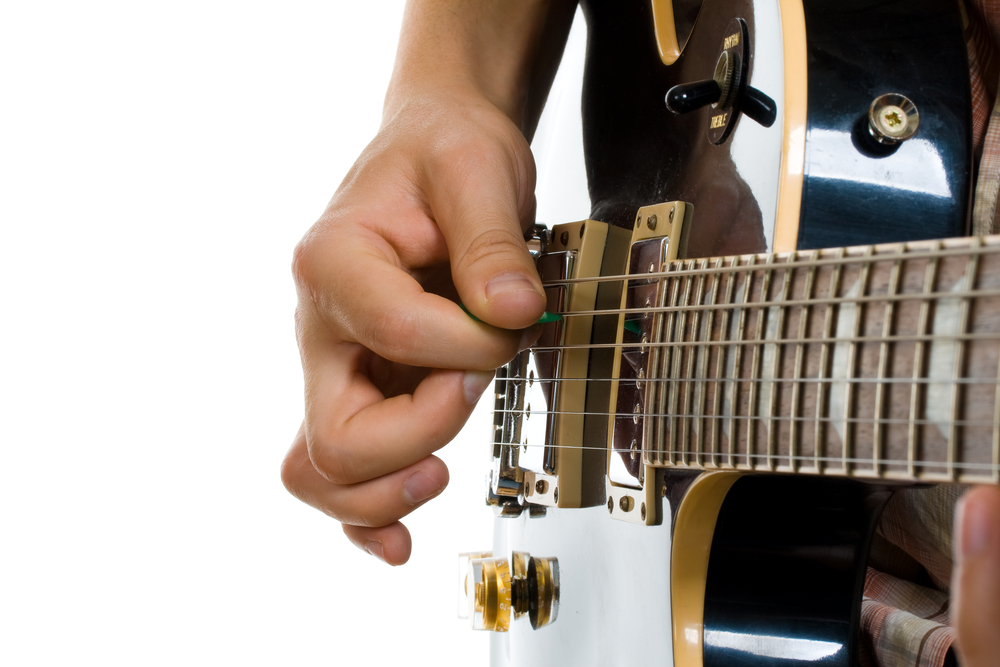
- Hold the pick between your thumb and the side of your index finger. Only about 2-3mm of the pick tip should extend past your finger.
- Keep your wrist relaxed. Strumming and picking motion comes from the wrist, not the elbow.
Posture:
- Sit up straight. Rest the guitar body on your right thigh (for right-handed players). The neck should angle slightly upward.
- If standing, adjust the strap so the guitar sits at roughly the same height as when you are seated.
Tune Every Single Time
Never practice on an out-of-tune guitar. Your ear is learning pitch whether you realize it or not, and practicing out of tune trains your ear to accept wrong notes.
Use a clip-on tuner (Snark or TC Electronic Polytune Clip are both under $20) or a free tuner app. Standard tuning from low to high: E A D G B E.
As your ear develops, you will start to hear when a string drifts out of tune mid-session. That is a good sign — it means your pitch recognition is improving.
Start Playing Songs Immediately
This is the most important piece of advice in this entire guide. Learning songs from day one is what keeps you motivated. Chord charts and scale exercises have their place, but they should support your song learning, not replace it.
First songs to learn (one-session starters)
These songs use two to four open chords and simple strumming:
- “Horse With No Name” — America (Em, D6)
- “Knockin’ on Heaven’s Door” — Bob Dylan (G, D, Am, C)
- “Wish You Were Here” — Pink Floyd (Em, G, A, C, D)
- “Love Me Do” — The Beatles (G, C, D)
- “Riptide” — Vance Joy (Am, G, C — with a capo on the 1st fret)
Don’t worry about playing the song perfectly. Playing a recognizable version of a song you love — even a rough one — is what creates the dopamine loop that keeps you coming back.
Learn to Read Tabs and Chord Diagrams
Tabs and chord diagrams are the two systems guitarists use most. Neither requires you to read standard notation.
Chord diagrams show a snapshot of the fretboard with dots indicating finger placement. Vertical lines are strings, horizontal lines are frets. An “X” above a string means don’t play it. An “O” means play it open.
Tablature (tabs) looks like six horizontal lines representing the six strings. Numbers on the lines tell you which fret to play. It reads left to right like text.
The main limitation of tabs is that they don’t show rhythm well. Always listen to the actual recording while reading tabs. Your ears fill in the timing information that tabs leave out.
Ultimate Guitar and Songsterr are the two best tab sites. Songsterr has the advantage of playing the tab back to you with audio, which helps with rhythm.
Build Your Chord Vocabulary in This Order
Don’t try to learn every chord at once. Follow this sequence:
Week 1-2: The four easiest open chords
- Em, G, C, D
Week 3-4: Add these
- Am, E, A
Week 5-8: Minor and seventh chords
- Dm, D7, A7, E7, G7
Month 3+: Barre chords
- F major (the first barre chord most players learn — and the hardest hurdle for beginners)
- Bm
- Moveable major and minor barre chord shapes based on E and A shapes
Practice switching between chords more than you practice holding them. Set a timer for 60 seconds and count how many times you can cleanly switch between two chords. This “one-minute chord change” drill is one of the most effective exercises for beginners.
Understand the Fretboard (Gradually)
You do not need to memorize every note on the neck before you start playing. But understanding the fretboard layout pays off quickly.
The basics:
- Open strings in standard tuning: E A D G B E
- Each fret raises the pitch by one half step (one semitone)
- The 12th fret is always the same note as the open string, one octave higher
- Notes follow the musical alphabet: A, A#/Bb, B, C, C#/Db, D, D#/Eb, E, F, F#/Gb, G, G#/Ab — then repeat
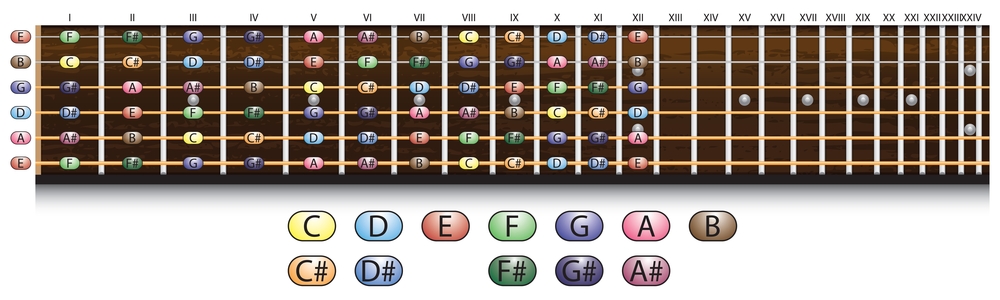
Start with these two exercises:
- Learn the notes on the low E and A strings only. These are the root notes for most barre chords, so knowing them lets you play any major or minor chord anywhere on the neck.
- Learn the pentatonic scale in one position (the “box 1” shape in Am pentatonic). This single pattern is the foundation for most rock, blues, and pop soloing.
The CAGED system
Once you are comfortable with open chords and barre chords, look into the CAGED system. It connects five chord shapes (C, A, G, E, D) across the entire neck and gives you a framework for understanding how chords, scales, and arpeggios relate to each other. It is the single most useful organizational system for the guitar fretboard.
Practice Bending and Vibrato Early
The guitar’s greatest expressive advantage over keyboards is that you can bend notes and add vibrato. These techniques are what make a guitar line sound vocal and alive.
- Bending: Push (or pull) the string sideways across the fretboard to raise its pitch. Start with half-step bends on the B and G strings around the 7th-10th frets where string tension is moderate.
- Vibrato: A controlled, repeating bend-and-release motion. Good vibrato is slow and even, not a rapid nervous shake.
Both take weeks to develop control. Practice them for a few minutes each session rather than ignoring them until later.
Structure Your Practice
Unstructured noodling is fun but it is not practice. A simple practice structure for beginners:
15-minute session:
- 2 minutes: warm-up (chromatic exercise or spider walk)
- 5 minutes: chord changes or new technique
- 8 minutes: song practice
30-minute session:
- 3 minutes: warm-up
- 7 minutes: technique work (chord changes, scales, or a specific skill)
- 15 minutes: song practice
- 5 minutes: free play / improvisation
The exact times matter less than the principle: warm up briefly, work on something specific, then play music. And practice every day, even if it is only 10 minutes. Daily short sessions beat weekly long ones every time.
Push Through the Plateau
Every self-taught guitarist hits a wall somewhere between month one and month three. Your fingers hurt, chord changes are still slow, and you feel like you are not improving. This is what James Clear calls the “Valley of Disappointment” — the gap between your expectations and your actual progress.
Here is what is actually happening: you are improving, but the improvements are invisible because they are happening in your muscle memory and neural pathways before they show up in your playing. The progress curve is not linear. It is flat, flat, flat, then a sudden jump.
The players who make it through this phase are the ones who:
- Keep showing up for short daily sessions even when it feels pointless
- Track their progress (record yourself monthly — you will hear the difference even when you cannot feel it)
- Rotate what they are working on so boredom doesn’t set in
Choose Your Learning Resources Wisely
Too many resources is almost as bad as too few. Pick one structured program and supplement with YouTube for specific songs or techniques.
Best free resource: JustinGuitar — the most comprehensive free beginner guitar course available. Structured, well-paced, and covers everything from holding the guitar through intermediate techniques.
Best paid platforms: Guitar Tricks and Fender Play both offer structured courses with progress tracking. For a deeper look at online guitar lessons, we have a full comparison.
YouTube for specific skills: Use YouTube when you need to learn a particular song or technique, not as your primary learning path. Jumping between random videos without structure is the number one trap self-taught guitarists fall into.
Deal with Finger Pain the Right Way
Your fingertips will hurt for the first two to four weeks. This is normal. Calluses form from repeated contact with the strings, and once they develop, the pain disappears entirely.
To manage the transition:
- Play in short sessions (15-20 minutes) multiple times per day rather than one long session
- If you are on acoustic, consider dropping to lighter strings temporarily (.011 gauge instead of .012)
- If you are on electric, use .009 gauge strings until your calluses are established
- Do not use numbing creams or tape — they interfere with your sense of touch and slow callus development
Record Yourself
Once you can play through a song, record it. Use your phone — audio quality does not matter at this stage. What matters is hearing yourself from outside your own head.
Recording reveals timing issues, muted strings, and sloppy chord changes that you cannot hear while you are focused on playing. It is the closest thing to having a teacher give you feedback when you are learning on your own.
As you progress and want to capture ideas or demo recordings with better quality, you can look into recording guitar at home with a basic audio interface. If you play electric and want to shape your tone, exploring guitar preamp pedals or the broader world of guitar pedal types can open up a lot of creative options.
Set a Clear Goal
“Learn guitar” is too vague to be useful. Pick a specific, achievable target:
- “Play ‘Wish You Were Here’ all the way through by the end of the month”
- “Learn all five pentatonic scale positions by summer”
- “Play well enough to jam with a friend on three songs”
- “Record a cover and post it online”
When you hit a goal, set the next one. The cycle of setting targets, working toward them, and achieving them is what transforms a hobby into a lifelong skill.
FAQ
Should I start on electric or acoustic guitar?
Either one. Electric guitars are easier to play physically — thinner necks, lower action, lighter strings. Acoustics are more portable and don’t need an amp to practice. Pick whichever one matches the music you want to play.
What guitar should a beginner buy?
A quality instrument from Squier, Epiphone, Yamaha, Ibanez, or Sterling by Music Man in the $150-$350 range. The most important thing is getting it professionally set up. Avoid the cheapest possible guitar and avoid spending more than $500 on your first instrument.
Can I learn guitar without taking lessons?
Yes. Structured online guitar lessons and free resources like JustinGuitar provide the same foundational knowledge a private teacher would, at a fraction of the cost. The main thing you miss without a teacher is real-time feedback on your technique, which you can partially compensate for by recording yourself.
What is the best app to learn guitar?
Yousician is the most popular all-in-one app. It listens to your playing through your phone’s microphone and gives real-time feedback. Fender Play is another strong option with a more structured curriculum. Both offer free trials.
How long does it take to learn guitar?
You can play simple songs within days. Most beginners can play a handful of songs comfortably within two to three months of daily practice. Playing confidently in a wider range of styles takes one to two years. Mastery is a lifelong pursuit — but you do not need mastery to enjoy playing.
How many hours a day should I practice?
Focus on consistency, not duration. Fifteen minutes every day is better than two hours once a week. As you build the habit, your sessions will naturally get longer because you will want to play more.
How do I deal with sore fingers?
Play in short sessions, use lighter gauge strings if needed, and let calluses develop naturally over two to four weeks. The soreness is temporary and universal — every guitarist went through it.
Is it too late to learn guitar at 30, 40, or 50?
No. Adults often learn faster than children because they bring discipline, patience, and a lifetime of musical listening to the process. The guitar is a low-impact instrument that people play well into their 80s.
Do I need to learn music theory?
Not immediately. Learn to play songs first. Theory becomes useful once you want to understand why certain chords go together, how to improvise, or how to write your own music. Start with the basics — major scale, chord construction, the Nashville number system — when you feel ready.
Are guitar picks necessary?
No. Many great guitarists — Derek Trucks, Matteo Mancuso, Mark Knopfler, Lindsey Buckingham — play entirely with their fingers. If you play rock, metal, or punk, a pick is more practical. For fingerstyle, classical, and some blues and country, fingers are standard. Try both and see what feels right for the music you want to play.