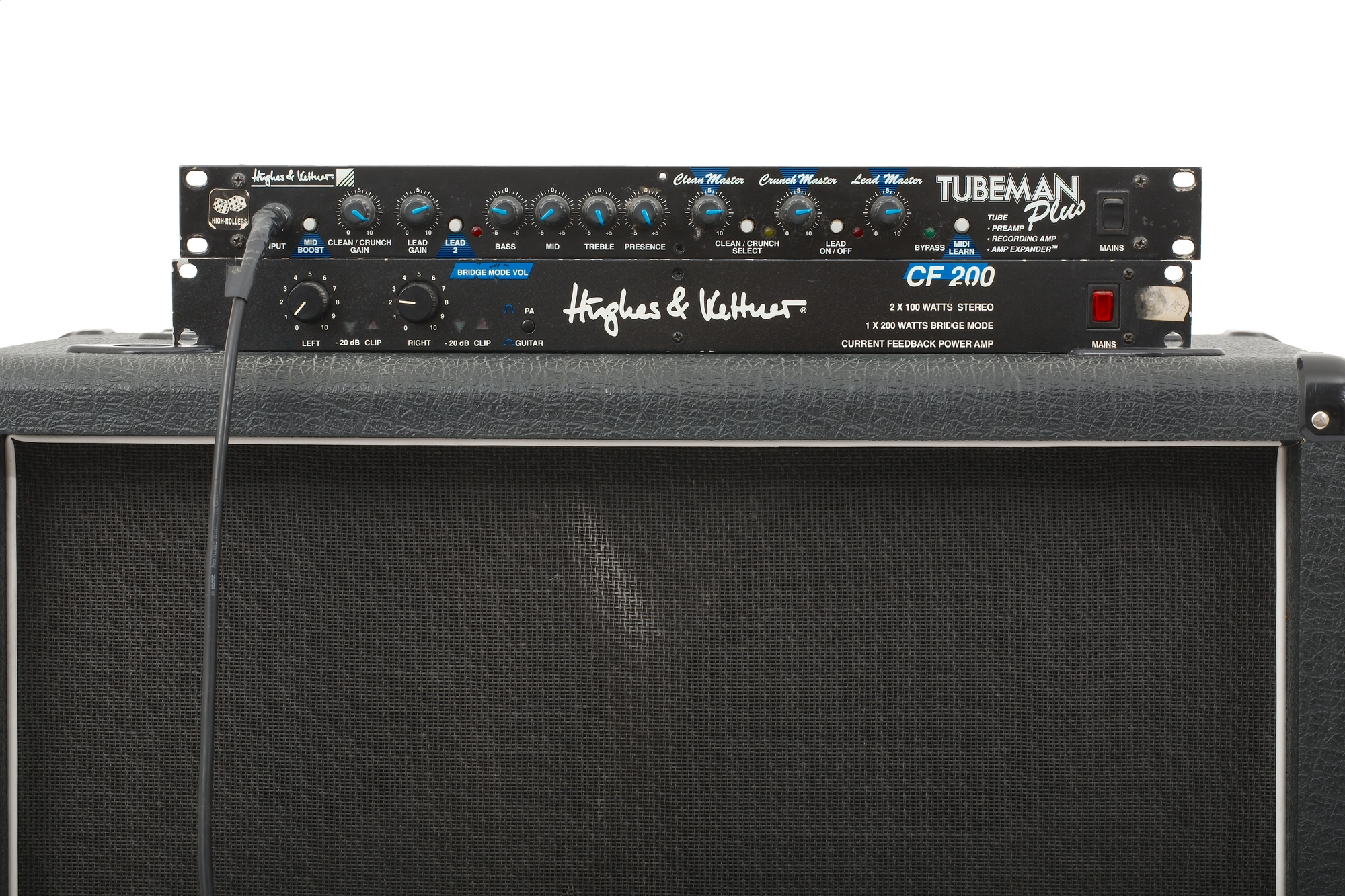
Preamp Vs Amp: What's The Difference?
A preamp and a power amp do two different jobs. The preamp takes a weak signal and brings it up to line level. The power amp takes that line-level signal and makes it loud enough to drive speakers. Every audio system uses both stages, whether they are in separate boxes or combined inside one unit.
What a Preamp Does
A preamp is the first gain stage in any audio signal chain. Its job is to take a low-level signal — from a microphone, guitar pickup, turntable cartridge, or keyboard — and amplify it to line level (roughly -10 dBV for consumer gear, +4 dBu for professional gear).
That is its core function. But preamps also handle several other things:
- Impedance matching. Different sources have different output impedances. A preamp presents the correct input impedance so the source can deliver its signal without loss or tonal change.
- Tone shaping. Most guitar and bass preamps include EQ controls (bass, mid, treble) and gain. When you crank the gain on a tube preamp past clean headroom, you get overdrive and distortion. This is where a guitar amp’s “voice” comes from.
- Phantom power. Studio preamps supply 48V phantom power to condenser microphones that need it.
- Source selection. In hi-fi and studio contexts, the preamp often handles input switching and volume control before passing the signal to the power amp.
A preamp does not produce enough power to drive a speaker. It amplifies voltage, not current. You always need a power amp stage after it.
What a Power Amp Does
The power amp is the final amplification stage. It takes the line-level signal from the preamp and amplifies both voltage and current so the signal can physically move a speaker cone.
Power amps are rated in watts. A 15-watt tube guitar amp is enough for a small club. A 100-watt head fills a large stage. A home stereo power amp might be 50-200 watts per channel depending on speaker sensitivity and room size.
The power amp’s job is simpler than the preamp’s: amplify the signal cleanly and deliver it to the speakers with minimal distortion. But it is not tonally invisible. In guitar amps especially, the power amp section adds its own character:
- Tube type matters. British-voiced amps (Marshall, Vox) typically use EL34 or EL84 power tubes, which break up with harmonic richness and compression. American-voiced amps (Fender, Mesa/Boogie) typically use 6L6 or 6V6 tubes, which stay cleaner at higher volumes and have more headroom.
- Power amp distortion sounds different from preamp distortion. It is more open, more dynamic, and punchier in the midrange. Classic rock and blues tones rely heavily on pushing the power section.
- Solid-state power amps are more efficient, lighter, and produce a cleaner, more linear response. Most PA systems and modern bass rigs use solid-state power.
How They Work Together in a Guitar Amp
A typical guitar amp head or combo contains both stages in one enclosure. The signal path looks like this:
Guitar pickup → Preamp section (gain, EQ, voicing) → Effects loop (if present) → Power amp section → Speaker cabinet
The preamp shapes your tone. The power amp projects it. When you adjust the gain knob, you are driving the preamp harder. When you adjust the master volume, you are controlling how hard the power amp works.
This is why a cranked 15-watt amp can sound better for recording than a 100-watt head at bedroom volume. The smaller amp lets you push the power section into its sweet spot without excessive volume. If you are recording guitar at home, this is worth keeping in mind.
How They Work in a Studio or PA System
In a recording studio or live sound setup, the preamp and power amp are almost always separate devices.
The signal chain for a vocal recording:
Microphone → Mic preamp (in an audio interface or standalone unit) → AD converter → DAW
The mic preamp boosts the mic-level signal (typically -60 to -40 dBu) up to line level. Most audio interfaces for beginners have built-in preamps that handle this. Standalone preamps from companies like Universal Audio, Neve, and API are used when you want a specific tonal character.
For live sound and monitoring, the chain continues:
DAW / mixer output → Power amp → Speakers
When You Need a Preamp
You need a preamp whenever your source signal is below line level. That includes:
- Microphones. Always need a preamp. Dynamic mics, condenser mics, and ribbon mics all output mic-level signals that must be amplified before anything useful can happen.
- Electric guitars and basses. The instrument-level signal from a passive pickup is weak. A guitar preamp pedal or bass preamp pedal can boost and shape the signal before it hits a power amp or recording interface.
- Turntables. A moving-magnet or moving-coil phono cartridge outputs a very weak signal that also needs RIAA equalization. A phono preamp handles both.
- Keyboards and synths. Most modern keyboards output line-level signals and do not need an external preamp. But if you are running into a keyboard amp, the amp already has a preamp stage built in.
When You Need a Power Amp
You need a power amp whenever you want to hear something through speakers. There are no exceptions. The question is whether the power amp is a standalone unit or built into another device.
- Guitar and bass amps have the power amp built in.
- Active (powered) speakers have the power amp built in.
- Passive speakers require an external power amp.
- Electronic drum amps are self-contained units with a preamp, power amp, and speaker in one package.
Preamp Pedals and Power Amp Pedals
Modern guitarists sometimes skip traditional amp heads entirely and build their rig from pedals. A preamp pedal provides the tone-shaping stage — gain, EQ, and often amp voicing that mimics a specific amp model. A power amp pedal (like the Seymour Duncan PowerStage or EHX Magnum 44) then amplifies that signal to drive a speaker cabinet.
This approach is lighter, more portable, and gives you consistent tone at any volume. If you are exploring this route, our guide to types of guitar pedals covers where preamp pedals fit in the broader pedal landscape.
Preamp vs Amp: Quick Comparison
| Preamp | Power Amp | |
|---|---|---|
| Purpose | Boost weak signal to line level, shape tone | Amplify line-level signal to drive speakers |
| Amplifies | Voltage only | Voltage and current |
| Controls | Gain, EQ, input selection, volume | Usually just level (gain is fixed) |
| Output level | Line level (~1-2V) | Speaker level (tens of volts) |
| Power draw | Low | High (produces heat) |
| Can drive speakers? | No | Yes |
| Standalone use? | Needs a power amp after it | Needs a preamp before it |
Common Questions
Can you use a preamp without a power amp?
Only if you are going into a recording interface or mixing console, which have their own amplification. You cannot drive speakers with a preamp alone.
Can you use a power amp without a preamp?
Technically yes, if your source is already at line level (like a mixer output or a line-level synth). But most sources need a preamp to reach line level first.
Do I need a separate preamp if my audio interface has one?
For most home recording, no. The built-in preamps in modern interfaces like the Focusrite Scarlett or Universal Audio Volt are good enough. You would add an external preamp if you want a specific tonal character (like the warmth of a Neve 1073 or the clarity of a Grace Design) or if you need more gain for quiet sources like ribbon mics.
Does a preamp improve sound quality?
A preamp does not magically fix a bad source. A cheap microphone through an expensive preamp still sounds like a cheap microphone. But a good preamp will amplify the signal with lower noise and less distortion than a mediocre one, which matters when you are recording quiet sources or need high gain.
What is an integrated amplifier?
An integrated amplifier combines the preamp and power amp in a single chassis. Most guitar combo amps, home stereo amplifiers, and AV receivers are integrated designs. Separates (standalone preamp + standalone power amp) are used in high-end hi-fi and professional audio where you want to upgrade each stage independently.
The Bottom Line
The preamp boosts and shapes. The power amp amplifies and drives. Every audio system — guitar rig, recording studio, home theater, PA system — uses both stages. The only real question is whether they live in the same box or separate ones.
If you are just starting out, an integrated amp (or a combo guitar amp) covers both. If you want more control over your tone and more flexibility in your signal chain, separating the preamp and power amp stages gives you that.