Do Violins and Cellos Have Frets?
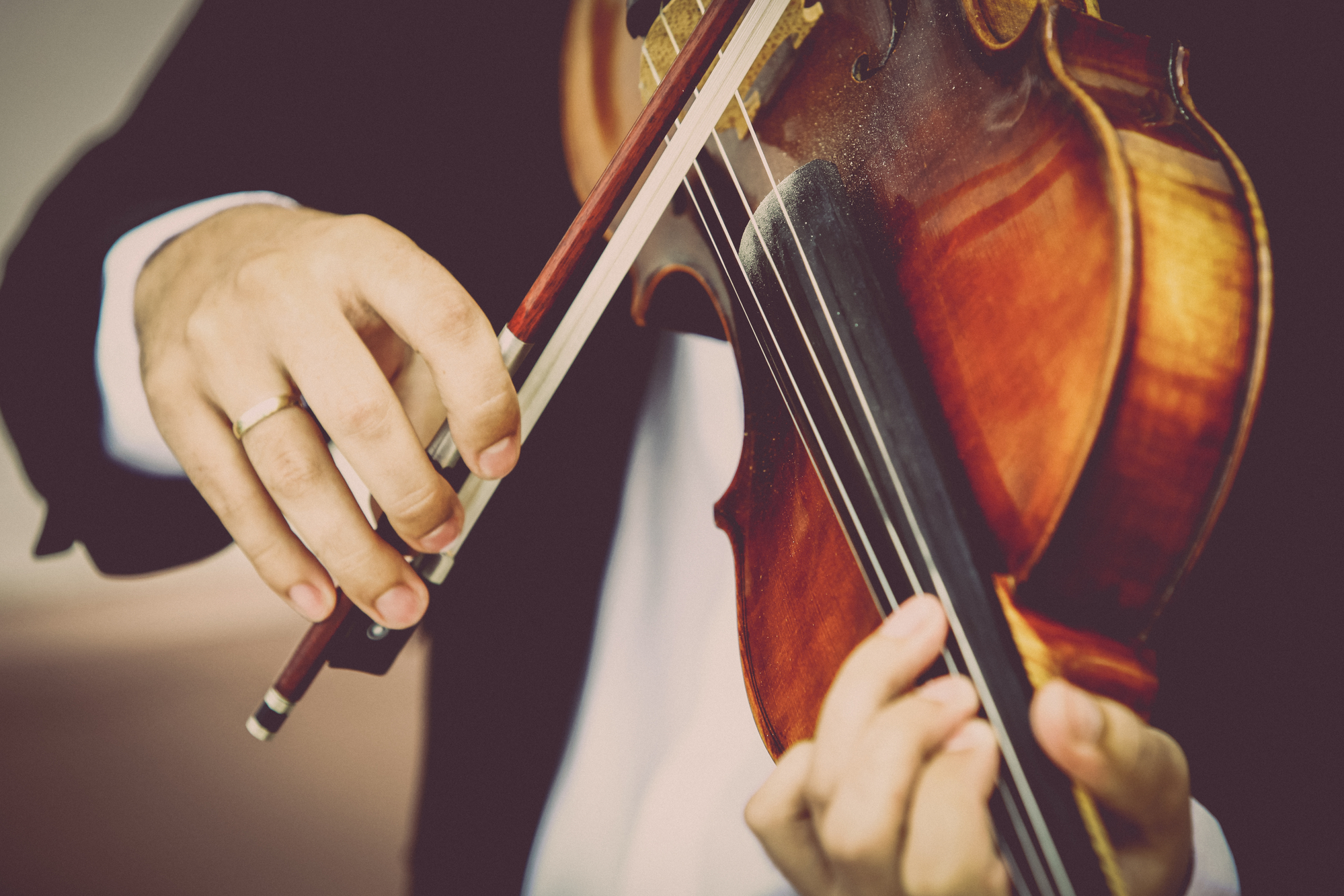
No. Violins, violas, cellos, and double basses do not have frets. Their fingerboards are smooth strips of ebony with no markings or raised strips of any kind. This is not an oversight — it is a deliberate design choice that dates back centuries and directly shapes how these instruments sound.
If you play guitar, banjo, or mandolin, this feels strange. Frets tell you exactly where to put your fingers. Without them, how do string players find the right notes? The short answer: muscle memory, ear training, and constant small adjustments. The longer answer involves physics, music history, and a fundamental difference between how plucked and bowed instruments produce sound.
What Frets Actually Do
A fret is a thin raised strip — usually metal on modern instruments — embedded across the fingerboard. When you press a string down behind a fret, the fret shortens the vibrating length of the string to a fixed point, producing a specific pitch.
Frets divide the fingerboard into semitones. On a standard guitar, 12 frets cover one octave. Press any string at the 7th fret and you get a perfect fifth above the open string, regardless of that string’s tuning or thickness. This works because pitch depends on the ratio of string lengths, not their absolute measurements. A string shortened to 2/3 of its length always produces a note a fifth higher.
This is why a single fret works across all strings simultaneously — the math is the same for every string. Frets appear on guitars, mandolins, banjos, ukuleles, lutes, and other plucked or strummed instruments.
Frets provide two practical advantages:
- Pitch accuracy without ear training. A beginner can play in tune on day one by simply pressing behind the correct fret.
- Sustain on plucked notes. The metal fret creates a hard contact point that lets plucked notes ring cleanly and decay slowly.
Why Violins and Cellos Do Not Have Frets
The violin family dropped frets for reasons that are musical, physical, and historical. Each reason reinforces the others.
Frets Lock You Into Equal Temperament
This is the most important reason, and it is often overlooked.
Frets force an instrument into equal temperament — the tuning system where every semitone is the same size. Equal temperament is a compromise. It lets you play in any key without retuning, but no interval except the octave is perfectly in tune. The perfect fifth is 2 cents flat. The major third is 14 cents sharp. On a guitar, this is close enough. On a bowed instrument sustaining long notes in a string quartet, those small errors become noticeable.
Without frets, a violinist or cellist can adjust each note by fractions of a millimeter to play pure intervals. A leading tone can be sharpened to pull toward the tonic. A major third in a chord can be lowered slightly so it rings without beating. This flexibility is central to how orchestral string sections blend and how solo players shape phrases expressively.
Bowed Instruments Do Not Need Frets for Sustain
On a guitar, the fret serves double duty: it fixes pitch and it provides a hard stop that helps plucked notes sustain. Without a fret, a fingertip pressing a plucked string deadens it slightly.
Bowed instruments do not have this problem. The bow provides continuous energy to the string, sustaining the note for as long as the player draws the bow. There is no pluck to decay. The fret’s sustain advantage is irrelevant, which removes one of the main reasons to have frets in the first place.
Vibrato and Expressive Techniques Require a Bare Fingerboard
Vibrato — the controlled oscillation of pitch that gives string instruments their singing quality — requires the fingertip to rock back and forth on a smooth surface. Frets would interrupt this motion and turn continuous vibrato into a series of clicks between two fixed pitches.
Portamento (sliding between notes), glissando, and microtonal inflections all depend on the fingerboard being an unbroken surface. These techniques are not optional extras. They are fundamental to how the violin, viola, cello, and double bass are played in virtually every musical tradition.
Frets Change the Tone Color
When a string contacts a metal fret, it produces a brighter, more metallic tone — essentially the sound of an open string at every position. This is desirable on guitar. On bowed instruments, the flesh of the fingertip pressing the string adds a subtle damping that softens the tone and allows the player to shade the color of each note. Frets would remove this control.
The Historical Path: Viols Had Frets, Violins Did Not
The violin family did not start with frets and then remove them. The violin emerged in the early 16th century in northern Italy as a distinct instrument from the viol (viola da gamba), which did have frets.
The viol was a fretted, bowed instrument with 5-7 strings tuned in fourths and thirds, a flat back, C-shaped sound holes, and a wide, flat fingerboard. Its frets were made of gut cord tied around the neck — movable, and prone to slipping and wearing out.
The violin family took a different path: four strings tuned in fifths, an arched back, f-shaped sound holes, a curved fingerboard, and no frets. These were not refinements of the viol but a parallel design optimized for projection, agility, and expressive range. The violin’s louder, more penetrating sound made it better suited to ensemble playing and larger venues. By the 18th century, the violin family had largely replaced the viol in mainstream European music.
So the question is not “why did violins lose their frets?” but rather “why were violins built without frets from the start?” The answer: because the instrument was designed around the expressive possibilities that a fretless fingerboard makes possible.
What About the Cello Specifically?
The cello follows the same logic as the violin. It is a member of the violin family, not a descendant of the viola da gamba, despite being held in a similar position between the legs. The cello’s fretless fingerboard allows the same expressive techniques — vibrato, portamento, flexible intonation — that define violin family playing.
One additional factor matters for cello: the string length is much longer than on a violin (roughly 69 cm vs. 32.5 cm). On longer strings, the physical distance between semitones is greater, which actually makes it easier to make fine pitch adjustments by ear. The argument for frets as a pitch-finding aid is weaker on cello than it would be on violin.
How Beginners Cope Without Frets
The lack of frets is one of the reasons violin and cello are considered among the hardest instruments to learn. Every note requires the player to find the right spot on a blank fingerboard using only their ear and muscle memory. Here is how teachers and students handle this:
Finger tapes. Small strips of colored tape placed on the fingerboard to mark first-position notes. These are training wheels, not permanent fixtures. They show approximately where to place fingers while the student develops their ear. Most teachers remove them within the first few months to a year.
Ear training from day one. Students learn to hear whether a note is sharp or flat and adjust in real time. Playing scales slowly with a drone (a sustained reference pitch) is one of the most effective exercises.
Consistent hand position. Teachers spend significant time on left-hand form — thumb placement, finger curvature, wrist angle — because consistent hand shape leads to consistent finger placement. Proper instrument sizing is critical here: a violin that is too large forces the hand into awkward positions that make intonation unreliable.
Reference points. Open strings and natural harmonics serve as built-in tuning references. A well-trained player constantly checks stopped notes against open strings and adjusts.
Daily warm-ups. Even professional cellists and violinists warm up with scales and intonation exercises before every practice session. As one cello teacher put it: “You have to re-learn how to play the instrument every day.” This is not an exaggeration — it reflects the reality that muscle memory needs daily reinforcement on a fretless instrument.
Can You Add Frets to a Violin or Cello?
Technically, yes. Fretted electric cellos and violins exist, and you can buy stick-on fret overlays for acoustic instruments. Some experimental luthiers have built fretted acoustic violins.
In practice, almost no serious player uses them. Frets interfere with vibrato and expressive intonation, change the instrument’s tone, and are incompatible with the standard repertoire’s technical demands. A fretted violin is a fundamentally different instrument — closer to a bowed guitar than to a traditional violin.
If you are a beginner struggling with intonation, finger tapes are the better solution. They provide visual guidance without physically constraining the string, so you can still develop the ear training and finger sensitivity that fretless playing requires. Regular instrument maintenance — keeping strings fresh, the bridge properly positioned, and the fingerboard clean — also makes intonation easier by keeping the instrument responsive and predictable.
The Bottom Line
Violins and cellos do not have frets because frets would take away more than they give. The violin family was designed from the beginning around the expressive flexibility of a bare fingerboard: pure intervals, continuous vibrato, seamless slides, and tonal control that frets make impossible. The bow removes the need for frets as a sustain mechanism. And the entire training tradition for these instruments is built on developing the ear and hand precision to play in tune without mechanical aids.
Frets make plucked instruments more accessible. A fretless fingerboard makes bowed instruments more expressive. Both designs are right for what they do.